Issue · Healthcare

Healthcare

Every healthcare bill, vote, and legislator stance in California, automatically classified by Maddy, our AI policy reader.

Total bills
487
2025-2026 Regular Session
Top supporter
Susan Rubio
99% support rate
Top opponent
Brian Jones
3% support rate
Ranked legislators
10
5 support · 5 oppose
Key legislators

Who's moving healthcare in California

Legislators moving healthcare in California
Legislator Party Stance Support rate Decisive votes
Susan Rubio
Susan Rubio Senate · District 22
D
Strong +
99% 84
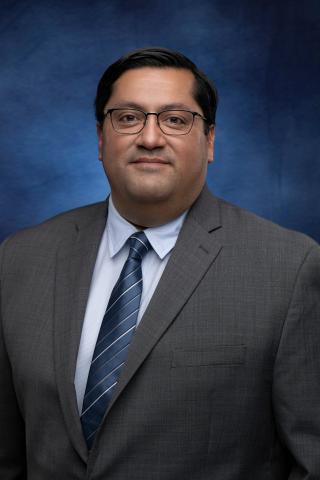
Jesse Arreguín
Jesse Arreguín Senate · District 7
D
Strong +
99% 79
Monique Limón
Monique Limón Senate · District 21
D
Strong +
99% 74
Celeste Rodriguez
Celeste Rodriguez House · District 43
D
Strong +
98% 66
Jerry McNerney
Jerry McNerney Senate · District 5
D
Strong +
98% 66
Brian Jones
Brian Jones Senate · District 40
R
Strong −
3% 60
Tri Ta
Tri Ta House · District 70
R
Strong −
4% 91
Tony Strickland
Tony Strickland Senate · District 36
R
Strong −
4% 67
Kelly Seyarto
Kelly Seyarto Senate · District 32
R
Strong −
5% 111
Natasha Johnson
Natasha Johnson House · District 63
R
Strong −
5% 76
Showing 231–240 of 487 bills

All healthcare bills

passed · California · Senate Aug 13, 2026

SB 1309: Health care coverage: lung cancer.

Existing law, the Knox-Keene Health Care Service Plan Act of 1975, provides for the licensure and regulation of health care service plans by the Department of Managed Health Care, and makes a willful violation of the act a crime. Existing law provides for the regulation of health insurers by the Department of Insurance. Existing law requires a health care service plan contract or health insurance policy to provide coverage for all generally medically accepted cancer screening tests. This bill would require a health care service plan contract or health insurance policy, except as specified, that is issued, amended, or renewed on or after January 1, 2027, to provide coverage for followup screening or diagnostic services for lung cancer, as specified. The bill would prohibit a contract or policy from imposing a copayment, coinsurance, deductible, or any other form of cost sharing for this coverage. If a health care service plan contract or health insurance policy is a high deductible health plan, the bill would prohibit the contract or policy from imposing a deductible, coinsurance, or any other cost sharing on this coverage unless not imposing the deductible, coinsurance, or cost sharing would conflict with the federal requirements for high deductible health plans. Because a willful violation of these provisions by a health care service plan would be a crime, the bill would impose a state-mandated local program. The California Constitution requires the state to reimburse local agencies and school districts for certain costs mandated by the state. Statutory provisions establish procedures for making that reimbursement. This bill would provide that no reimbursement is required by this act for a specified reason.
passed both · California · Assembly Aug 27, 2026

AB 2301: Community colleges: Baccalaureate Degree in Nursing Pilot Program.

Existing law establishes the California Community Colleges, under the administration of the Board of Governors of the California Community Colleges. Existing law establishes community college districts throughout the state, under the administration of community college district governing boards, and authorizes these districts to provide instruction at the community college campuses they operate. Existing law establishes a statewide baccalaureate degree program that authorizes up to a total of 30 baccalaureate degree programs at community college districts to be approved per academic year, as provided. This bill would require the office of the Chancellor of the California Community Colleges to develop a Baccalaureate Degree in Nursing Pilot Program that authorizes select community college districts to offer a Bachelor of Science in Nursing degree. The bill would limit the pilot program to 10 community college districts statewide and would require the chancellor's office to identify and select eligible community college districts based on specified criteria. The bill would require the chancellor's office to develop a process designed to assist community college districts with nursing programs that are applying for national accreditation for the purpose of qualifying for the pilot program, as provided. The bill would require each participating community college district to give priority registration for enrollment in the pilot program to students with an associate degree in nursing from that community college district. The bill would require the Legislative Analyst's Office to conduct an evaluation of the pilot program to determine the effectiveness of the program and the need to continue or expand the program, as specified, to be submitted to the Legislature on or before July 1, 2034. The bill would repeal these provisions as of January 1, 2036.
Sub-Topics Higher Education
passed both · California · Assembly Aug 28, 2026

AB 1897: Mentally disordered offenders: criteria for commitment.

Existing law requires that, as a condition of parole, a prisoner who has a severe mental health disorder be treated by the State Department of State Hospitals if the prisoner meets certain requirements, including, among others, that the person in charge of treating the prisoner and a practicing psychiatrist or psychologist from the State Department of State Hospitals have evaluated the prisoner and that a chief psychiatrist of the Department of Corrections and Rehabilitation certify to the Board of Parole Hearings that by reason of the prisoner's severe mental health disorder, the prisoner represents a substantial danger of physical harm to others. Existing law allows a prisoner to request a hearing before the Board of Parole Hearings for the purpose of proving that they meet the criteria to be treated by the State Department of State Hospitals. Existing law authorizes a prisoner who disagrees with the determination of the Board of Parole Hearings to file a petition in court in the county in which they are incarcerated or are being treated for a hearing on whether they met the criteria. This bill would require a psychiatrist or psychologist, when determining whether a prisoner represents a substantial danger of physical harm to others, to consider, among other things, the prisoner's history of violence that was related to their severe mental health disorder. The bill would also authorize the court, upon stipulation of the petitioner, prosecuting attorney, and defense counsel in the county of commitment to state prison, to conduct a hearing in the county of commitment to state prison.
Sub-Topics Mental Health
signed · California · Assembly Jun 26, 2026

ACR 209: Relative to Behavioral Health Awareness Month.

This bill designates May 2026 as Behavioral Health Awareness Month in California. It directs state agencies to acknowledge this month, likely through proclamations or public awareness campaigns. The measure does not change funding, laws, or services but serves to highlight the importance of mental and behavioral health.
Sub-Topics Mental Health
signed · California · Assembly Jun 26, 2026

ACR 205: Relative to Congenital Cytomegalovirus Awareness Month.

This bill designates June 2026 as Congenital Cytomegalovirus Awareness Month to highlight information about the virus. It directly affects public health officials, healthcare providers, and community organizations who may organize events or distribute educational materials during this time. The primary mechanism is a formal declaration that establishes the specific month for this awareness campaign. The measure does not alter laws or funding but serves to recognize the importance of the issue through official state recognition.
Sub-Topics Public Health
passed · California · Assembly Aug 6, 2026

HR 110: Relative to Food as Medicine.

This bill is a House Resolution that formally recognizes the value of "food as medicine" in improving public health and reducing healthcare costs in California. It highlights how providing medically tailored meals, produce prescriptions, and other nutrition services helps prevent and manage diet-related conditions, particularly for communities of color. The text cites evidence that these programs lower emergency room visits and hospitalizations while noting that they are currently optional under existing state healthcare initiatives. By documenting these successes and the role of local providers, the resolution aims to encourage broader adoption of these services to support patient health and economic stability.
passed both · California · Assembly Aug 27, 2026

AB 1882: Safe Delivery Fund Pilot Program.

Existing law establishes the Department of Health Care Access and Information to oversee and administer various health programs, including, among others, the California Reproductive Health Equity Program. Under existing law, this program provides grant funding to safety net providers of abortion and contraception services to offset the costs of providing uncompensated care to patients with low incomes who would otherwise lack access to care. Existing law establishes the California Reproductive Health Equity Fund, and, within the limits of funds available, authorizes the department to award grants that, in the department's judgment, best promote the purposes of the program. This bill would establish the Safe Delivery Fund Pilot Program, until January 1, 2030, which would be administered by the department to provide funding to hospitals to offset uncompensated standby costs associated with maintaining specialty physician coverage, advanced practice provider coverage, and hospital staffing necessary to safely provide deliveries and related inpatient specialty services. The bill would require a hospital to meet specified requirements to qualify for the program, including, among other things, that the hospital can demonstrate that the hospital serves a geographically isolated population and that loss of obstetric services would significantly impact access to maternity care. This bill would establish the Safe Delivery Fund, and would require moneys in the fund to be available, upon appropriation by the Legislature, to the department for the purposes of the program. The bill would require the hospital to use the funds from the program for salaries, benefits, insurance, contracted physician compensation, contracted advanced practice provider compensation, or other expenses attributable to maintaining standby clinical capacity. The bill would require the program to reimburse a hospital quarterly based on the number of deliveries performed per day using a specified schedule. The bill would prohibit the department from awarding a hospital more than $5,000,000 per year. This bill would require a participating hospital, by April 1, 2027, and quarterly thereafter, to submit to the department specified data, including, among other things, maintenance of specialty staffing and service availability. The bill would authorize the department to conduct annual audits or program reviews, as specified. The bill would require a hospital to meet all of the program requirements for continued participation in the program.
passed · California · Assembly Aug 25, 2026

AB 1672: Medi-Cal: Program of All-Inclusive Care for the Elderly: rates.

Existing law establishes the Medi-Cal program, which is administered by the State Department of Health Care Services and under which qualified low-income individuals receive health care services through various delivery systems, including fee-for-service and managed care. The Medi-Cal program is, in part, governed by, and funded pursuant to, federal Medicaid program provisions. Existing law establishes the California Program of All-Inclusive Care for the Elderly (PACE program) to provide community-based, risk-based, and capitated long-term care services as optional services for older individuals under the state's Medi-Cal State Plan and under contracts entered into between the federal Centers for Medicare and Medicaid Services, the department, and PACE organizations. Existing law requires the department to pay capitation rates to health plans participating in the Medi-Cal managed care program using actuarial methods. Existing law requires the department to develop and pay capitation rates to entities contracted pursuant to the PACE program, using actuarial methods consistent with those provisions, with specified exceptions. Existing law requires the department to consult with those contracted entities in developing a rate methodology. This bill would require the department to notify the contracting PACE organization of the proposed rates at least 60 days prior to submission to the federal Centers for Medicare and Medicaid Services (CMS) for approval. The bill would authorize the department to define a reasonable date by which the PACE organization must submit written questions or feedback concerning the proposed rates. The bill would require the department to respond in writing to those questions or feedback by no later than 30 days prior to submitting the rates to CMS.
passed both · California · Assembly Aug 26, 2026

AB 1629: Dental coverage.

Existing law, the Knox-Keene Health Care Service Plan Act of 1975, provides for the licensure and regulation of health care service plans by the Department of Managed Health Care and makes a willful violation of the act's requirements a crime. Existing law provides for the regulation of health insurers by the Department of Insurance. Existing law prohibits a contract between a plan or insurer and a dentist from requiring a dentist to accept an amount set by the plan or insurer as payment for dental care services provided to an enrollee or insured that are not covered services under the enrollee's contract or the insured's policy. Existing law requires a plan or insurer to make specified disclosures to an enrollee or insured regarding noncovered dental services. Existing law requires a health care service plan or health insurer to comply with specified timely access requirements. Under existing law, a health care service plan is required to annually report to the Department of Managed Health Care on this compliance. Existing law authorizes the Department of Insurance to issue guidance to insurers regarding annual timely access and network reporting methodologies. This bill would require a plan or insurer, including a specialized plan or insurer, covering dental services, to pay a noncontracting dental provider, which includes a registered dental hygienist in alternative practice, directly for covered services rendered to the enrollee or insured in accordance with the benefit provided in the contract or policy when the noncontracting dental provider submits to the plan or insurer an assignment of benefits. The bill would require a noncontracting dental provider to obtain a signed and dated consent to collect an assignment of benefits from an enrollee or insured. The bill would prohibit a noncontracting dental provider collecting an enrollee's or insured's assignment of benefits from charging an enrollee or insured, prior to the plan or insurer payment, more than an estimate of the enrollee's or the insured's cost sharing for the treatment or a deposit that approximates that cost share. Because a willful violation of these provisions relative to health care service plans would be a crime, this bill would impose a state-mandated local program. This bill would require a plan or insurer to certify, under penalty of perjury, that specified information submitted to its regulator regarding network adequacy is true and correct, thus creating a crime and imposing a state-mandated local program. Existing law, the Dental Practice Act, provides for the licensure and regulation of dentists and dental assistants by the Dental Board of California and the licensure and regulation of dental hygienists by the Dental Hygiene Board of California, and defines unprofessional conduct by a licensee, including, among other things, the violation of any provision of the act. Existing law authorizes the respective board to discipline a licensee under the act by placing the licensee on probation under various specified terms and conditions. This bill would require a noncontracting dental provider, including a registered dental hygienist in alternative practice, to make specified disclosures to a patient before collecting the patient's signed and dated consent to an assignment of benefits. The bill would expand the definition of unprofessional conduct under the act to include the failure to comply with that disclosure requirement and the above-described prohibition relating to the charging of a patient more than an estimate of their cost sharing and the failure to maintain a signed and dated copy of the patient's consent. The California Constitution requires the state to reimburse local agencies and school districts for certain costs mandated by the state. Statutory provisions establish procedures for making that reimbursement. This bill would provide that no reimbursement is required by this act for a specified reason.
passed both · California · Assembly Aug 30, 2026

AB 1540: 988 Suicide & Crisis Lifeline: LGBTQ+ youth.

Existing federal law, the National Suicide Hotline Designation Act of 2020, designates the 3-digit telephone number "988" as the universal number within the United States for the purpose of the national suicide prevention and mental health crisis hotline system operating through the 988 Suicide and Crisis Lifeline. Existing law, the Miles Hall Lifeline and Suicide Prevention Act, requires, among other things, the Office of Emergency Services (OES) to verify that technology that allows for transfers between 988 centers, as well as between 988 centers and 911 public safety answering points, is available to 988 centers and 911 public safety answering points throughout the state, to appoint a 988 system director, and to verify interoperability between and across 911 and 988. Existing law establishes the 988 State Suicide and Behavioral Health Crisis Services Fund and provides that 988 surcharge revenue in the fund is available, upon appropriation by the Legislature, for purposes of the act. This bill would require the California Health and Human Services Agency (agency) to annually determine whether an adequate specialized LGBTQ+ suicide prevention hotline is activated by the federal government under 988. When making this determination, the bill would require the agency to consider specified factors, including, among other things, any factor the agency considers relevant to evaluating the adequacy of press 3 operations. The bill would authorize the agency to, no later than 6 months after its determination, request the federal Substance Abuse and Mental Health Services Administration (SAMHSA) to allow the state to implement the press 3 function at the state level for calls originating in the State of California, which would allow callers to dial "988" and press "3" to be automatically routed to a specialized 988 center. The bill would require OES and the agency to, no later than 12 months following the approval by SAMHSA, ensure that press 3 function technologies are available. This bill would require, no later than 12 months following approval by SAMHSA, the agency to identify and contract with a qualified entity or entities that specialize in LGBTQ+ suicide prevention services. The bill would require the agency to determine the eligibility criteria, establish an application process, and administer funds to the qualified entity, as specified. The bill would require a qualified entity to comply with various requirements, including having a primary objective of reducing suicide rates or addressing mental health crises. The bill would make its implementation subject to an appropriation by the Legislature, as specified. This bill would declare that it is to take effect immediately as an urgency statute.
Sub-Topics Mental Health
Showing 231 to 240 of 487 bills
Previous 1 … 23 24 25 … 49 Next