Issue · Energy

Energy

Every energy bill, vote, and legislator stance in California, automatically classified by Maddy, our AI policy reader.

Total bills
196
2025-2026 Regular Session
Top supporter
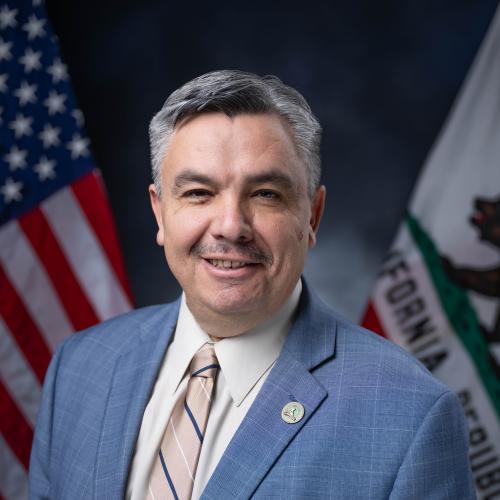
Jesse Arreguín
96% support rate
Top opponent
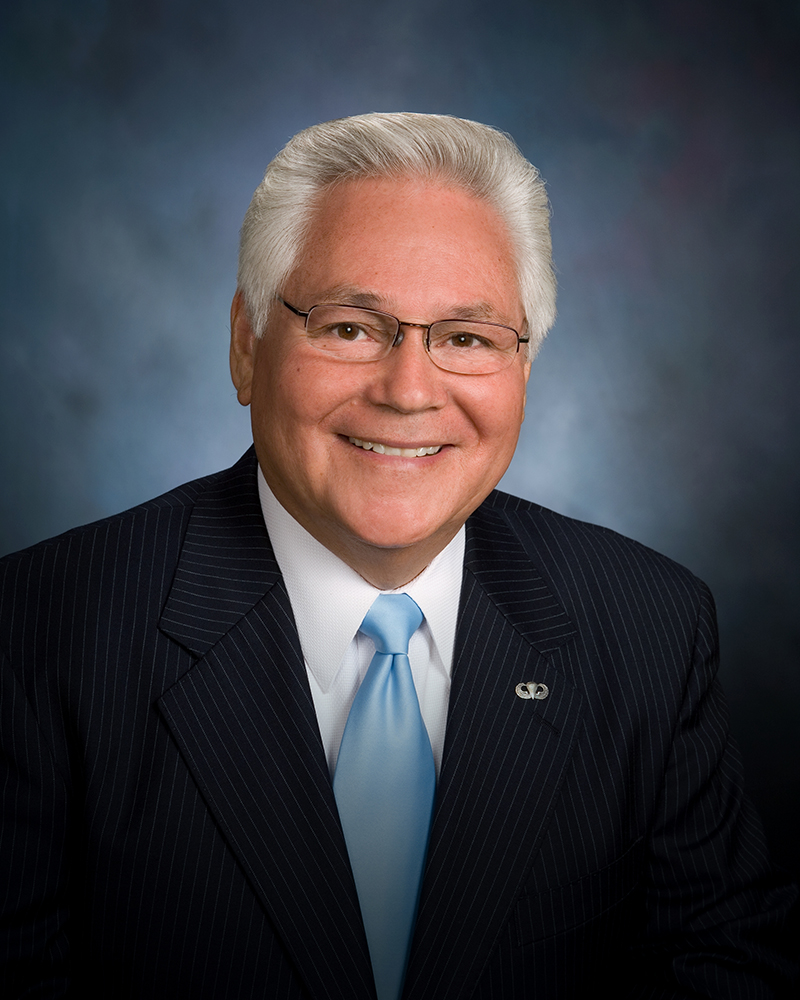
Tony Strickland
7% support rate
Ranked legislators
10
5 support · 5 oppose
Key legislators

Who's moving energy in California

Legislators moving energy in California
Legislator Party Stance Support rate Votes
JA
Jesse Arreguín Senate · District 7
D
Strong +
96% 299
Juan Carrillo
Juan Carrillo House · District 39
D
Strong +
96% 188
Bob Archuleta
Bob Archuleta Senate · District 30
D
Strong +
96% 271
Aisha Wahab
Aisha Wahab Senate · District 10
D
Strong +
95% 344
Esmeralda Soria
Esmeralda Soria House · District 27
D
Strong +
95% 155
Tony Strickland
Tony Strickland Senate · District 36
R
Strong −
7% 263
Diane Dixon
Diane Dixon House · District 72
R
Strong −
8% 246
Marie Alvarado-Gil
Marie Alvarado-Gil Senate · District 4
R
Strong −
9% 178
Roger Niello
Roger Niello Senate · District 6
R
Strong −
11% 217
Brian Jones
Brian Jones Senate · District 40
R
Strong −
11% 177
Showing 61–70 of 196 bills

All energy bills

passed both · California · Assembly Aug 28, 2026

AB 1820: Electric vehicle charging stations: permit fees.

Existing law requires a city, county, or city and county to administratively approve an application to install an electric vehicle charging station through the issuance of a building permit or similar nondiscretionary permit, and requires every local government to adopt an ordinance that creates an expedited, streamlined permitting process for electric vehicle charging stations, as provided. Existing law defines "electric vehicle charging station" to mean any level of electric vehicle supply equipment station that is designed and built in compliance with specified provisions, and delivers electricity from a source outside an electric vehicle into a plug-in electric vehicle. Existing law requires fees charged by a local agency for specified purposes, including permits, to not exceed the estimated reasonable cost of providing the service for which the fee is charged, unless a question regarding the amount of the fee charged in excess of this cost is submitted to, and approved by, 23 of the electors. Existing law, until January 1, 2034, prohibits a city, county, city or county, or charter city from charging a permit fee for a solar energy system that exceeds the estimated reasonable cost of providing the service for which the fee is charged, which cannot exceed $450 plus $15 per kilowatt for each kilowatt above 15kW for residential solar energy systems, and $1,000 plus $7 per kilowatt for each kilowatt between 51kW and 250kW, plus $5 for every kilowatt above 250kW, for commercial solar energy systems, unless the city, county, city and county, or charter city provides substantial evidence of the reasonable cost to issue the permit as part of a written finding and an adopted resolution or ordinance, as provided. This bill, until January 1, 2036, would prohibit a city, county, city or county, or charter city from charging a permit fee for an electric vehicle charging station that exceeds the estimated reasonable cost of providing the service for which the fee is charged, which cannot exceed $500 plus $5 per kilowatt for each kilowatt between 51kW and 250kW, plus $2 for every kilowatt above 250kW, for a level 2 electric vehicle charging station installed at a new or existing multifamily housing development, unless the city, county, city and county, or charter city provides substantial evidence of the reasonable cost to issue the permit as part of a written finding and an adopted resolution or ordinance, as provided. The bill would make its provisions operative on July 1, 2027, but for every city, county, city and county, or charter city with a population of fewer than 200,000 residents, the provisions would apply beginning on January 1, 2028. By requiring local agencies to perform additional duties, the bill would impose a state-mandated local program. This bill would make related findings and declarations. The bill would include findings that changes proposed by this bill address a matter of statewide concern rather than a municipal affair and, therefore, apply to all cities, including charter cities. The California Constitution requires the state to reimburse local agencies and school districts for certain costs mandated by the state. Statutory provisions establish procedures for making that reimbursement. This bill would provide that no reimbursement is required by this act for a specified reason.
passed · California · Assembly Jun 10, 2026

AB 2464: Energy: firm zero-carbon resources.

Existing law requires the State Energy Resources Conservation and Development Commission (Energy Commission) , in consultation with the Public Utilities Commission (PUC) , the Independent System Operator, and the State Air Resources Board, on or before December 31, 2023, to submit to the Legislature an assessment of the firm zero-carbon resources that support a clean, reliable, and resilient electrical grid in the state and will achieve the policy of the state that eligible renewable energy resources and zero-carbon resources supply 100% of all retail sales of electricity to the state's end-use customers and 100% of electricity procured to serve all state agencies by December 31, 2045, as specified. This bill would require the Energy Commission, working with the PUC, to prepare and submit to the Legislature, on or before January 1, 2028, a statewide assessment of the role and necessity of firm zero-carbon resources in meeting the state's clean energy and reliability objectives, potential technologies and strategies for integrating firm zero-carbon resources into the state's energy mix, recommendations on procurement, policy, and planning actions to deploy and support firm zero-carbon resources, and current and projected renewable and firm zero-carbon generation capacity, reliability requirements under varying system conditions, and the cost and emission implications of firm zero-carbon resources.
passed both · California · Senate Aug 21, 2026

SB 1196: Small energization projects: electrical service connections.

The Powering Up Californians Act requires the Public Utilities Commission to determine the criteria for timely service for electrical customers to be energized, including, among other things, categories of timely electric service through energization, as specified. The act requires the commission to establish reasonable average and maximum target energization time periods to ensure that work is completed in a manner that minimizes delay in meeting the date requested by an electrical customer to the greatest extent possible. This bill would require the commission, by September 30, 2027, in a new or existing proceeding, to establish timelines for electrical corporations to respond to and process requests to energize small energization projects, as provided. The bill would require the commission, in establishing the timelines for energization, to require electrical corporations to comply with certain requirements. Under existing law, a violation of an order, decision, rule, direction, demand, or requirement of the commission is a crime. Because the above-described provisions would be part of the act and a violation of a commission action implementing the bill's requirements would be a crime, this bill would impose a state-mandated local program. The California Constitution requires the state to reimburse local agencies and school districts for certain costs mandated by the state. Statutory provisions establish procedures for making that reimbursement. This bill would provide that no reimbursement is required by this act for a specified reason.
passed both · California · Senate Aug 30, 2026

SB 1359: Natural Gas Ratepayer Protection Act.

Existing law vests the Public Utilities Commission with regulatory authority over public utilities, including gas corporations. Existing law authorizes the commission to fix the rates and charges for every public utility and requires that those rates and charges be just and reasonable. Existing law requires, until at least December 31, 2029, each gas corporation to submit to the commission a map that includes, among other things, the location of all potential gas distribution line replacement projects identified in its distribution integrity management plan and any foreseeable gas distribution pipeline replacements, as provided. This bill would require each gas corporation to submit an annual report to the commission that describes its expenditures associated with gas distribution infrastructure replacement and upgrade projects, as provided. The bill would require the commission, as part of its long-term gas planning rulemaking or a successor proceeding, to consider a framework for the depreciation of gas distribution infrastructure that reflects reasonably foreseeable changes in gas demand and is designed to minimize future ratepayer exposure to stranded asset costs, and would authorize the commission to apply the framework in evaluating the depreciation of, and cost recovery for, gas distribution infrastructure replacements and upgrades. Under existing law, a violation of the Public Utilities Act or an order, decision, rule, direction, demand, or requirement of the commission is a crime. Because the above provisions would be part of the Public Utilities Act and a violation of a commission action implementing this bill's requirements would be a crime, the bill would impose a state-mandated local program. The California Constitution requires the state to reimburse local agencies and school districts for certain costs mandated by the state. Statutory provisions establish procedures for making that reimbursement. This bill would provide that no reimbursement is required by this act for a specified reason.
in committee · California · Senate May 14, 2026

SB 1411: Greenhouse Gas Reduction Fund: funding conditions: high-speed rail.

Existing law creates the High-Speed Rail Authority to develop and implement a high-speed rail system in the state. Existing law requires moneys collected by the State Air Resources Board from the auction or sale of certain allowances as part of a market-based compliance mechanism to be deposited into the Greenhouse Gas Reduction Fund and continuously appropriates a portion of the moneys in the fund for various purposes, including a specified portion to the authority for certain purposes. Existing law prohibits the authority from entering into new funding commitments with those moneys for activities outside of the Merced to Bakersfield segment, until June 30, 2030, or when that segment is fully funded, whichever is sooner. Notwithstanding that prohibition, existing law authorizes the authority to enter into new funding commitments outside of the Merced to Bakersfield segment for certain purposes, including for additional activities, not to cumulatively exceed $500,000,000, that maximize the efficiency of delivering the project, as specified. This bill would revise and recast that authorization to instead authorize the authority to enter into new funding commitments with the above-described moneys outside of the Merced to Bakersfield segment in any amount for activities related to early works, as defined, and for projects developed through public partnership agreements or public-private partnership agreements, subject to the requirements that those funding commitments maximize the efficiency of delivering the project and do not delay the completion of the Merced to Bakersfield segment, as specified. By expanding the purposes for which continuously appropriated moneys may be used, the bill would make an appropriation.
Sub-Topics Climate Change Rail
in committee · California · Assembly Apr 14, 2026

AB 2672: Transportation fuels: gasoline specifications: air pollution.

The Warren-Alquist State Energy Resources Conservation and Development Act establishes the State Energy Resources Conservation and Development Commission and prescribes the commission's authorities, duties, and responsibilities pertaining to energy matters, including the provision of independent oversight and analysis of the transportation fuels markets for the protection of consumers. Existing law requires the commission to submit an assessment to the Legislature, on or before January 1, 2024, and every 3 years thereafter, regarding transportation fuels in the state. Existing law requires that the first assessment submitted after January 1, 2026, evaluate the cost and supply impacts of allowing the sale of gasoline with alternative specifications to support a reliable and affordable supply of transportation fuels in California, and, if the evaluation finds that allowing the sale of gasoline with alternative specifications is likely to support a reliable and affordable supply of transportation fuels in California, requires the commission, in coordination with the State Air Resources Board, to recommend a strategy to facilitate the sale of gasoline with those alternative specifications that considers, among other things, the use of a fee associated with the sale of gasoline with those alternative specifications to mitigate for any increase in emissions. This bill would require the commission to triennially submit that assessment on or before July 1, rather than January 1, and would require that the commission's recommended strategy's discussion of that fee include recommendations regarding the appropriate fee amount to protect consumers from price impacts and avoid market disruptions. Existing law requires the commission to consider ways to manage necessary refinery turnarounds and maintenance that would protect the health and safety of employees, local communities, and the public, and minimize the impact of maintenance-related production losses on fuel prices. Existing law authorizes the commission, by regulation, to impose requirements governing the timing of turnaround and maintenance, and requires that those regulations include criteria that are required to be met before a refinery commences a turnaround or maintenance event, including the refiner making resupply plans or other arrangements sufficient to ensure that the loss of production during the turnaround or maintenance event does not adversely affect the California transportation fuels market. This bill would expressly provide that those resupply plans or other arrangements may include the sale of gasoline that meets alternative specifications, as provided. Existing law requires the state board to adopt and implement motor vehicle emission standards, in-use performance standards, and motor vehicle fuel specifications for the control of air contaminants and sources of air pollution, as provided. Existing law authorizes the state board to grant variances from gasoline specifications adopted by the state board and to impose fees and conditions on those variances, as provided. Existing law requires that the revenues from those variance fees, except as provided, be transmitted to the Treasurer for deposit into the High Polluter Repair or Removal Account and makes those revenues available, upon appropriation by the Legislature, to implement a program for accelerated retirement of light-duty vehicles to achieve specified emission reductions. This bill would instead require those revenues to be available, upon appropriation by the Legislature, to implement or fund a program for accelerated replacement of light-duty vehicles manufactured before 2004, or that are at least 20 years old, with cleaner and more efficient motor vehicles. The bill would require the commission to adopt regulations specifying the circumstances under which sellers of gasoline are required to apply for and make use of a variance, as provided. The bill would require those regulations to be adopted and implemented for the purpose of protecting consumers from price impacts associated with supply disruptions, as provided. The bill would require the state board to consider amendments to the variance process, as provided. This bill would include a change in state statute that would result in a taxpayer paying a higher tax within the meaning of Section 3 of Article XIIIA of the California Constitution, and thus would require for passage the approval of 23 of the membership of each house of the Legislature.
passed · California · Senate Apr 16, 2026

SR 98: Relative to Heat Pump Week in California.

Senate Resolution 98 designates the week of April 11 to April 17, 2026, as Heat Pump Week in California to raise awareness about electric heat pump technology. This resolution directly affects homeowners, businesses, and the general public by encouraging the adoption of heat pumps for space heating, cooling, and water heating. The text highlights that these systems are more energy-efficient than traditional gas equipment and can help lower utility bills while reducing greenhouse gas emissions. By promoting this technology, the Senate aims to support the state's broader goals of achieving carbon neutrality and improving public health through cleaner air.
Sub-Topics Climate Change
in committee · California · Senate May 14, 2026

SB 1215: Electrical corporations: electric vehicle charging stations: multifamily housing properties.

Existing law vests the Public Utilities Commission with regulatory authority over public utilities, including electrical corporations. Existing law requires each electrical corporation, not later than February 28, 2021, to file an advice letter for, and requires the commission, not later than June 30, 2021, to approve, a new tariff or rule that authorizes each electrical corporation to design and deploy all electrical distribution infrastructure on the utility side of the customer's meter for all customers installing separately metered infrastructure to support charging stations, other than those in single-family residences. Existing law requires the commission to establish strategies and quantifiable metrics to maximize the use of feasible and cost-effective electric vehicle grid integration, as defined, by January 1, 2030, as specified. This bill would require the commission, on or before March 1, 2027, to establish targets for each electrical corporation to install electric vehicle charging stations at multifamily housing properties. The bill would require the commission to ensure the targets reduce costs for all ratepayers, and to require electrical corporations to make annual progress reports and to provide to the commission corresponding maps that identify the proposed multifamily housing properties within its service territory where use will be highest based on distribution system planning and experience with electric vehicle charging station infrastructure. The bill would require the commission, in establishing the targets, to determine whether to impose certain requirements on an electrical corporation, including a requirement that an electrical corporation recover all costs, to the extent not covered by nonratepayer funding, for deploying the electric vehicle charging stations, including the costs for administration and implementation, as operations and maintenance costs rather than as capital costs. Under existing law, a violation of the Public Utilities Act or any order, decision, rule, direction, demand, or requirement of the commission is a crime. Because the provisions of the bill would be a part of the act and therefore a violation of the bill's requirements, or a violation of a commission action implementing the bill's requirements, would be a crime, this bill would impose a state-mandated local program. The California Constitution requires the state to reimburse local agencies and school districts for certain costs mandated by the state. Statutory provisions establish procedures for making that reimbursement. This bill would provide that no reimbursement is required by this act for a specified reason.
Sub-Topics Electric Vehicles
passed · California · Senate Aug 13, 2026

SB 1138: Load-serving entities: resource adequacy requirements.

Existing law vests the Public Utilities Commission with regulatory authority over public utilities, including electrical corporations. Existing law requires the commission, in consultation with the Independent System Operator, to establish resource adequacy requirements for all load-serving entities, as provided. Existing law defines load-serving entity, for that purpose, as an electrical corporation, electric service provider, or community choice aggregator. Existing law requires each load-serving entity to be subject to the same requirements for resource adequacy, the renewables portfolio standard program, and the integrated resource planning process that apply to electrical corporations, as provided. This bill would require the commission to authorize a load-serving entity to elect to demonstrate compliance with resource adequacy requirements by selling to, or otherwise making transactions with, another load-serving entity, and would require those transactions to not represent more than 25% of a load-serving entity's compliance obligations and be of a short-term duration. The bill would require the commission to authorize those transactions to be denominated in the same unit of time used to denominate resource adequacy compliance requirements. The bill would authorize the commission to suspend or adjust that authority of a load-serving entity to sell to, or otherwise make transactions with, another load-serving entity, as specified. Under existing law, a violation of the Public Utilities Act or any order, decision, rule, direction, demand, or requirement of the commission is a crime. Because the above provisions would be a part of the act, and because a violation of a commission action implementing the above prohibition would be a crime, the bill would impose a state-mandated local program. The California Constitution requires the state to reimburse local agencies and school districts for certain costs mandated by the state. Statutory provisions establish procedures for making that reimbursement. This bill would provide that no reimbursement is required by this act for a specified reason.
passed · California · Assembly Aug 13, 2026

AB 2748: Building standards: affordable housing developments: electric vehicle charging.

Existing law, the State Housing Law, establishes statewide construction and occupancy standards for buildings used for human habitation. Existing law requires the building department of every city or county to enforce within its jurisdiction all the provisions published in the California Building Standards Code and the provisions of the State Housing Law, as provided. Existing law makes any violation of the State Housing Law a misdemeanor punishable by a fine not exceeding $1,000, by imprisonment not exceeding 6 months, or by both. Existing law requires the California Building Standards Commission and the Department of Housing and Community Development to research and develop, and authorizes those entities to propose for adoption by the commission, mandatory building standards for the installation of electric vehicle charging stations in existing multifamily dwellings, hotels, motels, and nonresidential developments, as provided. This bill would require a new or existing affordable housing development, as defined, for which a permit application is submitted between January 1, 2025, and December 31, 2028, to comply with either the requirements for installation of low power Level 2 or higher electric vehicle charging receptacles in the 2025 California Green Building Standards Code, as provided, or the applicable requirements for installation of low power Level 2 or higher electric vehicle charging receptacles in the 2024 supplement to the 2022 edition of the California Green Building Standards Code. The bill would repeal these provisions on January 1, 2030. By adding to the duties of local officials, and by expanding the scope of a crime, this bill would impose a state-mandated local program. The bill would include findings that changes proposed by this bill address a matter of statewide concern rather than a municipal affair and, therefore, apply to all cities, including charter cities. The California Constitution requires the state to reimburse local agencies and school districts for certain costs mandated by the state. Statutory provisions establish procedures for making that reimbursement. This bill would provide that with regard to certain mandates no reimbursement is required by this act for a specified reason. With regard to any other mandates, this bill would provide that, if the Commission on State Mandates determines that the bill contains costs so mandated by the state, reimbursement for those costs shall be made pursuant to the statutory provisions noted above.
Sub-Topics Electric Vehicles
Showing 61 to 70 of 196 bills
Previous 1 6 7 8 20 Next