Issue · Education

Education

Every education bill, vote, and legislator stance in California, automatically classified by Maddy, our AI policy reader.

Total bills
420
2025-2026 Regular Session
Top supporter
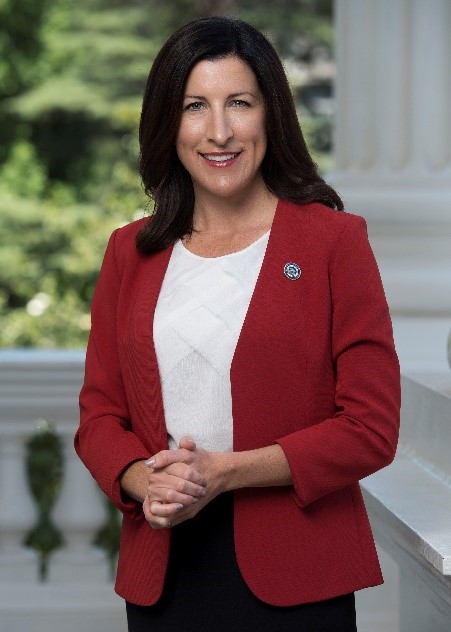
Pilar Schiavo
100% support rate
Top opponent
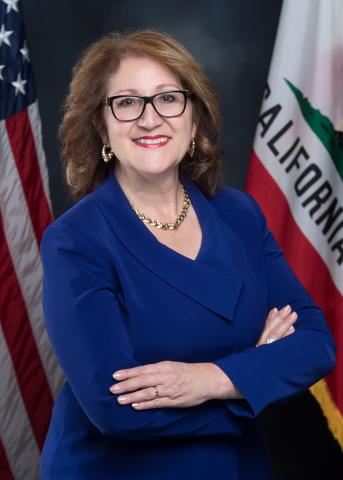
Natasha Johnson
0% support rate
Ranked legislators
10
5 support · 5 oppose
Key legislators

Who's moving education in California

Legislators moving education in California
Legislator Party Stance Support rate Votes
Pilar Schiavo
Pilar Schiavo House · District 40
D
Strong +
100% 467
Cottie Petrie-Norris
Cottie Petrie-Norris House · District 73
D
Strong +
100% 451
Eloise Reyes
Eloise Reyes Senate · District 29
D
Strong +
100% 393
Ash Kalra
Ash Kalra House · District 25
D
Strong +
99% 609
Catherine Stefani
Catherine Stefani House · District 19
D
Strong +
99% 603
Natasha Johnson
Natasha Johnson House · District 63
R
Strong −
0% 329
Stan Ellis
Stan Ellis House · District 32
R
Strong −
0% 504
James Gallagher
James Gallagher House · District 3
R
Strong −
2% 324
Ali Macedo
Ali Macedo House · District 33
R
Strong −
3% 580
Roger Niello
Roger Niello Senate · District 6
R
Strong −
4% 487
Showing 331–340 of 420 bills

All education bills

passed · California · Assembly Aug 29, 2025

AB 598: School safety: School Mapping Data Grant Program.

Existing law provides that it is the intent of the Legislature that all public schools, in kindergarten, and grades 1 to 12, inclusive, operated by school districts, in cooperation with specified entities and individuals, develop a comprehensive school safety plan, as provided. Existing law provides that school districts and county offices of education are responsible for the overall development of a comprehensive school safety plan for each of its schools, as provided. Existing law, the Charter Schools Act of 1992, provides for the establishment and operation of charter schools, including countywide charter schools, and requires a petition for the establishment of a charter school to contain comprehensive descriptions of various matters and procedures, including procedures that the charter school will follow to ensure the health and safety of pupils and staff. The act requires those procedures to also require the development of a school safety plan, as provided. Existing law encourages, on or before July 1, 2030, each public school, including charter schools, with an enrollment of 100 pupils or more to implement a web-based or app-based school safety program that includes certain program parameters. If a school implements a web-based or app-based school safety program, existing law requires the school to ensure that the program developers ensure that best practices are implemented to protect the security and data of all pupils and staff listed within the program, as provided. This bill, upon appropriation by the Legislature, would establish the School Mapping Data Grant Program under the administration of the Office of Emergency Services to provide one-time grants to participating school districts, county offices of education, and charter schools to enter into contracts with qualified vendors providing school mapping data, as provided, for purposes of assisting public safety agencies in efficiently responding to on-campus emergencies at schools. The bill would require a school mapping data program, to be eligible to receive funding under the grant program, to include the same program parameters as, and to have the program developers implement the same best practices to protect the security and data of all pupils and staff as, a web-based or app-based school safety program, as described above. Existing constitutional provisions require that a statute that limits the right of access to the meetings of public bodies or the writings of public officials and agencies be adopted with findings demonstrating the interest protected by the limitation and the need for protecting that interest. This bill would make legislative findings to that effect.
passed · California · Assembly Aug 29, 2025

AB 731: Pupil instruction: dual enrollment: College and Career Access Pathways partnerships.

Existing law authorizes the governing board of a community college district to enter into a College and Career Access Pathways (CCAP) partnership with the governing board of a school district, a county office of education, or the governing body of a charter school for the purpose of offering or expanding dual enrollment opportunities for pupils who may not already be college bound or who are underrepresented in higher education, as provided. Existing law requires the partnership agreement to outline the terms of the partnership, as specified, and to establish protocols for information sharing, joint facilities use, and parental consent for high school pupils to enroll in community college courses. Existing law requires the protocols to only require a high school pupil participating in a CCAP partnership to submit one parental consent form and principal recommendation for the duration of the pupil's participation in the CCAP partnership. This bill would revise the CCAP partnership provisions to eliminate the requirement that the protocols require principal recommendation. Existing law requires the Chancellor of the California Community Colleges to revise the special part-time student application process to allow a pupil to complete one application for the duration of the pupil's attendance at a community college as a special part-time student participating in a CCAP partnership agreement. This bill would require a CCAP partnership agreement to also establish protocols that authorize a pupil to complete one application for the duration of the pupil's attendance at a community college as a special part-time student participating in a CCAP partnership agreement. Existing law authorizes a community college district to allow a special part-time student participating in a CCAP partnership agreement to enroll in up to a maximum of 15 units per term in courses offered at the community college campus or the participating high school campus if certain circumstances are satisfied, including that the units constitute no more than 4 community college courses per term. This bill would eliminate the 4 community college courses per term limit for a special part-time student enrolling in up to 15 units under a CCAP partnership agreement. Existing law requires, for each CCAP partnership agreement, the affected community college district and school district, county office of education, or charter school to annually report specified information to the office of the Chancellor of the California Community Colleges, including the total number of community college courses, by course category and type and by schoolsite, enrolled in by CCAP partnership participants. This bill instead would require the affected community college district and school district, county office of education, or charter school to annually report the total number of high school pupils who successfully completed 12 or more units of college coursework by graduation, completed a certificate, or completed the courses required for an associate degree or an associate degree for transfer.
passed · California · Assembly Aug 29, 2025

AB 887: Pupil instruction: high schools: computer science courses: California Computer Science Demonstration Grant Program: reporting.

Existing law creates the California Computer Science Coordinator as a position within the State Department of Education to provide statewide coordination in, among other things, implementing the computer science content standards and leading the implementation of the Computer Science Strategic Implementation Plan, as provided. This bill would establish the California Computer Science Demonstration Grant Program for specified purposes, including increasing the number of public high schools offering a computer science course to increase pupil access to computer science education and increasing the computer science course access of pupils eligible for free or reduced-priced meals and pupils that are underrepresented in the field of computer science. The bill would also establish the California Computer Science Demonstration Grant Program Working Group that includes the coordinator and nonprofit organizations and private industry stakeholders with relevant expertise and experience in computer science education. The bill would authorize only public high schools that do not offer computer science courses to be eligible to voluntarily participate in the grant program. The bill would require the funding entity or funding entities, as defined, to administer the grant program. If there are multiple funding entities, the bill, among other things, would require each funding entity to determine how the funds that it contributes to the grant program will be spent, provided that expenditure aligns with the grant program's purposes, and require the funding entities to coordinate implementation of the grant program. The bill would require the funding entities, in coordination with the working group, to select the public high schools to participate in the grant program, as provided. The bill would require the grant program to be funded through contributions, gifts, grants, in-kind donations, and donations from the funding entity or funding entities, and would specify the allowable uses of those funds. The bill would require the funding entity or funding entities, in coordination with the working group, to evaluate the effectiveness of the grant program and submit an interim report to certain legislative committees on or before August 1, 2027, and a final report on or before July 1, 2028, as specified. The bill would repeal the grant program's provisions as of January 1, 2029. The bill would separately require the department, on or before June 30, 2028, and annually thereafter, to publicly post specified computer science course-related data on its internet website, as specified.
Sub-Topics Government Spending
passed both · California · Assembly Sep 13, 2025

ACR 40: Student financial aid: Free Application for Federal Student Aid (FAFSA) data.

This measure would state, among other things, the Legislature and the State of California's commitment to protecting, to the fullest extent of the law, all the data and information provided by students and their families to California's postsecondary education.
passed · California · Assembly Jun 5, 2025

AB 48: Education finance: postsecondary education facilities: College Health and Safety Bond Act of 2026.

(1) The California Constitution prohibits the Legislature from creating a debt or liability that singly or in the aggregate with any previous debts or liabilities exceeds the sum of $300,000, except by an act that (A) authorizes the debt for a single object or work specified in the act, (B) has been passed by a 23 vote of all the Members elected to each house of the Legislature, (C) has been submitted to the people at a statewide general or primary election, and (D) has received a majority of all the votes cast for and against it at that election. This bill would set forth the College Health and Safety Bond Act of 2026 as a state general obligation bond act that would provide $____ to construct and modernize education facilities, as specified. This bond act would become operative only if approved by the voters at an undefined statewide election. The bill would also provide for the submission of the bond act to the voters at that election. (2) Existing law establishes the California State University, under the administration of the Trustees of the California State University, and the University of California, under the administration of the Regents of the University of California, as 2 of the segments of public postsecondary education in the state. This bill would require the Trustees and the Regents to comply with certain conditions, as provided, before receiving funds from the 2026 University Capital Outlay Bond Fund established pursuant to the College Health and Safety Bond Act of 2026. (3) This bill, except for the provision making the provisions of the bill severable, would become operative upon the adoption of the College Health and Safety Bond Act of 2026 by the voters at an undefined statewide election.
Sub-Topics Higher Education
signed · California · Assembly Jul 14, 2025

AB 1034: Teacher credentialing: programs of professional preparation: youth mental health.

Existing law requires the Commission on Teacher Credentialing to establish standards for the issuance and renewal of credentials. Existing law requires, as a minimum requirement for a preliminary multiple subject, single subject, or education specialist teaching credential, the satisfactory completion of a program of professional preparation that, among other things, has been accredited by the Committee on Accreditation on the basis of standards of program quality and effectiveness that have been adopted by the commission and provides specified experience that addresses, among other things, health education, including the study of nutrition, cardiopulmonary resuscitation, and the physiological and sociological effects of the abuse of alcohol, narcotics, and drugs and the use of tobacco. This bill would require that health education to also include a basic understanding of youth mental health.
passed · California · Assembly Aug 17, 2026

AB 65: School and community college employees: paid disability and parental leave.

Existing law requires the governing board of a school district, and the governing board of a community college district, to provide for a leave of absence from duty for a certificated employee or an academic employee of the district who is required to be absent from duty because of pregnancy, miscarriage, childbirth, and recovery from those conditions. Existing law authorizes the governing board of a school district, and the governing board of a community college district, to provide for a leave of absence from duty as it deems appropriate for a female employee in the classified service of the district who is required to be absent from duty because of pregnancy or convalescence following childbirth. Existing law authorizes a governing board to adopt rules and regulations about leaves of absence for classified employees for these purposes, and authorizes a governing board to provide in the rules and regulations whether the leave granted shall be with or without pay, as provided. This bill would delete the latter provisions authorizing a governing board of a school district and the governing board of a community college district to adopt those rules and regulations. The bill instead would require a public school employer to, for a certificated employee or an employee in the classified service of the public school employer, and would require a community college district to, for an academic employee or an employee in the classified service of the community college district, provide up to 14 weeks of a leave of absence with specified pay benefits for an employee who is required to be absent from duty because of pregnancy, miscarriage, childbirth, termination of pregnancy, or recovery from those conditions, as provided. The bill would authorize the paid leave to begin before and continue after childbirth if the employee is actually disabled by pregnancy, childbirth, termination of pregnancy, or a related condition. The bill would prohibit a leave of absence taken pursuant to these provisions from being deducted from other leaves of absence, as provided, and would require public school employers and community college districts to maintain group health coverage for an employee who takes a leave of absence under these provisions for the duration of the leave of absence at the same level and under the same conditions that coverage would have been provided if the employee had not taken a leave of absence. The bill would prohibit any other eligibility requirements, including, but not limited to, minimum hours worked or length of service, before an employee disabled by pregnancy, childbirth, termination of pregnancy, or related medical conditions is eligible for a paid leave of absence under these provisions.
Sub-Topics Paid Leave
signed · California · Assembly Jul 14, 2025

AB 784: Special education: specialized deaf and hard-of-hearing services.

Existing law requires local educational agencies to identify, locate, and assess individuals with exceptional needs and to provide those individuals with a free appropriate public education in the least restrictive environment, with special education and related services, as reflected in an individualized education program. Existing law defines "special education" as specially designed instruction, at no cost to the parent, to meet the unique needs of individuals with exceptional needs. Existing law includes in that definition speech-language pathology services and certain other services if the service is considered special education rather than a designated instruction and service or related service under state standards. This bill would prohibit those provisions from being construed to prohibit an individualized education program from including specialized deaf and hard-of-hearing related services as the only services.
Sub-Topics Special Education
passed · California · Assembly Aug 29, 2025

AB 347: Pupil instruction: animal dissection.

Existing law authorizes a pupil with a moral objection to dissecting or otherwise harming or destroying an animal to refrain from participation in an educational project that involves the harmful or destructive use of animals. Existing law authorizes, if the pupil chooses to refrain and a teacher believes that an adequate alternative education project is possible, the teacher to work with the pupil to develop and agree upon an alternative education project in order to obtain the knowledge, information, or experience required by the course of study in question. Existing law requires each teacher teaching a course that uses live or dead animals or animal parts to inform the pupils of their rights pursuant to these provisions. Existing law applies these provisions to all levels of instruction in all public schools operating programs in kindergarten and grades 1 to 12, inclusive. Existing law requires the Superintendent of Public Instruction to establish and implement a system of complaint processing, known as the Uniform Complaint Procedures, for specified educational programs. This bill, commencing July 1, 2026, if a pupil chooses to refrain from participation in an assignment or assessment involving the dissection of animals, would require a teacher to provide an alternative assignment or assessment. The bill would prohibit a pupil's grades from being impacted as a means of penalizing the pupil for exercising their rights concerning the dissection of animals. The bill would require a teacher to provide, at a pupil's request, any sourcing information provided by the vendor or provider of the animals and information about the chemicals used to preserve the animals for dissection to which the pupil may be exposed. The bill would require a teacher, or a public school on behalf of the teacher, to provide written notice of the pupils' rights that includes specified information, including, among other things, the above-described rights and the complaint procedures described below. The bill would require, by the start of the 2026–27 school year, the State Department of Education to develop a template that a teacher, or a public school on behalf of the teacher, would be authorized to use to provide this written notice and to make the template available on its internet website. The bill would apply the above-described provisions to all public schools operating programs in kindergarten or any of grades 1 to 12, inclusive, including, but not limited to, public schools operated by school districts, county offices of education, charter schools, or state special schools, to the extent that the public school chooses to offer a course of study that uses live or dead animals or animal parts for purposes of dissection. The bill would encourage, by July 1, 2028, public schools to explore using effective alternative methods in lieu of using live or dead animals or animal parts for dissection in a course of study, except as provided. The bill would require, commencing July 1, 2026, the Uniform Complaint Procedures to apply to pupils' rights to refrain from participation in an assignment or assessment involving the dissection of animals and to choose an alternative assignment or assessment.
passed · California · Senate Sep 13, 2025

SB 494: Charter schools: establishment prohibition and renewal procedures.

(1) Existing law, the Charter Schools Act of 1992, authorizes the establishment, operation, and governance of charter schools. Existing law authorizes a charter school that has an approved charter to receive funding for nonclassroom-based instruction only if a determination for funding is made by the State Board of Education, as specified. The act prohibits, from January 1, 2020, to January 1, 2026, inclusive, the approval of a petition for the establishment of a new charter school offering nonclassroom-based instruction, as specified. This bill would extend that prohibition to continue through January 1, 2027. (2) Existing law, until January 1, 2026, sets out performance standards and procedures for the renewal of the charter of an existing charter school, including, among other things, the use of verified data, as provided. Existing law sets out revised standards and procedures that are operative on and after January 1, 2026, that, among other things, no longer requires a chartering authority to use verified data and instead requires a chartering authority to use only the data reported on the California School Dashboard in making a renewal decision, as provided. This bill would extend, until January 1, 2027, the operation of the performance standards and procedures for the renewal of charter schools that would otherwise be inoperative on January 1, 2026, and would delay the operation of the revised standards and procedures until January 1, 2027. To the extent the bill imposes new duties on local educational agencies acting as chartering authorities, the bill would impose a state-mandated local program. (3) The California Constitution requires the state to reimburse local agencies and school districts for certain costs mandated by the state. Statutory provisions establish procedures for making that reimbursement. This bill would provide that, if the Commission on State Mandates determines that the bill contains costs mandated by the state, reimbursement for those costs shall be made pursuant to the statutory provisions noted above.
Sub-Topics School Choice
Showing 331 to 340 of 420 bills
Previous 1 33 34 35 42 Next