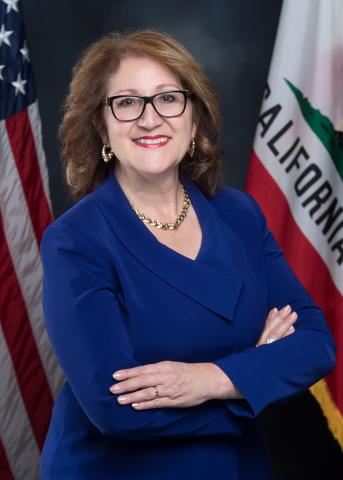
(1) Existing law authorizes a school district, with the approval of the governing board of the school district, to procure design-build contracts for public works projects in excess of $1,000,000, awarding the contract to either the low bid or the best value, as provided. Existing law requires specified information relating to design-build bid proposals to be verified under penalty of perjury. Existing law, until January 1, 2029, authorizes a school district, with the approval of its governing board, to procure alternative design-build contracts for public works projects in excess of $5,000,000, awarding the contract to either the low bid or the best value, as provided. Existing law authorizes county boards of education that have had all or a portion of certain duties and functions relating to expenses transferred to them by the county board of supervisors to acquire, lease, lease-purchase, hold, and convey real property for purposes of housing the offices and the services of the county superintendent of schools. This bill would authorize county superintendents of schools to procure the same above-described design-build and alternative design-build contracts, subject to the same requirements that are applicable to school districts, except that the bill would, notwithstanding any other law, require county superintendents of schools to have exclusive authority to award design-build and alternative design-build contracts on behalf of a county office of education and county board of education. The bill would include findings that these provisions address a matter of statewide concern and, therefore, apply to all counties, including charter counties. By expanding the crime of perjury, the bill would impose a state-mandated local program. (2) This bill would incorporate additional changes to Section 17250.20 of the Education Code proposed by SB 1107 to be operative only if this bill and SB 1107 are enacted and this bill is enacted last. (3) The California Constitution requires the state to reimburse local agencies and school districts for certain costs mandated by the state. Statutory provisions establish procedures for making that reimbursement. This bill would provide that no reimbursement is required by this act for a specified reason.
Existing law, the Mobilehome Residency Law, prescribes various terms and conditions of tenancies in mobilehome parks. The law defines "mobilehome park" for these purposes to mean an area of land where 2 or more mobilehome sites are rented, or held out for rent, to accommodate mobilehomes used for human habitation. The law caps the amount by which management of a qualified mobilehome park may increase the gross rental rate for a tenancy over the course of any 12-month period. The cap is the lower of 5% of the lowest gross rental rate charge for a tenancy at any time during the preceding 12 months or 3% of that amount plus the percentage change in the cost of living. Under that law, a mobilehome park is subject to that cap if it is located within and governed by the jurisdictions of 2 or more incorporated cities. The law repeals these rent cap provisions on January 1, 2030. This bill would additionally make any mobilehome park that is located in the City of Torrance subject to that cap, as specified, and would extend the repeal of these rent cap provisions to January 1, 2036. For a mobilehome park that is located in the City of Torrance, the bill would cap the rent on January 1, 2027, at the amount of rent as of January 5, 2026, plus the maximum permissible increase described above. This bill would make legislative findings and declarations as to the necessity of a special statute for the City of Torrance.
(1) Existing law requires the governing board of a school district to give diligent care to the health and physical development of pupils and authorizes the governing board of a school district to employ properly certified persons for this purpose. Existing law requires a school of a school district or county office of education and a charter school to notify pupils and parents or guardians of pupils no less than twice during the school year on how to initiate access to available pupil mental health services on campus or in the community, or both, as provided. Existing law requires the State Department of Education, on or before June 1, 2025, to develop model referral protocols for addressing pupil behavioral health concerns, as provided. This bill would require the department, on or before July 1, 2027, in consultation with appropriate stakeholders, to review and, as necessary, update the model referral protocols to include guidance on providing equity-centered mental health supports in case of a local emergency related to immigration enforcement activities or deportations of pupils or their family members. (2) Existing law requires the governing board or body of a local educational agency that serves pupils in grades 7 to 12, inclusive, before January 31, 2026, to adopt a policy on referral protocols for addressing pupil behavioral health concerns in grades 7 to 12, inclusive, as provided. This bill would require those local educational agencies, on or before July 1, 2028, to review and, as necessary, update that policy to include guidance on providing equity-centered mental health supports in case of a local emergency related to immigration enforcement activities or deportations of pupils or their family members. The bill would authorize an updated policy to either be based on the updated model referral protocols developed by the department or developed in consultation with school and community stakeholders and school-linked behavioral health professionals, and would require the updated policy to, at a minimum, address procedures relating to referrals to behavioral health professionals and support services. By imposing additional duties on local educational agencies, the bill would impose a state-mandated local program. (3) The California Constitution requires the state to reimburse local agencies and school districts for certain costs mandated by the state. Statutory provisions establish procedures for making that reimbursement. This bill would provide that, if the Commission on State Mandates determines that the bill contains costs mandated by the state, reimbursement for those costs shall be made pursuant to the statutory provisions noted above.
Existing law establishes the California State University, under the administration of the Trustees of the California State University, the University of California, under the administration of the Regents of the University of California, the California Community Colleges, under the administration of the Board of Governors of the California Community Colleges, and independent institutions of higher education, as defined, as 4 segments of postsecondary education in the state. This bill would establish the Designation of California Asian American- and Native Hawaiian Pacific Islander-Serving Institutions to recognize campuses of those segments of postsecondary education that excel at providing academic resources to Asian American, Native Hawaiian, and Pacific Islander students. The bill would establish a California Asian American- and Native Hawaiian Pacific Islander-Serving Institutions governing board to designate colleges and universities as California Asian American- and Native Hawaiian Pacific Islander-Serving Institutions and would require the office of the Chancellor of the California Community Colleges to, among other duties, develop the application processes and to process and present initial and renewal applications to receive this designation to the governing board, as specified. The bill would make an initial and renewal designation valid for 5 years.
Existing law states the policy of the State of California is to afford all persons in public schools, regardless of their disability, gender, gender identity, gender expression, nationality, race or ethnicity, religion, sexual orientation, or any other specified characteristic, equal rights and opportunities in the educational institutions of the state. Existing law establishes the Office of Civil Rights, under the administration of the Government Operations Agency. Existing law requires the Office of Civil Rights to employ a Religious Discrimination Prevention Coordinator, a Race and Ethnicity Discrimination Prevention Coordinator, a Gender Discrimination Prevention Coordinator, and an LGBTQ Discrimination Prevention Coordinator. Existing law requires each of the coordinators be appointed by the Governor and confirmed by the Senate. This bill would require the Office of Civil Rights to employ a Disability Discrimination Prevention Coordinator to be appointed by the Governor and confirmed by the Senate. The bill would change the title of the LGBTQ Discrimination Prevention Coordinator to instead be the LGBTQ+ Discrimination Prevention Coordinator. The bill would require each of the coordinators, in consultation with the State Department of Education, and under the supervision of the Government Operations Agency, to, among other things, (1) develop, consult on, and provide discrimination education to teachers, staff, governing board and body members, administrators, and other local educational agency personnel to identify and proactively prevent discrimination, as provided, (2) provide technical assistance, upon specified request, to local educational agencies to access restorative justice resources, training, and practitioners, and (3) engage with local educational agencies to ensure administrators are equipped to address conflicts at an early stage with the goal of proactively resolving incidents of discrimination, as specified. This bill would require the Office of Civil Rights to employ a Deputy Coordinator on Anti-Black Racism, a Deputy Coordinator on Anti-Asian American, Native Hawaiian, and Pacific Islander (Anti-AANHPI) Discrimination, a Deputy Coordinator on Anti-Latino Discrimination, and a Deputy Coordinator on Anti-Native American Discrimination, and would require these deputy coordinators to report directly to the Race and Ethnicity Discrimination Prevention Coordinator. The bill would require the Office of Civil Rights to provide resources and training on how to properly assist in cases of discrimination that involve the intersectionality of protected characteristics, as provided.
(1) Existing law, the California Healthy Youth Act, requires school districts, defined to include county boards of education, county superintendents of schools, the California School for the Deaf, the California School for the Blind, and charter schools, to ensure that all pupils in grades 7 to 12, inclusive, receive comprehensive sexual health education and human immunodeficiency virus (HIV) prevention education, as specified. This bill would authorize the State Department of Education to monitor compliance with the requirements of the California Healthy Youth Act as part of its annual compliance monitoring of state and federal programs. (2) Existing law establishes the Office of School-Based Health Programs for the purpose of assisting local educational agencies regarding the current health-related programs under the purview of the State Department of Education including, among other duties, coordinating school health program activities with public health, social services, environmental, and local educational agencies, and other public and private entities. This bill would prohibit a local educational agency, as defined, from prohibiting school-based health centers, as defined, that serve schools of the local educational agency from making internal and external condoms available and easily accessible to pupils in any of grades 7 to 12, inclusive, at the school-based health center site and would require a school of a local educational agency to allow condoms to be made available to pupils in any of grades 7 to 12, inclusive, during the course of, or in connection with, educational or public health programs and initiatives, as provided. To the extent the bill imposes additional duties on local educational agencies, the bill would impose a state-mandated local program. (3) Under existing law, the Sherman Food, Drug, and Cosmetic Law, the State Department of Public Health generally regulates the packaging, labeling, advertising, and sale of food, drugs, devices, and cosmetics, in accordance with the Federal Food, Drug, and Cosmetic Act. A violation of those provisions is generally a crime. Existing law sets forth various other provisions relating to the furnishing and health care coverage of certain types of contraception. This bill would, with certain exceptions, prohibit a retail establishment, as defined, from refusing to furnish nonprescription contraception to a person solely on the basis of age by means of any conduct, including, but not limited to, requiring the customer to present identification for purposes of demonstrating their age. Under the bill, a violation of that prohibition would be exempt from the above-described criminal penalty. (4) The California Constitution requires the state to reimburse local agencies and school districts for certain costs mandated by the state. Statutory provisions establish procedures for making that reimbursement. This bill would provide that, if the Commission on State Mandates determines that the bill contains costs mandated by the state, reimbursement for those costs shall be made pursuant to the statutory provisions noted above.
Existing law establishes the Instructional Quality Commission and requires the commission to, among other things, recommend curriculum frameworks to the State Board of Education. This bill would require the commission, during the next revision of the publication "Health Framework for California Public Schools," to consider including, and recommending for adoption by the state board, specific content related to sexual health instruction to educate pupils about dating abuse and digital violence, as described.
The Classroom Instructional Improvement and Accountability Act, an initiative approved by the voters as Proposition 98 at the November 8, 1988, statewide general election, amended the California Constitution to, among other things, set forth a formula for computing the minimum amount of revenues that the state is required to appropriate for the support of school districts and community college districts in any given fiscal year. The California Constitution creates the Public School System Stabilization Account in the General Fund and requires the Controller to transfer, pursuant to a schedule provided by the Director of Finance, a specified amount from the General Fund to the account in each fiscal year, except as provided. The California Constitution generally prohibits the total annual appropriations subject to limitation of the state and each local government from exceeding the appropriations limit of the entity of government for the prior fiscal year, adjusted for the change in the cost of living and the change in population. The California Constitution defines "appropriations subject to limitation" for these purposes. Existing law establishes a public school financing system that requires state funding for county superintendents of schools, school districts, and charter schools to be calculated pursuant to a local control funding formula (LCFF) , as specified. Under existing law, school districts that do not receive an apportionment of state funds under the LCFF because their local revenues exceed the amount calculated pursuant to the LCFF are considered "basic aid school districts" or "excess tax entities." This measure would establish the Equalization Reserve Account in the General Fund. The measure would require the Controller, in any fiscal year in which there is an increase over the preceding fiscal year in the minimum amount of revenues the state is required to appropriate for the support of school districts and community college districts, to transfer from the General Fund to the Equalization Reserve Account an amount equal to the total amount transferred from the General Fund to the Public School System Stabilization Account in that fiscal year, as provided. The measure would require interest earned on funds in the Equalization Reserve Account to be deposited in the account and would require the Legislature, in each fiscal year, to allocate at least 80% of that interest to increase per-pupil funding in non-basic aid school districts. The measure would define non-basic aid school districts as school districts that received an apportionment of state funds under the LCFF in any of the preceding 3 fiscal years. The measure would authorize the Legislature to suspend the required transfers from the General Fund in any fiscal year in which average per-pupil funding in non-basic aid school districts equals or exceeds the average per-pupil funding in basic aid school districts. The measure would prohibit the allocation of funds transferred to the account from the General Fund. The measure would exclude funds transferred to or allocated from the account from computations of the minimum amount of revenues that the state is required to appropriate for the support of school districts and community college districts, from the moneys allocated for purposes of meeting that minimum funding obligation, and from the total annual state appropriations subject to the limitation described above.
Existing law requires the Superintendent of Public Instruction, the Controller, and the Director of Finance to develop and update as necessary, standards and criteria to be reviewed and adopted by the State Board of Education and to be used by local educational agencies in the development of annual budgets and the management of subsequent expenditures from that budget, as specified. Existing law requires these standards and criteria to include, among other things, multiyear commitments, including cost-of-living adjustments. This bill would specify that the multiyear commitments are for only the current fiscal year and the subsequent fiscal year. The bill would require the state board, on or before March 1, 2027, to amend specified related regulations, as provided, and would require the State Department of Education to modify the Standardized Account Code Structure reporting software infrastructure to eliminate reporting fields for a 2nd subsequent fiscal year and, commencing with the 2027–28 fiscal year, ensure that the system reflects a 2-year operational and forecasting structure. Existing law requires the governing board of a school district and each county board of education, on or before July 1 of each year, to adopt a budget, as specified, and requires that budget to be filed with the county superintendent of schools or the Superintendent, respectively. Existing law requires the county superintendent of schools or the Superintendent, as applicable, to, among other things, examine the adopted budget to determine whether it complies with the standards and criteria adopted by the state board for local educational agency budgets and determine whether the adopted budget (1) will allow the school district or county office of education to meet its financial obligations during the fiscal year and (2) is consistent with a financial plan that will enable the school district or county office of education to satisfy its multiyear financial commitments. Existing law requires the governing board of each school district and each county superintendent of schools to certify whether the school district or county office of education is able to meet its financial obligations for the remainder of the fiscal year and for the subsequent 2 fiscal years. Existing law requires (1) a negative certification to be assigned to any school district or county office of education that will be unable to meet its financial obligations for the remainder of the fiscal year or the subsequent fiscal year, (2) a qualified certification to be assigned to the school district or county office of education that may not meet its financial obligations for the current fiscal year or 2 subsequent fiscal years, and (3) a positive certification to be assigned to a school district or county office of education that will meet its financial obligations for the current fiscal year and subsequent 2 fiscal years. Existing law requires a copy of the school district's or county superintendent's certification to be filed with the county superintendent of schools or the Superintendent, respectively. The bill would instead only require certification for the current fiscal year and the subsequent fiscal year, and would require determinations for qualified and positive certifications to instead be assigned based only on the current fiscal year and the subsequent fiscal year. The bill would also make conforming changes to related provisions.
Existing law establishes the California Community Colleges, under the administration of the Board of Governors of the California Community Colleges as one of the 3 segments of public postsecondary education in the state. Existing law establishes uniform residency requirements for purposes of ascertaining the amount of tuition and fees to be paid by students of public postsecondary educational institutions. Existing law requires a student classified as a nonresident to pay nonresident tuition, in addition to other fees required by the institution, except as provided. This bill, the California Community Colleges Access and Continuity for Deported Students Act, would, until January 1, 2030, exempt a community college student from paying nonresident tuition if the student departs the United States on or after January 1, 2025, for specified reasons, was not paying nonresident tuition at the time of departure, provides an attestation of specified information related to the departure, and reenrolls in a community college online education program no later than 3 years from the date the student departed the United States. The bill, until January 1, 2030, would require a deported student, as defined, who resumes in-person education at a community college to be eligible to retain residency status for the purpose of determining tuition and fees, provided the student was previously classified as a resident and eligible for the nonresident tuition exemption at the time of departure, and would require the student to be eligible to apply for financial aid upon reenrollment. To the extent that the bill would impose new duties on community college districts, the bill would impose a state-mandated local program. The California Constitution requires the state to reimburse local agencies and school districts for certain costs mandated by the state. Statutory provisions establish procedures for making that reimbursement. This bill would provide that, if the Commission on State Mandates determines that the bill contains costs mandated by the state, reimbursement for those costs shall be made pursuant to the statutory provisions noted above. This bill would declare that it is to take effect immediately as an urgency statute.