Issue · Criminal Justice

Criminal Justice (Corrections)

Every criminal justice bill, vote, and legislator stance in California, automatically classified by Maddy, our AI policy reader.

Total bills
44
2025-2026 Regular Session
Top supporter
Jesse Gabriel
100% support rate
Top opponent
Kate Sanchez
7% support rate
Ranked legislators
10
5 support · 5 oppose
Key legislators

Who's moving corrections in California

Legislators moving corrections in California
Legislator Party Stance Support rate Votes
Jesse Gabriel
Jesse Gabriel House · District 46
D
Strong +
100% 12
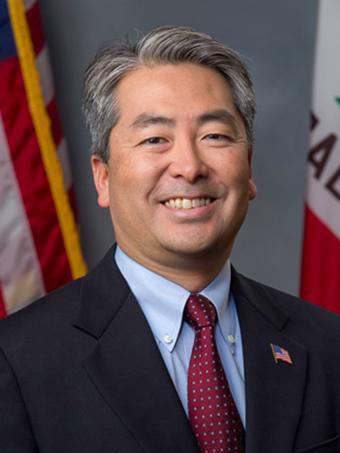
Al Muratsuchi
Al Muratsuchi House · District 66
D
Strong +
100% 9
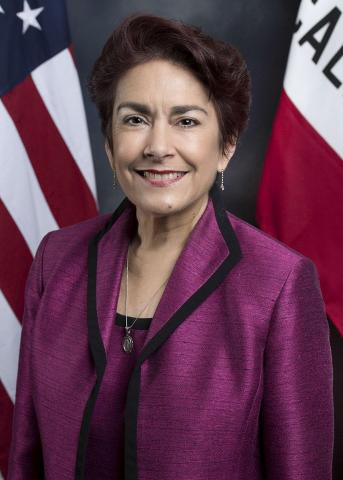
Celeste Rodriguez
Celeste Rodriguez House · District 43
D
Strong +
100% 7
Anna Caballero
Anna Caballero Senate · District 14
D
Strong +
96% 23
Joaquin Arambula
Joaquin Arambula House · District 31
D
Strong +
93% 14
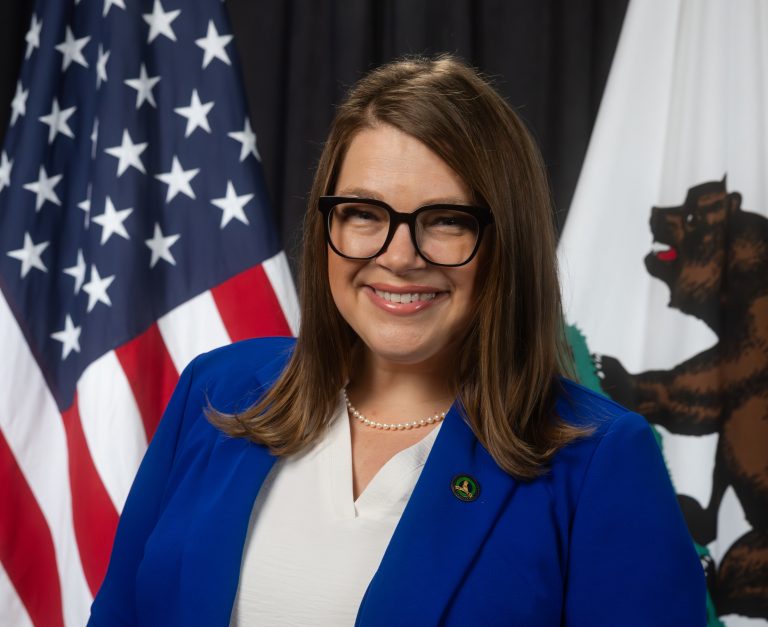
Kate Sanchez
Kate Sanchez House · District 71
R
Strong −
7% 14
Ali Macedo
Ali Macedo House · District 33
R
Strong −
8% 13
Carl DeMaio
Carl DeMaio House · District 75
R
Strong −
8% 13
Heather Hadwick
Heather Hadwick House · District 1
R
Strong −
8% 13
Laurie Davies
Laurie Davies House · District 74
R
Strong −
8% 13
Showing 21–30 of 44 bills

All criminal justice bills

failed · California · Assembly Apr 21, 2026

AB 2701: Domestic Violence Offender Registration Act.

Existing law requires each county to develop a procedure for electronically transmitting, upon the issuance of certain types of protective orders, the contents of the order and other specified information to the Department of Justice through the California Law Enforcement Telecommunications System. Existing law also requires the department to maintain a California Restraining and Protective Order System and to make specified information electronically available to court clerks and law enforcement personnel. This bill, the Domestic Violence Offender Registration Act, would require the department, upon an appropriation by the Legislature, to create a database for the purpose of storing and sharing information with local agencies and the court, regarding persons convicted of a registrable offense, as defined. The bill would also require the department to publish that information on its internet website, as specified. The bill would require the offender, as defined, to register, for up to 20 years, certain information including their place of birth and current address with the law enforcement agency having jurisdiction over their residence, as specified. The bill would create a petition process for an offender to seek removal from the registry before having completed the applicable term if they demonstrate rehabilitation and no new qualifying offenses, or they demonstrate exoneration, as specified. The bill would require the court to notify the department of certain petition-related events, including when a petition for termination from the registry is granted, denied, or summarily denied. The bill would require local agencies and the court to create a database for the purpose of storing information received from offenders pursuant to these provisions. The bill would create both civil and criminal penalties for the misuse of information disclosed pursuant to these provisions, including, if a person uses that information to commit a felony, a 5-year prison sentence in addition to and consecutive to any other punishment. The bill would also make an offender's failure to comply with registration requirements a misdemeanor, punishable by imprisonment in the county jail for up to one year. By increasing the duties on local agencies and creating new crimes, the bill would impose a state-mandated local program. The bill would declare its provisions to be severable. The California Constitution requires the state to reimburse local agencies and school districts for certain costs mandated by the state. Statutory provisions establish procedures for making that reimbursement. This bill would provide that with regard to certain mandates no reimbursement is required by this act for a specified reason. With regard to any other mandates, this bill would provide that, if the Commission on State Mandates determines that the bill contains costs so mandated by the state, reimbursement for those costs shall be made pursuant to the statutory provisions noted above.
in committee · California · Assembly Mar 18, 2026

AB 1955: Crimes: firearm enhancements.

Under existing law, anyone who personally uses a firearm in the commission of a specified felony offense shall be punished by an additional and consecutive term of imprisonment in the state prison for 10 years, or by 20 years if they discharge the firearm, or by imprisonment for 25 years to life if they discharge the firearm and proximately causes great bodily harm. Existing law prohibits the application of these firearm enhancements to the lawful use or discharge of a firearm by a peace officer, under specified circumstances, or by any person in lawful self-defense, lawful defense of another, or lawful defense of property. This bill would, notwithstanding the exemption above, prohibit the application of these firearm enhancements to a peace officer, as defined, unless the use or discharge of the firearm did not arise out of and was not in the course of employment. The bill would place the burden of proving by a preponderance of the evidence on the prosecution that the firearm enhancements apply to a peace officer. The bill would define "arise out of and in the course of employment" for these purposes. By placing the burden of proof on, and thus imposing a new duty on, local prosecutors, the bill would create a state-mandated local program. The bill would make a technical, nonsubstantive change. The California Constitution requires the state to reimburse local agencies and school districts for certain costs mandated by the state. Statutory provisions establish procedures for making that reimbursement. This bill would provide that no reimbursement is required by this act for a specified reason.
passed · California · Assembly Aug 13, 2026

AB 1759: Prisons: classification.

Existing law requires the Secretary of the Department of Corrections and Rehabilitation to evaluate a person who is newly committed to a state prison and classify incarcerated persons based on the evaluations, and, when reasonable, assign or reassign an incarcerated person to the institution of the appropriate security level and gender population nearest the incarcerated person's home, unless other classification factors make that placement unreasonable. This bill would require the department to contract with an independent research entity to conduct a study to reassess the entire security classification system, as specified. The bill would require the study to contain policy recommendations to enhance the effectiveness of the classification system, as specified. The bill would require the selected research entity to perform the study according to specified criteria, including, among others, that the entity is governed by the University of California Board of Regents and has demonstrated expertise on Department of Corrections and Rehabilitation policy and data. The bill would require the report to be published on or before January 1, 2030, and would repeal the provisions as of January 1, 2031.
in committee · California · Assembly May 14, 2026

AB 2328: Vehicles: leaving the scene of an accident.

Existing law requires the driver of a vehicle involved in an accident resulting in injury to a person, other than that driver, or in the death of a person, to immediately stop the vehicle at the scene of the accident and provide specified personal information to the injured person or the occupants of the other vehicle and to any traffic or police officer at the scene of the accident. Under existing law, if a vehicle accident results in injury, a person who violates the requirement to stop is subject to punishment by imprisonment in the state prison, or in a county jail for not more than one year, or by a specified fine, or both the imprisonment and fine. Under existing law, if a vehicle accident results in permanent, serious injury or death, a person who violates the requirement to stop is subject to punishment by imprisonment in the state prison for 2, 3, or 4 years, or in a county jail for not less than 90 days nor more than one year, or by a specified fine, or both the imprisonment and fine. Existing law requires a person who flees the scene of the crime after committing specified vehicle manslaughter while intoxicated or vehicle manslaughter to be punished for an additional term of imprisonment of 5 years in the state prison, upon conviction, and in addition and consecutive to the punishment prescribed. This bill would instead require a person who violates the requirement to stop to be subject to punishment by imprisonment in the state prison for 3, 4, or 5 years, or in a county jail for not less than 90 days nor more than one year, and by a specified fine, if the vehicle accident results in death.
Sub-Topics Corrections Policing
passed both · California · Assembly Aug 27, 2026

AB 1889: Protective orders.

Existing law allows the court to issue a protective order restraining a defendant from any contact with the victim if the defendant has been convicted of a crime of domestic violence, human trafficking, a crime in furtherance of a criminal street gang, or a registerable sex offense. Under existing law, the protective order may be valid for up to 10 years, as determined by the court. This bill would authorize those orders to be valid for up to 10 years, or one year after the person's release from the state prison or a county jail, whichever is later. Existing law authorizes a protective order restraining a person convicted of the crime of battery of specified persons, including a spouse or former spouse, to be valid for up to 15 years. The bill would authorize those orders to be valid for up to 15 years, or one year after the person's release from the state prison or a county jail, whichever is later. By extending the duration of protective orders, a violation of which is punishable as a crime, this bill would impose a state-mandated local program. This bill would incorporate additional changes to Section 136.2 of the Penal Code proposed by SB 1395 and AB 2261, to be operative only if this bill and either or both of those bills are enacted and this bill is enacted last. The California Constitution requires the state to reimburse local agencies and school districts for certain costs mandated by the state. Statutory provisions establish procedures for making that reimbursement. This bill would provide that no reimbursement is required by this act for a specified reason.
in committee · California · Senate Mar 4, 2026

SB 1396: Illegal dumping.

Existing law makes it unlawful to dump waste matter in certain locations, such as upon a public or private highway or road, upon private property without the consent of the owner, or in or upon a public park or other public property, as specified. Existing law also makes it unlawful to place, deposit, or dump rocks, concrete, asphalt, or dirt in certain locations, as specified. A person violating these provisions is guilty of an infraction, as specified. Existing law makes a violation of these provisions in commercial quantities, as defined, a misdemeanor punishable by imprisonment in a county jail and by a fine, as specified. This bill would make technical, nonsubstantive changes to these provisions.
passed both · California · Assembly Aug 26, 2026

AB 2273: Crimes: SCRIVNER Act.

Existing law provides that any person who willfully and lewdly commits any lewd or lascivious act, including any of the acts constituting other crimes, as provided, upon or with the body, or any part or member thereof, of a child who is under 14 years of age, with the intent of arousing, appealing to, or gratifying the lust, passions, or sexual desires of that person or the child, is guilty of a felony, punishable by imprisonment in the state prison for 3, 6, or 8 years. The bill would require the Department of Justice, upon completion of an investigation of a person who holds an elected office in which the department determines the person committed specified crimes relating to rape, that the victim was a minor, and that the case is appropriate for prosecution, to bring criminal charges against that person within 30 days. Existing law authorizes a court to grant pretrial diversion to a defendant suffering from a mental disorder, on an accusatory pleading alleging the commission of a misdemeanor or felony offense, in order to allow the defendant to undergo mental health treatment. Existing law makes a defendant ineligible for this diversion program if the defendant is charged with specified offenses, including, among other offenses, any sex offense except indecent exposure. This bill would, when the facts alleged in the accusatory pleading or disclosed in the preliminary hearing transcript would constitute an offense for which a defendant would be ineligible for diversion under these provisions, and the defendant has not been charged with those offenses, require the prosecution to state on the record why those charges are not being sought and whether they have conferred with the victim about the charges filed. By increasing duties on prosecutors, this bill would impose a state-mandated local program. This bill would incorporate additional changes to Section 1001.36 of the Penal Code proposed by AB 46 to be operative only if this bill and AB 46 are enacted and this bill is enacted last. The California Constitution requires the state to reimburse local agencies and school districts for certain costs mandated by the state. Statutory provisions establish procedures for making that reimbursement. This bill would provide that, if the Commission on State Mandates determines that the bill contains costs mandated by the state, reimbursement for those costs shall be made pursuant to the statutory provisions noted above.
Sub-Topics Corrections Courts
passed · California · Assembly May 13, 2026

ACR 176: Relative to Second Chance Month.

This bill designates April 2026 as Second Chance Month in California to raise awareness about opportunities for individuals reentering society after incarceration. The measure is a ceremonial proclamation that does not alter laws, allocate funding, or change government operations. Its primary purpose is to encourage public recognition of the challenges faced by formerly incarcerated people and to highlight available support resources during that specific month.
Sub-Topics Corrections
in committee · California · Assembly May 14, 2026

AB 2683: Crimes: child endangerment.

Existing law makes it unlawful, under circumstances or conditions likely to produce great bodily harm or death, to willfully cause or permit a child to suffer, or to inflict thereon unjustifiable physical pain or mental suffering, or, having the care or custody of a child, to willfully cause or permit the person or health of that child to be injured, or to willfully cause or permit that child to be placed in a situation where their person or health may be endangered and a violation of these provisions punishable as a misdemeanor or felony. This bill would make any adult who solicits or recruits a minor to commit a felony guilty of child endangerment pursuant to the provisions above and would, in addition and consecutive to any other punishment, make a violation punishable as a sentence enhancement in the state prison for 2, 4, or 6 years. By creating a new crime, the bill would impose a state-mandated local program. The California Constitution requires the state to reimburse local agencies and school districts for certain costs mandated by the state. Statutory provisions establish procedures for making that reimbursement. This bill would provide that no reimbursement is required by this act for a specified reason.
Sub-Topics Corrections Sentencing
passed · California · Senate Aug 13, 2026

SB 1330: Assault and battery: utility workers.

Existing law defines an assault as an unlawful attempt, coupled with present ability, to commit a violent injury upon the person of another. Existing law defines a battery as any willful and unlawful use of force or violence upon the person of another. Under existing law, an assault or battery committed against specified professionals engaged in the performance of their duties, including peace officers, firefighters, and emergency medical personnel, is punishable by imprisonment in a county jail not exceeding one year, by a fine not exceeding $2,000, or by both that fine and imprisonment. This bill would make an assault or battery committed against a utility worker, as defined, who is engaged in the performance of their duties punishable by imprisonment in a county jail not exceeding one year, by a fine not exceeding $2,000, or by both that fine and imprisonment. By expanding the scope of these crimes, this bill would impose a state-mandated local program. The California Constitution requires the state to reimburse local agencies and school districts for certain costs mandated by the state. Statutory provisions establish procedures for making that reimbursement. This bill would provide that no reimbursement is required by this act for a specified reason.
Showing 21 to 30 of 44 bills
Previous 1 2 3 4 5 Next