Issue · Budget & Taxes

Budget & Taxes (Revenue)

Every budget & taxes bill, vote, and legislator stance in California, automatically classified by Maddy, our AI policy reader.

Total bills
5
2025-2026 Regular Session
Top supporter
Chris Ward
100% support rate
Top opponent
Ali Macedo
0% support rate
Ranked legislators
10
5 support · 5 oppose
Key legislators

Who's moving revenue in California

Legislators moving revenue in California
Legislator Party Stance Support rate Votes
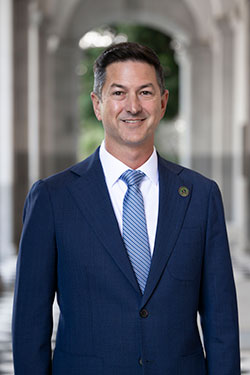
Chris Ward
Chris Ward House · District 78
D
Strong +
100% 4
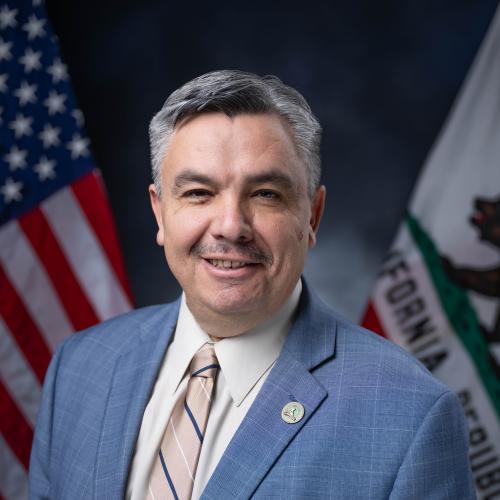
Juan Carrillo
Juan Carrillo House · District 39
D
Strong +
100% 4
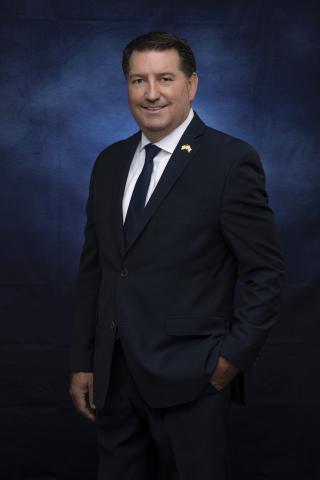
Rhodesia Ransom
Rhodesia Ransom House · District 13
D
Strong +
100% 4
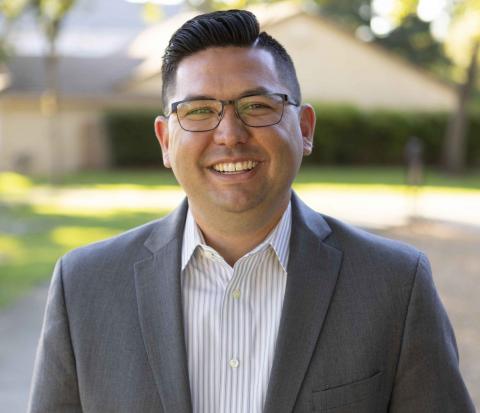
Tim Grayson
Tim Grayson Senate · District 9
D
Strong +
100% 4
Blanca Pacheco
Blanca Pacheco House · District 64
D
Strong +
100% 3
Ali Macedo
Ali Macedo House · District 33
R
Strong −
0% 3
Joshua Hoover
Joshua Hoover House · District 7
R
Strong −
0% 3
Laurie Davies
Laurie Davies House · District 74
R
Strong −
0% 3
Tom Lackey
Tom Lackey House · District 34
R
Strong −
0% 3
Tri Ta
Tri Ta House · District 70
R
Strong −
0% 3
Showing 5 of 5 bills

All budget & taxes bills

passed both · California · Senate Aug 28, 2026

SB 1172: Bradley-Burns Uniform Local Sales and Use Tax Law: tax sharing agreements.

Existing law prohibits a local agency from entering into any form of agreement that would result, directly or indirectly, in the payment, transfer, diversion, or rebate of any tax revenue resulting from the imposition of a sales and use tax under the Bradley-Burns Uniform Local Sales and Use Tax Law to any person for any purpose when the agreement results in a reduction in the amount of revenue under the Bradley-Burns Uniform Local Sales and Use Tax Law that, in the absence of the agreement, would be received by another local agency and the retailer continues to maintain a physical presence within the territorial jurisdiction of that other local agency. Existing law also requires a local agency entering into an agreement that results in a reduction of the amount of revenue under the Bradley-Burns Uniform Local Sales and Use Tax Law that, in the absence of the agreement, would be received by another local agency to take certain actions with respect to that agreement, including posting the proposed agreement on its internet website for at least 30 days prior to ratification or approval of that agreement by its governing body. This bill would prohibit a person from paying compensation to a consultant with respect to a specific tax sharing agreement, as defined, that exceeds the lower of 5% of the total tax revenues shared pursuant to the tax sharing agreement and $250,000. The bill would define a tax sharing agreement for this purpose to mean any agreement that would result, directly or indirectly, in the payment, transfer, diversion, or rebate of any tax revenue resulting from the imposition of a sales and use tax under the Bradley-Burns Uniform Local Sales and Use Tax Law to any person for any purpose. The bill would exclude from these provisions agreements between a local agency and a member of the agency's staff directly employed by the jurisdiction or technical consultants providing noncompensated advisory services. The bill would apply these provisions only to agreements entered into on and after January 1, 2027. The bill would include findings that changes proposed by this bill address a matter of statewide concern rather than a municipal affair and, therefore, apply to all cities, including charter cities.
Sub-Topics Revenue Sales Tax
signed · California · Assembly Oct 11, 2025

AB 1445: Downtown revitalization and economic recovery financing districts.

Existing law authorizes the legislative body of a city or a county to establish an enhanced infrastructure financing district to finance public capital facilities or other specified projects of communitywide significance, including the acquisition, construction, or rehabilitation of housing for persons of very low, low, and moderate income. Existing law authorizes the City and County of San Francisco to establish a downtown revitalization and economic recovery financing district for the purpose of financing commercial-to-residential conversion projects with incremental tax revenues generated by commercial-to-residential conversion projects within the district. Existing law requires the City and County of San Francisco to establish a board for the district at the same time that it adopts the resolution of intention to form the district, and requires the district to prepare a downtown revitalization financing plan (financing plan) that includes specified information and requirements, including that the first distribution of incremental tax revenues distributed back to a commercial-to-residential conversion project commence with the fiscal year that begins after the project is issued a certificate of occupancy. Existing law, among other things, requires a district to establish a process for eligible commercial-to-residential conversion projects identified in the financing plan to opt into receiving incremental tax revenue generated by the respective project. Existing law specifies that the commercial-to-residential conversion projects that opt in to receive incremental tax revenue are public works for which prevailing wages are required to be paid, as specified, and requires the commercial-to-residential conversion projects that opt in to receiving incremental tax revenue to comply with labor standards adopted by the Board of Supervisors of the City and County of San Francisco, as provided. This bill would additionally authorize any city, county, or city and county, except the City and County of San Francisco, to establish a downtown revitalization and economic recovery financing district for the purpose of financing specified commercial-to-residential conversion projects with incremental tax revenues generated by commercial-to-residential conversion projects within the district. The bill would require the district to meet the requirements imposed on the City and County of San Francisco when establishing a downtown revitalization and economic recovery financing district described above and would modify the required components of the district's proposed financing plan, as provided. The bill would make various conforming changes to the above-described provisions in this regard and would also make technical changes. This bill would further specify that, for purposes of the preparation of a financing plan, if the city, county, or city and county does not issue certificates of occupancy, the first distribution of incremental tax revenue to a commercial-to-residential conversion project shall be made with the fiscal year that begins after the project completes a final inspection. The bill would remove the requirement that commercial-to-residential conversion projects that opt in to receive incremental tax revenue comply with labor standards adopted by the Board of Supervisors of the City and County of San Francisco and would instead subject such projects to specified labor standards. Existing law requires a certain portion of any ad valorem property tax revenue annually allocated to the local government that is specified in the adopted financing plan, as described, to be allocated to and, when collected, apportioned to a special fund of the district for all lawful purposes of the district. Existing law also requires those revenues to be allocated and apportioned to the local government when the district ceases to exist pursuant to the financing plan. This bill would remove those provisions.
failed · California · Senate Feb 2, 2026

SB 64: Education expenses: School Choice Flex Account Act of 2025.

(1) Existing law establishes a system of elementary and secondary education in this state. This system consists of the public and private schools that provide instruction in kindergarten and in grades 1 to 12, inclusive. This bill would enact the School Choice Flex Account Act of 2025 and establish the School Choice Flex Account (SCFA) Trust, to be known as the SCFA Trust, as a fund within the State Treasury to be administered by the SCFA Trust Board. For the 2027–28 to 2030–31, inclusive, school years, the bill would authorize certain children eligible to be enrolled in kindergarten or any of grades 1 to 12, inclusive, to establish an SCFA or Special Education Flex Account (SEFA) , based on parent or guardian income. The bill would, beginning with the 2031–32 school year, authorize every child eligible to be enrolled in kindergarten or any of grades 1 to 12, inclusive, to establish an SCFA or SEFA. The bill would credit a deposit amount to the account of every eligible student enrolled in an eligible school for tuition and certain school expenses. The bill would specify the deposit amounts for the 2027–28 school year, and require the Department of Finance, beginning on July 1, 2028, to determine the SCFA and SEFA deposit amounts annually for the upcoming school year, as provided. The bill would require the Controller to transfer an amount of money from the General Fund to the SCFA Trust in those amounts. The bill would require any unused funds remaining in an SCFA or SEFA account on June 30 of each school year to be returned to the state for the benefit of elementary and secondary education, upon appropriation by the Legislature. The bill would specify the membership of the SCFA Trust Board and would vest the SCFA Trust Board with certain powers and duties. The bill would establish 2 accounts within the SCFA Trust, the SCFA Trust Program Account and the SCFA Trust Administrative Account, and would continuously appropriate the moneys in the program account to the SCFA Trust Board for purposes of the bill, thereby making an appropriation. The bill would require the Superintendent of Public Instruction to establish a procedure for the parents and legal guardians of eligible students to apply to establish an SCFA or SEFA and submit an executed participation agreement. The bill would authorize the SCFA Trust Board to disburse funds from SCFAs or SEFAs to eligible schools, defined as private full-time day schools accredited by, or, except as provided, awaiting accreditation from, a regional accrediting agency recognized by the state or the United States Department of Education. The bill would specify the procedures for participating eligible schools to receive funds disbursed by the SCFA Trust Board. (2) The Classroom Instructional Improvement and Accountability Act, an initiative approved by the voters as Proposition 98 at the November 8, 1988, statewide general election, amended the California Constitution to, among other things, set forth a formula for computing the minimum amount of revenues that the state is required to appropriate for the support of school districts and community college districts based on one of 3 tests in any given fiscal year, one of which is based on the percentage of General Fund revenues appropriated for school districts and community college districts, respectively, in the 1986–87 fiscal year, and 2 of which are based on, among other things, changes in enrollment. This bill would require the Legislature to recalculate that minimum education funding guarantee by including eligible students not enrolled in a public elementary or secondary school before the operative date of the act in those minimum funding guarantee calculations based on average daily attendance, as provided. The bill would also require the costs of providing SCFA and SEFA deposit amounts for eligible students to be apportioned between the General Fund and the public school district in which those eligible students reside in the same ratio of General Fund and local property tax revenue that would have been used to educate those eligible students in their public school district. (3) The Personal Income Tax Law, in modified conformity with federal law, generally defines "gross income" as income from whatever source derived, except as specifically excluded, and provides various exclusions from gross income for purposes of computing tax liability. This bill would, for taxable years beginning on or after January 1, 2027, exclude from gross income any amounts received as distribution from an SCFA or SEFA, as defined, as part of a participation agreement. Existing law requires a bill authorizing a new tax expenditure to contain, among other things, specific goals, purposes, and objectives the tax expenditure will achieve, detailed performance indicators, and data collection requirements. This bill would include additional information required for any bill authorizing a new tax expenditure. (4) These provisions would become operative on January 1, 2027, and only if Senate Constitutional Amendment ____ of the 2025–26 Regular Session is approved by the voters at the statewide general election on November 4, 2026.
signed · California · Assembly Oct 13, 2025

AB 1223: Local Transportation Authority and Improvement Act: Sacramento Transportation Authority.

The Local Transportation Authority and Improvement Act authorizes a county board of supervisors to create or otherwise designate a local transportation authority in the county that may impose a transactions and use tax for transportation purposes subject to voter approval and other specified requirements. Pursuant to that authority, the county board of supervisors of the County of Sacramento created the Sacramento Transportation Authority (STA) . This bill would provide that the allowable expenditure categories for revenues from a tax imposed by STA include the construction, modernization, and improvement of infrastructure, as defined, that supports infill or transit-oriented development in areas nominated by local governments, and included in regionally adopted plans that advance state greenhouse gas emissions reduction objectives, as specified. The bill would also authorize STA to impose a transactions and use tax under the act in a geographic area that comprises less than the total area of the County of Sacramento, subject to the approval of voters within that area and other specified requirements. Existing law authorizes regional transportation agencies and the Department of Transportation to apply to the California Transportation Commission to develop and operate high-occupancy toll lanes or other toll facilities. Under existing law, revenue generated from the operation of a toll facility under these provisions is available to the sponsoring agency for the expenses related to the toll facility and for other uses within the corridor from which the revenue is generated pursuant to an expenditure plan developed by the sponsoring agency. Existing law authorizes a regional transportation agency to issue bonds to finance construction-related expenditures for a toll facility, and construction-related expenditures that are included in the expenditure plan, payable from the revenues generated from the toll facility. Existing law defines regional transportation agency for these purposes to mean, among other things, a joint exercise of powers authority subject to the consent of a transportation planning agency for the jurisdiction in which the transportation project will be developed. For purposes of these provisions, the Sacramento Area Council of Governments, the Yolo Transportation District, and the department formed a joint powers authority, known as the Capital Area Regional Tolling Authority (CARTA) , to apply to the commission to develop and operate toll facilities in the Sacramento region. This bill would authorize STA to issue bonds to finance costs of high-occupancy toll lanes or other toll facilities within the County of Sacramento approved by the commission pursuant to the above-described provisions. The bill would authorize those bonds to be payable from toll revenue or any other funds lawfully available to STA for those purposes, including sales tax revenue. Before STA issues bonds payable from toll revenue for a toll facility operated by CARTA, the bill would require STA to enter into an agreement with CARTA regarding the application of toll revenue to pay for bonds issued by STA and would require the governing board of CARTA to review and approve a toll facility expenditure plan.
passed both · California · Assembly Aug 24, 2026

AB 1112: Tax Equity Allocation.

Existing property tax law requires the auditor of each county with qualifying cities, as defined, to make certain property tax revenue allocations to those cities in accordance with an established Tax Equity Allocation formula. In any fiscal year in which a qualifying city is to receive a distribution under these provisions, existing law requires the auditor to reduce the actual amount distributed to the qualifying city by the sum of specified amounts, including any amount of property tax revenues that has been exchanged pursuant to specified law between the City of Rancho Mirage and a community services district. This bill would remove the above-described property tax revenues from the reductions to the actual amount distributed. By changing the duties on local officials to administer Tax Equity Allocation, this bill would impose a state-mandated local program. The California Constitution requires the state to reimburse local agencies and school districts for certain costs mandated by the state. Statutory provisions establish procedures for making that reimbursement. This bill would provide that, if the Commission on State Mandates determines that the bill contains costs mandated by the state, reimbursement for those costs shall be made pursuant to the statutory provisions noted above. By removing the above-described property tax revenues from the reductions to the actual amount distributed, this bill would change the pro rata shares in which ad valorem property tax revenues are allocated among local agencies in a county, within the meaning of paragraph (3) of subdivision (a) of Section 25.5 of Article XIII of the California Constitution, and thus would require for passage the approval of 23 of the membership of each house of the Legislature.
Sub-Topics Revenue