

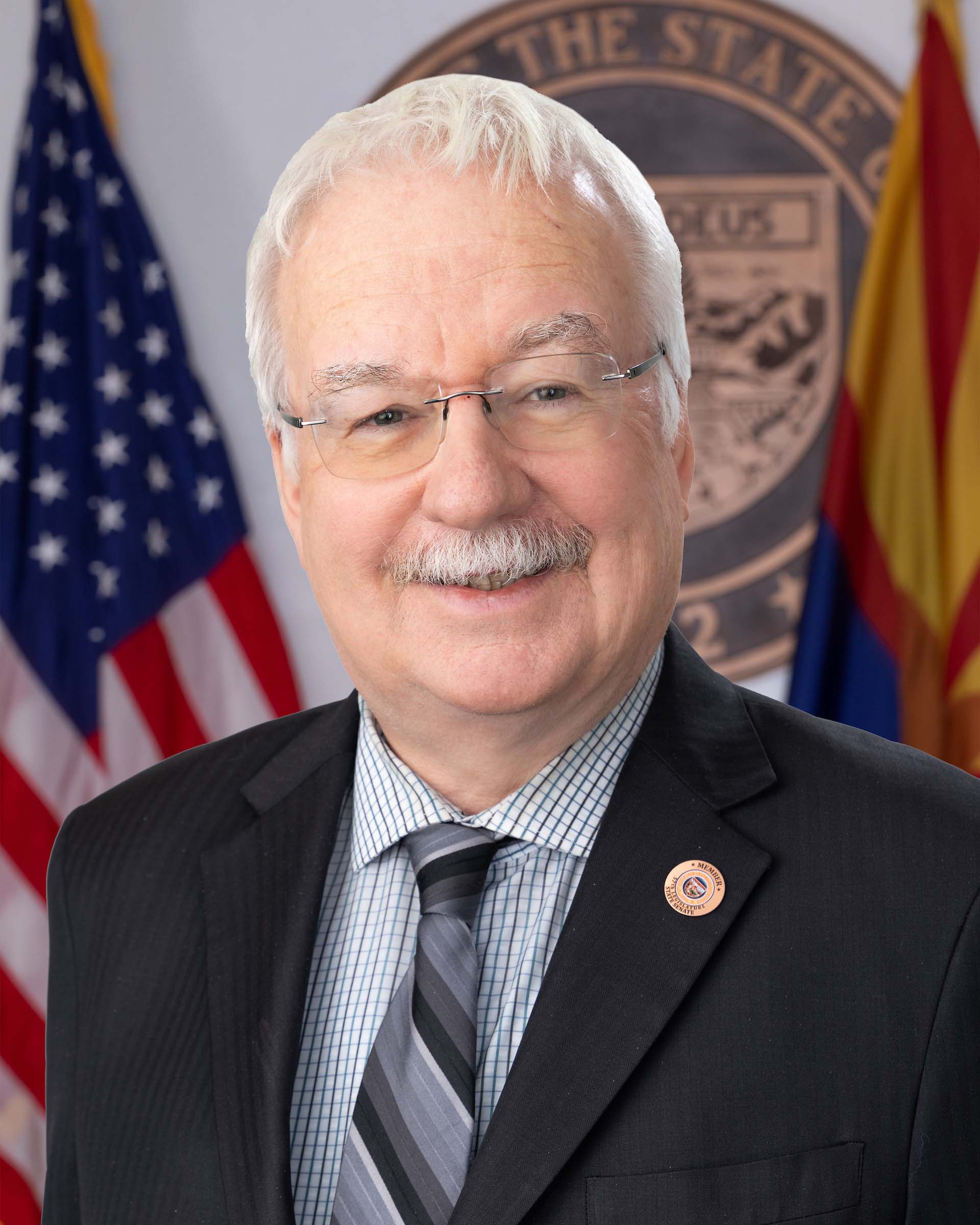
Photo of John Kavanagh
R Arizona Senate · District 3 On the 2026 ballot

Sen. John Kavanagh

Compare
Total votes
5,805
all sessions
Attendance
99%
78 missed
Higher than 83% of chamber peers
With party
97%
of cast votes
Higher than 86% of chamber peers
Bipartisan score
2%
crosses aisle rarely
Lower than 90% of chamber peers
Sponsored
880
bills & resolutions
Near the chamber average
Committees
7
assignments
880 bills and resolutions

Sponsored bills

Total
880
Primary
567
Co-sponsor
313
This page
880
matching current filters
Primary SB 1290
Failed · Arizona Senate · Lead sponsor
brass knuckles; purchase; possession; minors

Maddy summarySB 1290 prohibits minors (juveniles under 18) from intentionally or knowingly purchasing or possessing brass knuckles in Arizona. The bill defines brass knuckles as devices made of hard material designed to fit over multiple hand knuckles to enhance punching power, while excluding knives defined under other law. Violating this law would be a class 3 misdemeanor, punishable by up to 30 days in jail or a $500 fine. The bill failed to pass in the Arizona legislature on March 13, 2025, and did not become law.

Failed Mar 13, 2025 0 co-sponsors
Primary SB 1337
Passed · Arizona Senate · Lead sponsor
homeowner's associations; violations; notice

Maddy summarySB 1337 requires homeowner associations (HOAs) to provide specific written notice when a unit owner violates HOA rules. The notice must include the exact rule broken, the violation date, and the full name of the person who observed the violation. Homeowners have 21 days to respond in writing, and HOAs must then explain the violation details within 10 business days. This law ensures transparency before HOAs can enforce penalties or pursue collections, giving homeowners clear information to address or contest notices.

Passed Mar 11, 2025 0 co-sponsors
Primary SB 1028
Failed · Arizona Senate · Lead sponsor
high school graduation; requirements

Maddy summaryArizona's SB 1028 would have required high school students to pass a U.S. citizenship civics test (60/100 questions for 2025 graduates, 70/100 for 2026+) to graduate, alongside mandated social studies content including personal finance, American civics, and comparative political ideologies. The bill also required districts to offer preparation for this test and provided exemptions for students with career technical certifications or individualized education plans (IEPs). It aimed to standardize graduation requirements through state-prescribed academic standards and competency tests. The bill failed in the legislature on March 10, 2025, and did not become law.

Failed Mar 10, 2025 0 co-sponsors
Co-sponsor HB 2684
Passed · Arizona House · Co-sponsor
pedestrians; congregating; medians; unsafe locations

Maddy summaryHB 2684 prohibits pedestrians from congregating or soliciting (e.g., asking for money) on traffic islands, medians, highway ramps, or unsafe locations without sidewalks. It directly affects pedestrians who gather in these specific high-risk areas, such as busy roadways or unprotected medians. The bill establishes a tiered enforcement approach: a first violation receives only a warning, a second violation is a civil traffic violation (likely involving a fine), and third or subsequent violations are classified as a class 1 misdemeanor. The law aims to improve pedestrian safety by restricting gathering in locations where pedestrians face significant traffic dangers.

Passed Mar 5, 2025 1 co-sponsor
Primary SB 1243
Passed · Arizona Senate · Lead sponsor
open meetings; call to public

Maddy summarySB 1243 strengthens Arizona's open meeting laws by requiring public bodies (like city councils, school boards, and county commissions) to provide greater transparency. It mandates detailed minutes with voting records, requires posting meeting recordings or summaries online within 2-3 days, and creates a formal "open call to the public" at the start of meetings for citizen input. The bill also specifies that public bodies must maintain seating capacity for attendees and post open meeting law materials on their websites. These changes directly affect all local government bodies and aim to make public deliberations more accessible and documented.

Passed Mar 4, 2025 0 co-sponsors
Co-sponsor SB 1539
Introduced · Arizona Senate · Co-sponsor
TPT; exemption; clean rooms

Maddy summarySB 1539 amends Arizona's tax code to exempt clean rooms used in medical facilities from the transaction privilege tax. This change directly affects medical providers, laboratories, and healthcare facilities operating clean rooms for medical purposes. The bill adds clean rooms to the list of tax-exempt durable medical equipment under section 42-5061(A)(13), which already covers items like prosthetics and hearing aids. The exemption applies to clean rooms that are medically necessary, prescribed by licensed professionals, and used in home or facility settings for treatment. This policy change reduces tax burdens for facilities purchasing or maintaining clean rooms essential for medical care.

Introduced Feb 20, 2025 1 co-sponsor
Primary SB 1365
In committee · Arizona Senate · Lead sponsor
PSPRS; member contributions

Maddy summarySB 1365 amends Arizona's Public Safety Personnel Retirement System (PSPRS) to establish contribution rates for public safety employees. It requires members hired before July 1, 2017, to contribute 7.65% to 11.05% of their salary (increasing annually), while members hired on or after that date have separate, higher rates. The bill also outlines employer contribution obligations, late payment penalties (10% annual penalty), and rules for transferring funds from prior retirement systems. These changes directly affect current and future public safety employees covered by PSPRS.

In committee Feb 17, 2025 0 co-sponsors
Primary SB 1298
Introduced · Arizona Senate · Lead sponsor
property tax exemption; religious activities

Maddy summaryThis bill (SB 1298) creates a property tax exemption for nonprofit organizations using property primarily for religious worship, education, or housing that serves religious or charitable purposes. To qualify, organizations must file an affidavit with proof of their 501(c)(3) tax-exempt status and the county assessor's receipt. If an organization misses the filing deadline but qualifies, it can petition the county board for refunds of paid taxes (within one year) or forgiveness of unpaid taxes and penalties. The exemption applies to land, buildings, and equipment not used for profit.

Introduced Feb 17, 2025 0 co-sponsors
Co-sponsor SB 1011
Failed · Arizona Senate · Co-sponsor
early voting; ballot deadlines; certificates

Maddy summaryThis bill would have amended Arizona election law to change how counties establish polling places and manage voting locations. It required counties to set precinct boundaries by October 1 before elections, with specific rules for combining precincts or using voting centers where any voter can cast a ballot with ID. The bill also mandated that public schools provide space for polling places unless a principal denies it for safety or space reasons, and created procedures for emergency voting centers during elections. It directly affected county election officials, public schools, and voters across Arizona.

Failed Feb 13, 2025 1 co-sponsor
Co-sponsor SB 1606
Introduced · Arizona Senate · Co-sponsor
interfacility transport; hospitals

Maddy summarySB 1606 updates definitions for emergency medical services terminology in Arizona law, clarifying terms like "ambulance," "advanced life support," "emergency medical technician," and "interfacility transport." It standardizes language for ambulance services, medical personnel roles, and hospital transport protocols without changing service requirements or creating new regulations. This procedural bill ensures consistent terminology across existing emergency medical services rules. (2 sentences)

Introduced Feb 11, 2025 1 co-sponsor
Showing 181 to 190 of 880 bills
Previous 1 18 19 20 88 Next