

Maddy summarySB 1604 amends Arizona law to ensure time spent in a licensed secure health facility by defendants found incompetent to stand trial counts toward their criminal sentence for the original charges. It directly affects defendants in Arizona who are deemed incompetent and committed to such facilities under Section 13-4521. Key provisions require courts to credit all time served in these facilities against the sentence for the underlying offense (Section 13-712), limit commitment periods to the presumptive sentence for the original charge (Section 13-4521), and mandate specific hearings to determine dangerousness within 120 days (Section 13-4521). The bill streamlines how custody time is calculated for this population, ensuring it reduces the total prison time they would otherwise serve. This law was signed by the governor in May 2025.
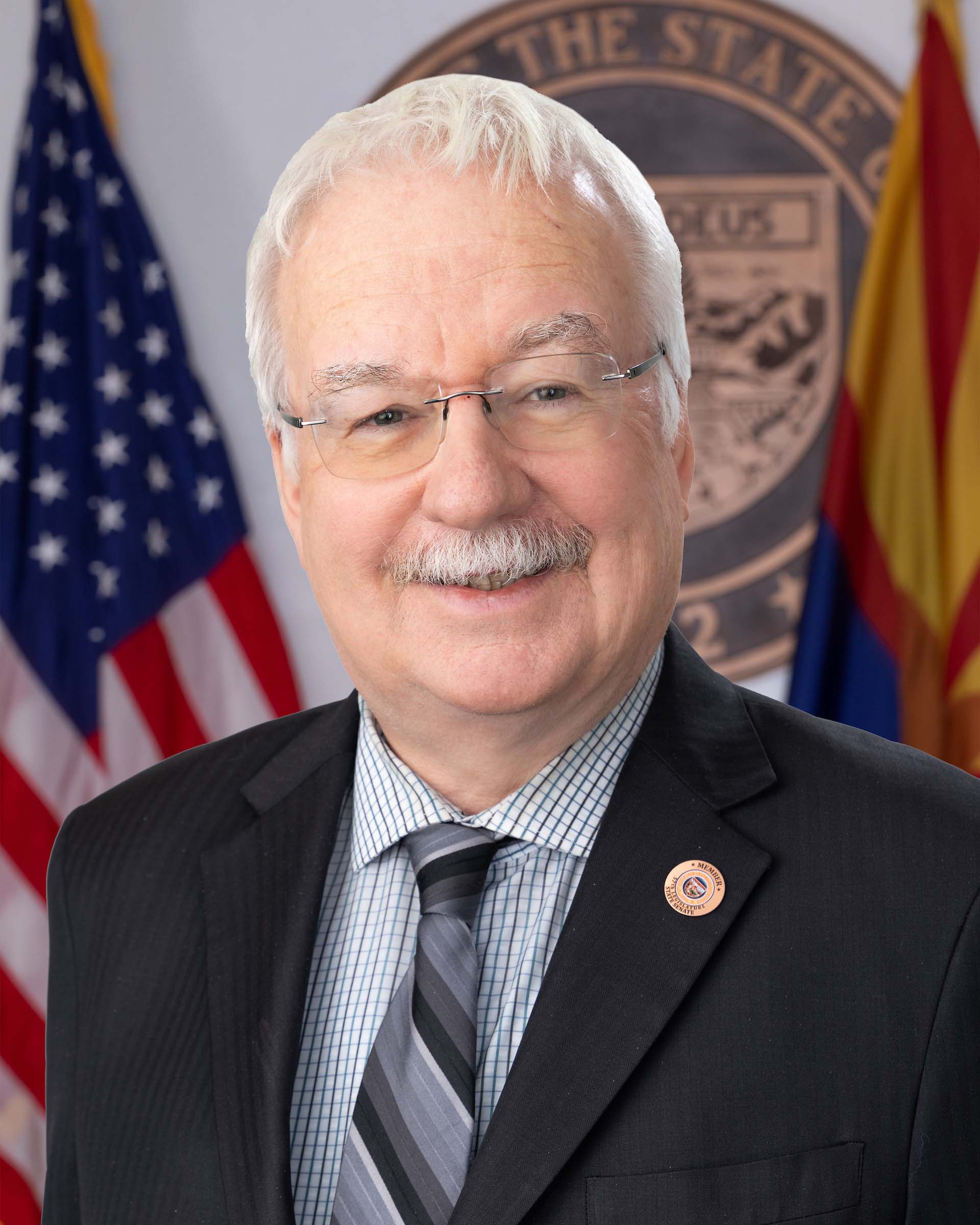
Sen. John Kavanagh
Sponsored bills
Maddy summarySB 1443 establishes a "parental bill of rights" in Arizona law, directly affecting parents of minor children and government entities like schools, healthcare providers, and child welfare agencies. It codifies specific parental rights - including control over education, health care decisions, access to medical records, and notification of suspected child-related incidents - and prohibits government interference without meeting a strict legal standard. The bill adds a new provision allowing parents to sue for compensatory damages of at least $2,500 per violation if government entities unlawfully interfere with these rights. Despite passing the legislature in April 2025, it was vetoed by the Governor on May 2, 2025, and did not become law.
Maddy summarySB 1597 sets new sentencing ranges for second-degree murder convictions in Arizona. For standard cases, it establishes a minimum sentence of 10 years, a presumptive (standard) sentence of 16-20 years, and a maximum of 25 years. Repeat offenders - those previously convicted of second-degree murder or a dangerous felony - face higher penalties: a minimum of 15 years, presumptive sentence of 20-25 years, and maximum of 29 years. The bill directly affects individuals convicted of second-degree murder and guides judges in determining sentences under Arizona law. It modifies statutory sentencing guidelines without creating new offenses or procedural changes.
Maddy summarySB 1294 would lease Arizona's Marana prison site to the U.S. government or its contractors for $1 per year to house individuals detained for immigration violations. The lease would last four years with a possible two-year extension, requiring the lessee to maintain the facility to industry standards. The state could terminate the lease early if it provided 12 months' notice and demonstrated either a need for the beds to house Arizona state inmates or an agreement to sell the site. The bill would expire automatically on September 30, 2032. (Note: This bill failed in the 2025 legislative session.)
Maddy summarySB 1693 allows private school students living in a public school's attendance area to try out for public school interscholastic activities under the same rules as public school students, provided their parents verify they are passing all courses and making academic progress. The bill also prohibits public schools from charging private school participants fees exceeding their pro-rata share of program costs (calculated by dividing total program budget by total participants), though schools may still require all participants to pay standard expenses. It further bars school districts from contracting with private entities that exclude private school students from interscholastic activities. The bill failed to pass on May 1, 2025, after being placed on the House Consent Calendar.
Maddy summarySB 1535 prohibits homeowner associations (HOAs) from banning "lighted home address devices" that display house numbers, flash red and blue when emergency services are en route, are street-visible, and include low-light settings. It requires HOAs to allow these devices unless rules unreasonably restrict their function, placement, or cost, while still permitting compliance with municipal lighting ordinances. The bill also mandates that courts award reasonable attorney fees to homeowners who successfully sue HOAs for violating these provisions. This directly affects HOAs and homeowners in Arizona communities governed by HOA rules, ensuring emergency visibility without overburdening residents.
Maddy summarySB 1734 establishes rules for Arizona's "Parents as Paid Caregivers" program, allowing parents of minor children with disabilities to be paid for providing care. It restricts billing to care provided between 6 a.m. and 10 p.m., prohibits billing for routine household tasks (like meal prep or laundry), and sets a 40-hour weekly care limit per child starting June 30, 2025. The bill requires electronic tracking of services, quarterly reports to the legislature on enrollment, healthcare visits, and service hours, and mandates legislative approval for Medicaid waiver changes that expand eligibility or increase utilization by over 10% annually. These provisions directly affect parents enrolled in the program and state agencies managing Medicaid waivers.
Maddy summarySB 1282 creates a new offense called "aggravated unlawful flight" for drivers who recklessly endanger others while fleeing police. It classifies this as a class 4 felony generally, but elevates it to a class 2 felony if the driver causes serious injury, transports a minor under 15, or was already violating specific traffic laws (like driving under suspension). Convicted individuals in the class 2 felony scenario must serve at least four months in prison before becoming eligible for probation or early release. The bill directly affects drivers who flee law enforcement in a reckless manner, with stricter penalties for certain aggravating circumstances.
Maddy summaryArizona's SB 1071 (vetoed by the governor on April 18, 2025) requires the Department of Economic Security to verify SNAP (food assistance) eligibility more frequently by checking data from multiple sources, including lottery winnings, unemployment changes, and out-of-state EBT card transactions. It mandates monthly reviews of health services and corrections data, quarterly checks of tax records, and public posting of aggregated fraud investigation results like recovered funds. The bill also adds strict rules for EBT card replacements (triggering fraud investigations after two requests) and investigates recipients using over 10% of their benefits out-of-state within six months. These provisions directly affect SNAP recipients in Arizona by increasing verification requirements and fraud monitoring.
Maddy summarySB 1009 allocates $2.6 million for fiscal year 2025-2026 and $2.7 million for 2026-2027 from Arizona's nuclear emergency management fund to support nuclear emergency preparedness. The funds directly affect the state Division of Emergency Management, the Arizona Department of Agriculture, Maricopa County agencies, and the city of Buckeye, covering personnel costs and response planning for off-site nuclear emergencies. These funds are assessed against nuclear power operators in Arizona, requiring them to pay for the emergency planning services they support. The bill passed in April 2025 and became law immediately as an emergency measure.