

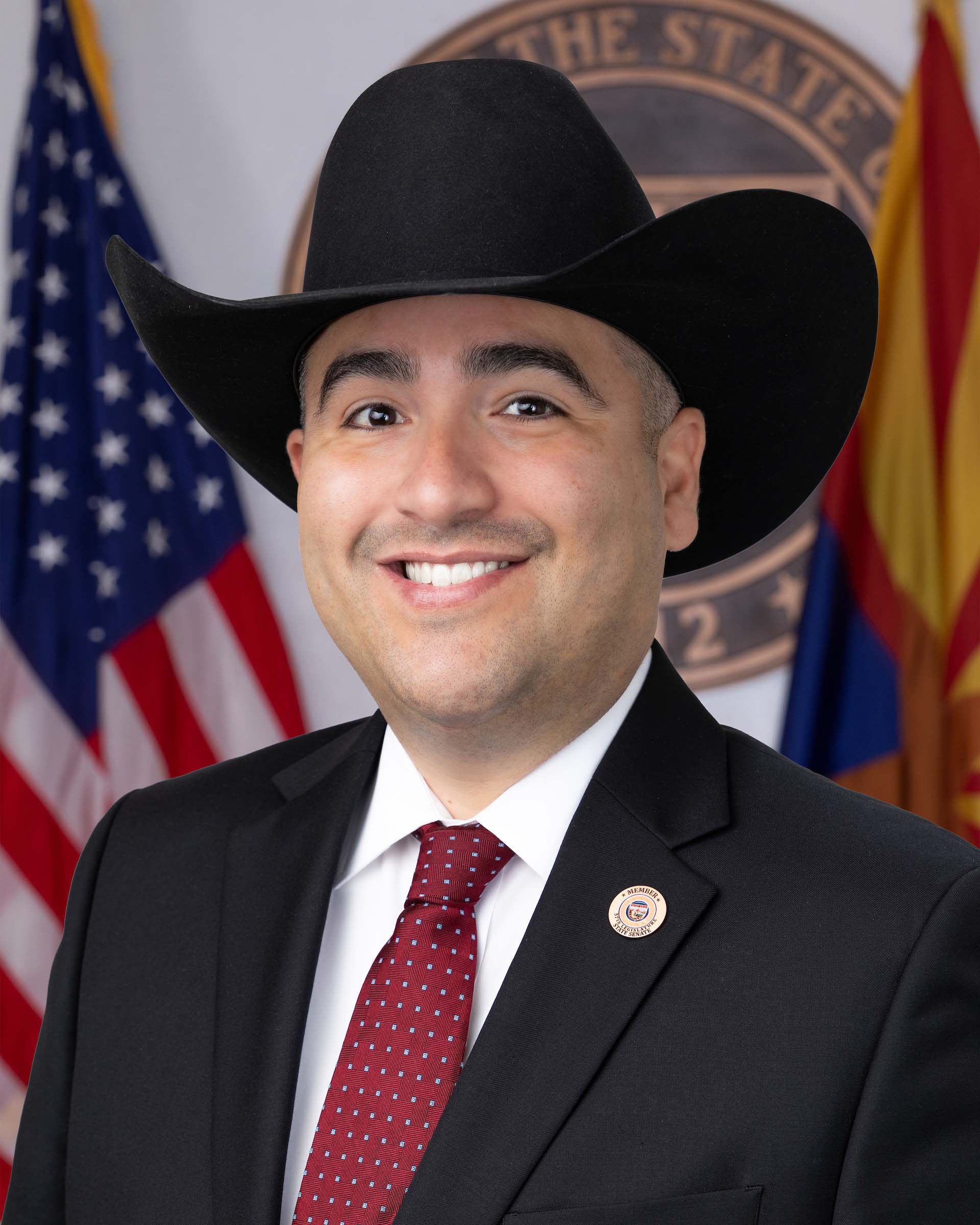
Photo of T.J. Shope
R Arizona Senate · District 16 On the 2026 ballot

Sen. T.J. Shope

Compare
Total votes
5,817
all sessions
Attendance
99%
46 missed
Higher than 93% of chamber peers
With party
98%
of cast votes
Higher than 95% of chamber peers
Bipartisan score
2%
crosses aisle rarely
Lower than 95% of chamber peers
Sponsored
692
bills & resolutions
Near the chamber average
Committees
8
assignments
692 bills and resolutions

Sponsored bills

Total
692
Primary
321
Co-sponsor
371
This page
692
matching current filters
Co-sponsor HB 2685
Introduced · Arizona House · Co-sponsor
earned income; tax credit

Maddy summaryHB 2685 creates a $350 state earned income tax credit for Arizona residents who qualify for the federal Earned Income Tax Credit (EITC). It directly affects low-income individuals and families by providing a refundable tax credit that can be claimed on state income tax returns, with one credit allowed per household annually. The bill requires claimants to file the credit with their tax return (except for those with no tax liability who meet specific filing exceptions) and allows excess credit amounts to be paid as refunds. This credit applies retroactively to taxable years beginning after December 31, 2024.

Introduced Jan 28, 2025 1 co-sponsor
Co-sponsor HB 2102
In committee · Arizona House · Co-sponsor
anti-racketeering revolving fund; prohibited transfers

Maddy summaryHB 2102 establishes a dedicated anti-racketeering revolving fund in Arizona to manage money recovered from racketeering prosecutions. It requires all recovered funds - such as attorney fees from civil/criminal cases under AZ statutes 13-2301 or 13-2312, forfeiture proceeds, or federal/state cooperative investigation funds - to be deposited into this fund, prohibiting transfers to the general state fund. The fund may finance gang/victim prevention programs, racketeering investigations, officer relocation costs, and administrative reporting, but bans using it for Attorney General’s office salaries after August 2025. All agencies receiving fund monies must submit quarterly reports on sources and expenditures to the Attorney General and Arizona Criminal Justice Commission, with strict deadlines and penalties for noncompliance.

In committee Jan 27, 2025 1 co-sponsor
Primary SB 1135
Introduced · Arizona Senate · Lead sponsor
dietitian nutritionists; licensure

Maddy summaryThis bill amends Arizona Revised Statutes to update and clarify definitions related to pharmacy practice and drug regulation. It directly affects pharmacists, pharmacy technicians, pharmacy boards, and other healthcare professionals by establishing standardized terminology for terms like compounding, dispensing, and controlled substances. The key provision adds new definitions for modern pharmacy operations, including automated prescription-dispensing kiosks and compressed medical gas distributors, while also clarifying existing definitions for advisory letters and counterfeits. These changes aim to improve regulatory consistency without altering current operational requirements for licensed entities.

Introduced Jan 23, 2025 0 co-sponsors
Co-sponsor HCR 2011
Introduced · Arizona House · Co-sponsor
Arizona state parks heritage fund

Maddy summaryThis bill (HCR 2011) is a referendum measure that would redirect $10 million annually from Arizona’s state lottery fund to the Arizona State Parks Heritage Fund, as established under Section 41-502 of the Arizona Revised Statutes. It specifies that this allocation would come from lottery funds remaining after other required deposits and expenses, and it would be adjusted annually based on GDP changes. The bill does not create new programs but ensures consistent annual funding for state parks operations and maintenance. As a referendum, it requires voter approval to become law.

Introduced Jan 22, 2025 1 co-sponsor
Co-sponsor HB 2276
Introduced · Arizona House · Co-sponsor
legislative ratification; rulemaking; regulatory costs

Maddy summaryHB 2276 requires Arizona state agencies to submit proposed rules expected to increase regulatory costs for businesses by more than $100,000 within five years for review by the Office of Economic Opportunity. If the cost exceeds $500,000, the rule cannot take effect until the legislature passes separate legislation approving it. Agencies cannot finalize such rules without this legislative approval, and if the legislature doesn't act during the session, the proposed rule must be terminated. This directly affects state agencies creating new rules and businesses subject to those rules, adding a legislative review step for high-cost regulations.

Introduced Jan 22, 2025 1 co-sponsor
Co-sponsor HB 2002
Introduced · Arizona House · Co-sponsor
transportation tax; deposit; county board

Maddy summaryHB 2002 amends Arizona law to establish rules for counties that voters approve to levy a transportation excise tax. The tax rate cannot exceed 20% of existing business transaction tax rates, and collected funds must be deposited into specific transportation funds based on county population size: counties over 400,000 residents send revenue to the regional transportation fund, while smaller counties can choose between funds or split allocations. All tax revenue must be used for transportation projects within the county, with no reduction in tax rates if underlying business taxes change. The bill requires voter approval for the tax to take effect and specifies it would be effective starting April 9, 2026.

Introduced Jan 15, 2025 1 co-sponsor
Co-sponsor HB 2618
Signed into law · Arizona House · Co-sponsor
spirituous liquor; DHS; inspection; exemption

Maddy summaryThis bill amends the powers and duties of the Arizona Department of Health Services director, specifically expanding authority to inspect premises and vehicles for health violations. It allows the director to enter a wider range of locations, including restaurants and factories, to enforce health laws and requires public hearings before leasing state hospital property to third parties. Additionally, the legislation grants the director flexibility to delegate certain functions to local health agencies and establish emergency measures for controlling infectious diseases. The changes aim to streamline public health enforcement and improve the management of state hospital assets without altering the core structure of the department.

Signed into law Jun 21, 2024 1 co-sponsor
Primary SB 1211
Signed into law · Arizona Senate · Lead sponsor
pharmacists; prescribing; naloxone; reporting

Maddy summaryThis bill allows Arizona pharmacists to dispense naloxone, a medication used to reverse opioid overdoses, based on standing orders from doctors or health officials without needing an individual prescription for each dose. The law requires pharmacists to document these dispensings and instruct recipients to call emergency services immediately after administering the drug, while also providing legal protection for pharmacists acting in good faith. Additionally, the legislation mandates that pharmacies report all naloxone dispensings to the state board alongside other controlled substance transactions to improve tracking and oversight. These changes aim to increase access to life-saving overdose reversal tools while maintaining regulatory standards for prescription drug management.

Signed into law Jun 21, 2024 0 co-sponsors
Primary SB 1267
Signed into law · Arizona Senate · Lead sponsor
physical therapy assistants; students; supervision

Maddy summaryThis bill updates the definitions of various roles within Arizona's physical therapy regulations, specifically clarifying who counts as "assistive personnel" and how students are excluded from that category. It establishes new standards for supervision, requiring that physical therapist assistants work under "on-site supervision" where a licensed physical therapist is immediately available, while allowing "general supervision" for other assistive staff who are on call. The legislation also formally defines specific medical techniques like dry needling and manual therapy to ensure consistent understanding of the scope of practice. By amending the Arizona Revised Statutes, the bill directly affects physical therapists, their assistants, aides, and students by setting clearer boundaries for their duties and supervision requirements.

Signed into law Jun 21, 2024 0 co-sponsors
Primary SB 1036
Signed into law · Arizona Senate · Lead sponsor
social work compact

Maddy summaryThis bill establishes a Social Work Licensure Compact in Arizona, allowing licensed social workers to practice across multiple member states with a single license. The legislation creates a commission to manage the compact and maintain a shared database for licensure and disciplinary records, while defining rules for how social workers are regulated in different states. Key provisions include mutual recognition of licenses to reduce administrative burdens, support for military families, and the authorization of telehealth services to improve public access. The compact also sets standards for handling adverse actions and ensuring that social workers adhere to the laws of the state where their clients are located.

Signed into law Jun 21, 2024 0 co-sponsors
Showing 151 to 160 of 692 bills
Previous 1 … 15 16 17 … 70 Next