

1 co-sponsor
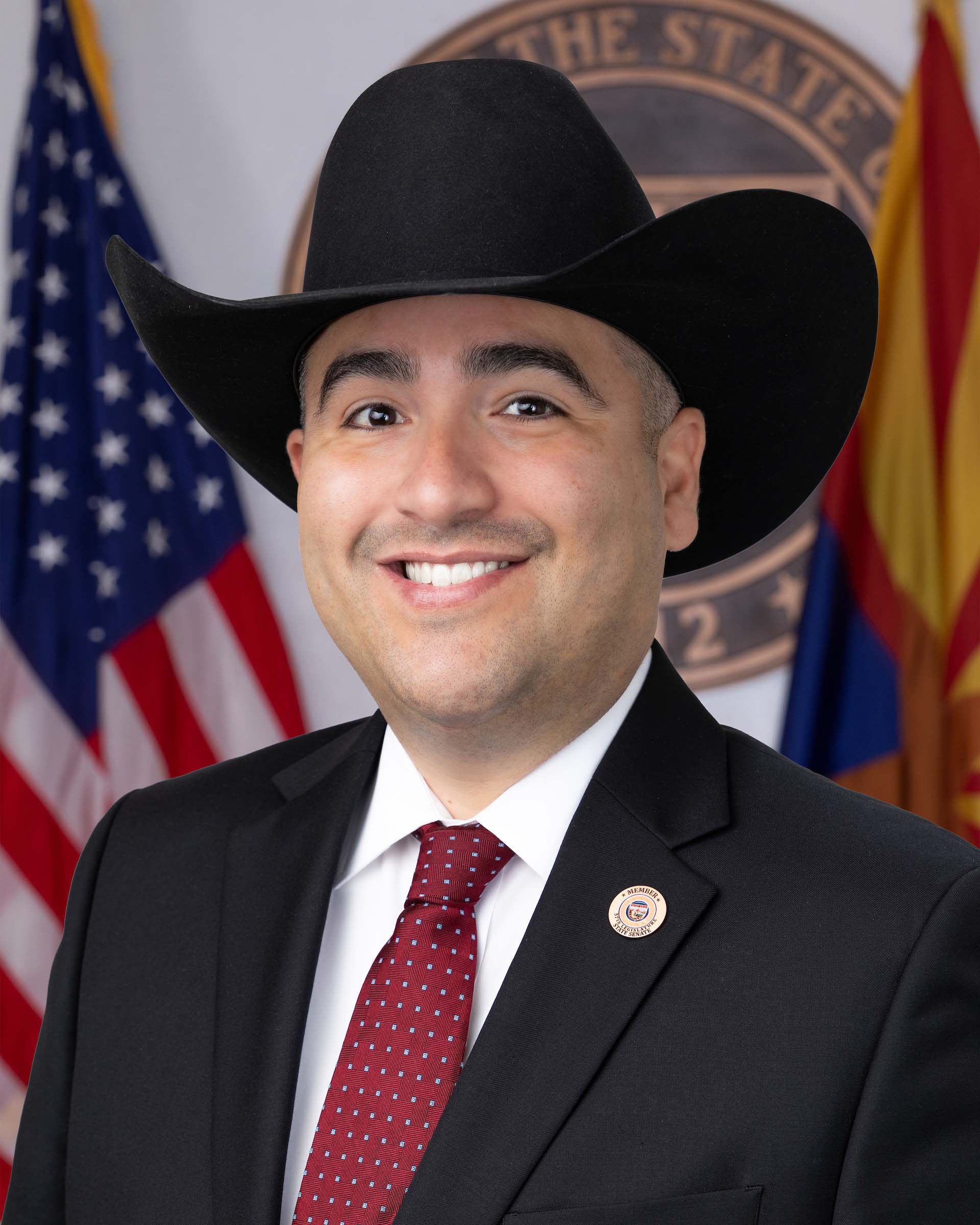
Sen. T.J. Shope
Total votes
5,817
all sessions
Attendance
99%
46 missed
Higher than 93% of chamber peers
With party
98%
of cast votes
Higher than 95% of chamber peers
Bipartisan score
2%
crosses aisle rarely
Lower than 95% of chamber peers
Sponsored
692
bills & resolutions
Near the chamber average
Committees
8
assignments
692 bills and resolutions
Sponsored bills
Total
692
Primary
321
Co-sponsor
371
This page
692
matching current filters
AHCCCS; procurement; contracting
Maddy summarySB 1713 establishes a new performance-based procurement system called the "Arizona hybrid model" for Arizona's Medicaid program (AHCCCS). It directly affects managed care organizations (MCOs) contracted to provide services under AHCCCS by replacing traditional requests for proposals with a standardized evaluation system. The bill requires all MCOs to be assessed over a four-year performance period using publicly available, measurable metrics covering care access, claims processing, and member experience, with decisions on contract continuation based solely on this scoring. It also mandates a single statewide master contract for all MCOs serving AHCCCS programs, eliminating duplicate contracts and reducing administrative burden.
Signed into law Jun 22, 2026
0 co-sponsors
service of process; evaluation agencies
Maddy summarySB 1113 clarifies how legal documents related to involuntary mental health evaluations and treatment must be delivered. It requires that these documents be personally handed to the affected person by a peace officer, authorized process server, or another court-approved individual, with proof of service filed with the court. The bill specifically allows evaluation agencies to serve documents to patients already in their facilities and states that agencies are not financially responsible for this service except in those inpatient cases. This procedural bill affects individuals subject to court-ordered mental health evaluations, courts, and evaluation agencies by standardizing document delivery rules.
Signed into law Jun 22, 2026
1 co-sponsor
campaign spending; personal security
Maddy summarySB 1189 allows Arizona campaign committees to use election funds for the personal security of a candidate and their family members, such as bodyguards or protective services. This bill amends Arizona law to explicitly include security expenses as an allowable campaign cost under existing reporting rules (ARS § 16-926). It directly affects candidates and their committees by clarifying that security spending qualifies as a permitted campaign expense. The law does not create new funding or alter security standards, but requires these costs to be reported like other campaign expenditures.
Signed into law Jun 22, 2026
0 co-sponsors
approved medications; scheduling; prescription authority
Maddy summarySB 1188 automatically aligns Arizona's controlled substance scheduling with federal classifications for FDA-approved medications (excluding Schedule I drugs), meaning Arizona will adopt the same schedules as the U.S. Drug Enforcement Administration without requiring separate state action. This allows healthcare providers in Arizona to prescribe these medications as permitted under federal law, eliminating the need for the state pharmacy board to reclassify them. The bill directly affects the Arizona State Board of Pharmacy and medical professionals who prescribe or dispense controlled substances by simplifying scheduling requirements. It applies only to drugs approved by the FDA and scheduled by the federal government (other than Schedule I), ensuring consistency with federal regulations.
Signed into law Jun 22, 2026
0 co-sponsors
home; community-based services; mental illness
Maddy summarySB 1630 establishes a new Arizona Medicaid program providing home and community-based services for adults with serious mental illness, replacing institutional care when possible. It sets eligibility based on clinical criteria (like recent hospitalizations, medication complexity, or safety risks) and income limits (300% of federal SSI), with options for a qualified income trust to meet financial requirements. Covered services include personal care, medication management, supervised community living, adult day health, and nonemergency transportation. The program requires federal approval by 2027 and aims to support individuals in community settings while avoiding psychiatric hospital or residential facility placement.
Signed into law Jun 22, 2026
1 co-sponsor
radiation protection systems; medical procedures
Maddy summarySB 1121 requires Arizona hospitals, outpatient surgical centers, and other health care facilities performing radiation procedures to install a radiation protection system in procedure rooms before they can stop requiring staff to wear lead aprons. The system must provide protection equivalent to a 0.25 millimeter lead apron and include real-time radiation exposure monitoring for health professionals. Staff may still choose to wear lead aprons voluntarily even when the system is installed. This law directly affects medical facilities and health professionals conducting procedures like X-rays or fluoroscopy using ionizing radiation.
Signed into law Jun 19, 2026
1 co-sponsor
document retention; proposals; donations
Maddy summarySB 1186 requires companies bidding on state contracts or applying for state grants to disclose any "anything of value" (like donations or loans) they or their executives provided to the governor or related entities (such as campaign committees or political groups supporting the governor) within the past five years. It also mandates that state agencies retain all notes from proposal evaluations and prohibits destroying these notes; if notes are destroyed, related contracts may need to be re-bid. The bill directly affects businesses seeking state contracts or grants by adding transparency requirements about their political contributions. Key provisions include mandatory disclosure for both contract proposals (Section 1) and grant applications (Section 3), alongside new record retention rules for procurement evaluations (Section 2).
Vetoed Jun 19, 2026
0 co-sponsors
social workers; documentation; dialysis centers
Maddy summarySB 1446 requires social workers employed by outpatient treatment centers authorized to provide dialysis services to document each patient's progress in the medical record at least once every three months. This applies directly to social workers and dialysis centers operating in Arizona, ensuring regular tracking of patient outcomes during treatment. The key provision sets a minimum quarterly documentation requirement for patient progress, updating how care is recorded. The bill does not alter treatment protocols but standardizes record-keeping frequency for dialysis patients.
Signed into law Jun 19, 2026
0 co-sponsors
interscholastic activities; criminal offenses; ineligibility
Maddy summarySB 1475 prohibits Arizona students from participating in school-sponsored sports or activities if they have been convicted of, admitted to, or pleaded no contest to certain serious criminal offenses - including aggravated assault, sexual exploitation of minors, domestic violence, or stalking - or are charged with such offenses while awaiting trial. School districts must require students to certify their criminal history using a provided form and bar participation during pending cases for these offenses. The bill directly affects students facing these specific legal consequences and mandates school districts to implement these eligibility rules. It does not change criminal sentencing but modifies school participation policies based on defined criminal conduct.
Vetoed Jun 19, 2026
1 co-sponsor
Ask Maddy
·
AI policy assistant
Ask Maddy about T.J. Shope
Scope: arizona
Hi! I can help you understand T.J. Shope's legislative record. What would you like to know?
Try one of these
i
Maddy answers using official bill text and legislative records. Always verify before sharing.
Sources cited inline