

Maddy summarySB 1448 amends Arizona's aggravated assault statute to specifically include utility workers as protected individuals. The bill makes it a more serious offense to assault an employee of a public utility (like electric, gas, or water providers) while they are performing job duties. This change elevates such assaults to aggravated assault status, meaning they would face harsher penalties under existing law. The bill directly affects utility workers who are on the job, ensuring assaults against them are treated as aggravated crimes. It does not create new penalties but expands the definition of aggravated assault to cover these workers.
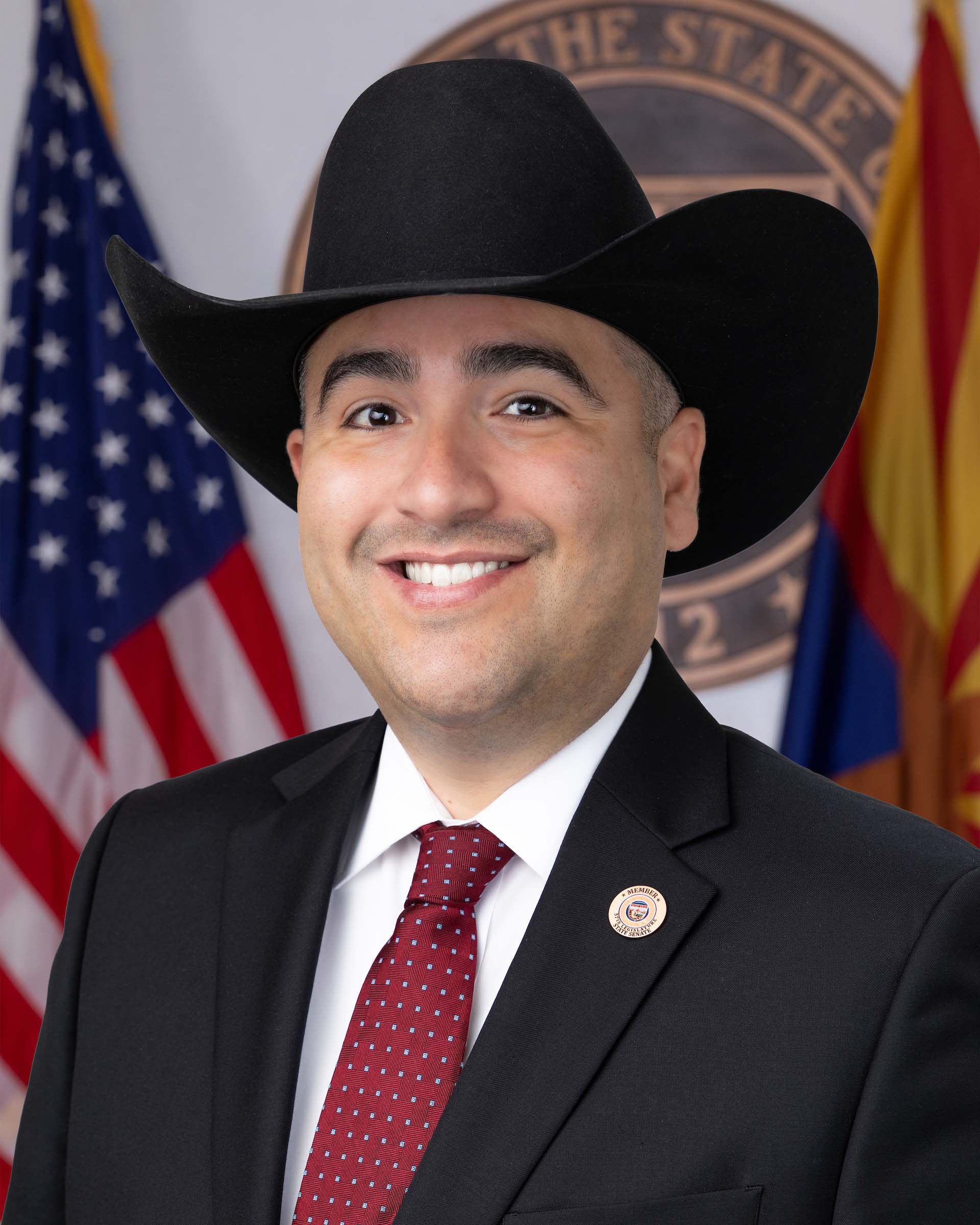
Sen. T.J. Shope
Sponsored bills
Maddy summarySB 1613 is a technical corrections bill that fixes errors in five Arizona statutes amended during 2025. It corrects inaccuracies in the recording of previous legislative changes to sections 4-205.11, 13-2910.11, 36-2212, 42-5159, and 48-261 of the Arizona Revised Statutes. The bill repeals incorrect versions of these statutes and reinstates the properly amended language to comply with Arizona's constitutional requirements. This bill does not create new policies or affect any individuals; it only ensures the official legal record accurately reflects prior legislative actions.
Maddy summaryThis bill amends Arizona Revised Statutes § 45-105 to clarify and update the Arizona Department of Water Resources' authority. It specifically adds provisions allowing the Director to contract for imported water, acquire water rights (including groundwater), and manage groundwater basins as part of the department's core functions. The changes directly affect the Department of Water Resources, enhancing its administrative flexibility for water management without creating new regulatory requirements. The bill focuses on procedural clarity for existing groundwater and water rights management duties.
Maddy summarySenate Concurrent Resolution 1055 is a commemorative measure that honors the life and service of Major General Glen W. 'Bill' Van Dyke, a retired Arizona National Guard leader who passed away in April 2026. The resolution formally recognizes his nearly 38 years of military and public service, including his roles as a pilot, commander of the 162nd Fighter Group, and Adjutant General of Arizona. It expresses the legislature's condolences to Van Dyke's family and friends while acknowledging his contributions to the state and nation.
Maddy summaryThis is a commemorative resolution (HCR 2063), not a substantive bill. It honors Yvonne Glee Lime Fedderson, founder of Childhelp and a global humanitarian dedicated to child welfare, following her death on January 23, 2026. The resolution expresses the Arizona Legislature's sympathy to her family and admirers, and directs the Secretary of State to send copies of the resolution to her family and Childhelp. It has no policy provisions or impact on legislation.
Maddy summarySB 1187 is a technical correction to Arizona's groundwater law (Section 45-462) affecting users in active management areas (AMAs), which are designated regions with water management plans. It clarifies that transporting groundwater does not make a legal use illegal and confirms that the amount requested in a certificate of exemption application is recognized as a legal use for determining grandfathered rights. The bill also restates the three categories of grandfathered rights (non-irrigation on retired land, non-irrigation not on retired land, and irrigation rights) without creating new policies. This update resolves minor ambiguities in existing law to ensure consistent application for groundwater users in AMAs.
Maddy summarySB 1282 clarifies that Arizona cities and towns cannot effectively prohibit the installation or use of vehicle refueling apparatuses (like EV chargers or fueling stations) as defined in state law. The bill amends an existing statute to state that local governments may not block these installations, though they can still enforce safety and health standards for proper installation. This technical correction directly affects local governments and businesses installing refueling infrastructure. It does not create new policy but removes ambiguity in current law regarding local authority over such equipment.
Maddy summarySB 1450 sets time limits for lawsuits about construction defects in Arizona, primarily affecting condo owners, developers, and contractors. It establishes an 8-year deadline from substantial completion for most properties (reduced to 5 years for condos under Title 33), with a one-year window to sue for hidden defects discovered later (capping total claims at 9 years for standard properties or 6 years for condos). The law excludes personal injury claims and does not override express warranties. It clarifies that "substantial completion" is defined by when a property is first used, available for use, or passes final inspection.
Maddy summaryThis is not a legislative bill but a memorial (SCM 1004) from Arizona's state legislature, not a federal bill. It requests Congress to clarify the EPA's authority to regulate greenhouse gases like CO2 and methane, arguing the EPA lacks explicit statutory power under the Clean Air Act and that current regulations violate the "major questions doctrine" established by the Supreme Court in *West Virginia v. EPA* (2022). The memorial specifically asks Congress to end EPA "regulation overreach" by defining the agency's powers regarding greenhouse gas emissions. It directly affects federal environmental policy by challenging the EPA's current regulatory scope on climate-related emissions.
Maddy summarySB 1431 prohibits Arizona municipalities from requiring homeowner associations for subdivisions or mandating features like gates, walls, or shared amenities that would necessitate such associations. It also blocks cities from restricting home design elements - including colors, roof styles, fencing, or patio layouts - for single-family homes and accessory dwelling units. The bill exempts historical districts, tribal lands, and areas near military facilities, while still allowing municipalities to enforce building codes, fire safety rules, and utility requirements. This legislation directly affects developers, homebuyers, and local governments by limiting municipal control over residential design and community structure. It does not change existing safety or utility regulations but aims to reduce local government oversight of home aesthetics and access features.