

Maddy summarySB 1614 amends Arizona's Board of Regents governance authority (Section 15-1626) but does not specifically address athletic coaches or their contracts, as the title suggests. The bill updates the board's powers to appoint university presidents and staff, set tuition and fees (including enrollment thresholds for in-state students), establish budget processes, and adopt academic policies. It requires public hearings and disclosures for tuition increases and mandates reporting on students exceeding credit hour thresholds. The bill directly affects university governance structures and financial operations across Arizona's public universities. (Note: The bill's title appears inconsistent with its actual content, which focuses on general administrative powers, not athletic coaching contracts.)
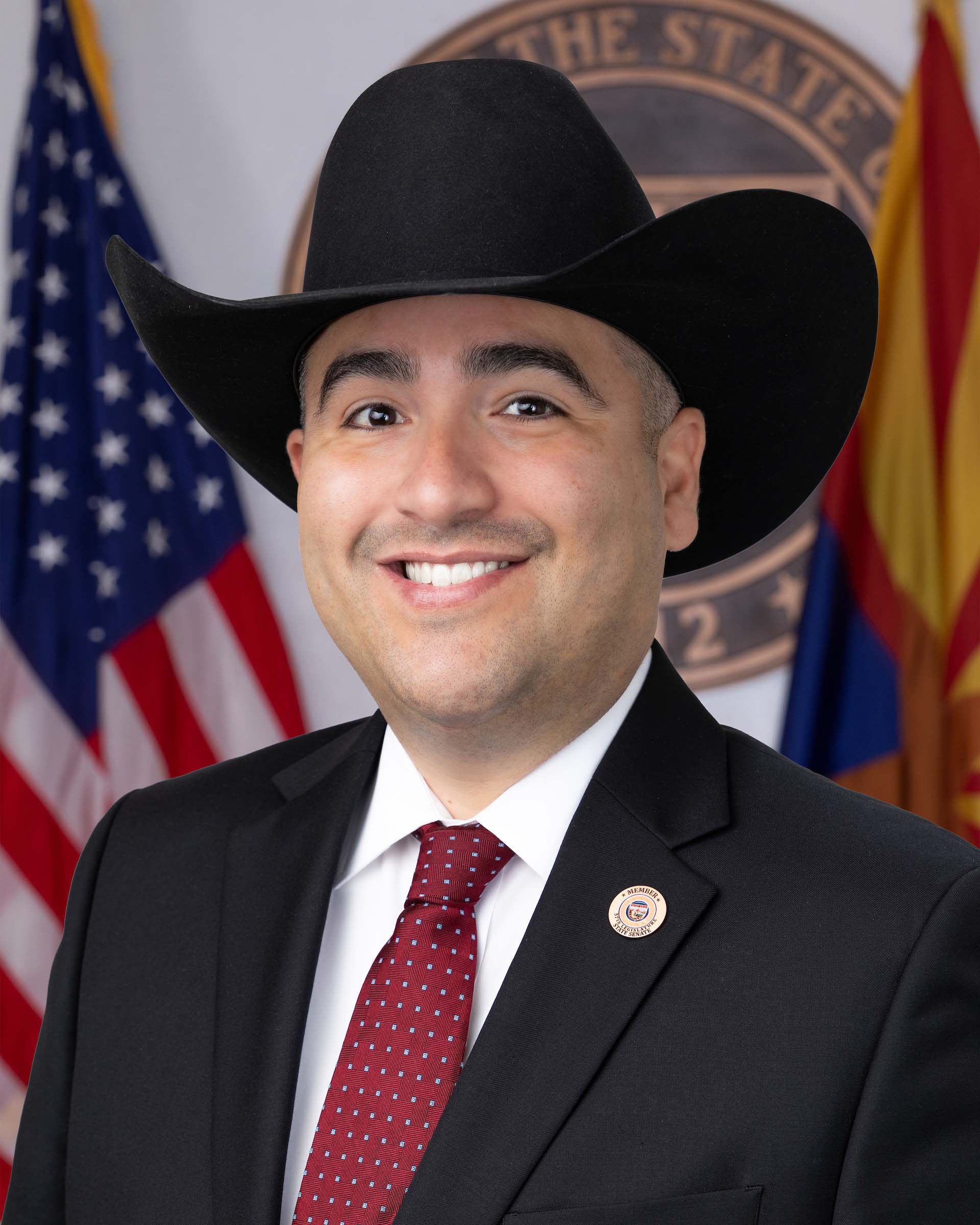
Sen. T.J. Shope
Sponsored bills
Maddy summaryThis bill clarifies that clean rooms used for semiconductor manufacturing must be assessed as personal property (like equipment) for tax purposes, not as part of a building. It directly affects semiconductor manufacturers in Arizona by changing how they calculate property taxes on these facilities. The bill defines "clean room" to include all environmental control systems, fixtures, and production equipment necessary for semiconductor work, but explicitly excludes the building itself. This is a technical correction to existing tax law, not a new policy.
Maddy summaryHB 2457 updates Arizona's process for creating fire districts (and similar districts like park or hospital districts). It requires organizers to submit a detailed impact statement to county supervisors, including property maps, tax impact estimates for residents, and service plans for the first five years. County supervisors must hold a public hearing within 30-60 days, notify all affected property owners via mail and public postings, and approve the district only if it promotes public health or welfare. Property owners within the proposed district boundaries are directly affected, as they must sign petitions within one year of approval to form the district. The bill standardizes procedures for multi-county districts and ensures transparency in the formation process.
Maddy summaryThis bill proposes an amendment to Arizona's Constitution requiring most judges to file for retention elections. It affects supreme court justices, intermediate appellate court judges, and superior court judges (except in counties under 250,000 population), mandating they file a declaration 60-90 days before the general election to appear on a nonpartisan ballot asking "Shall [Judge's Name] be retained in office? Yes __ No __." If a majority votes "No," the seat becomes vacant; a "Yes" vote extends their term. The amendment must be approved by voters at the next general election.
Maddy summarySB 1394 amends Arizona law to clarify that counties cannot prevent the installation or use of vehicle refueling apparatuses (such as EV charging stations), as defined in § 43-1086.01. The bill directly affects counties by restricting their ability to block these installations, while still allowing counties to enforce safety and health regulations for proper installation. Key provisions state that counties must not "effectively prohibit" such apparatuses, though they retain authority to ensure public safety compliance. This is a technical correction to existing statute, not a new policy, and applies specifically to vehicle refueling infrastructure.
Maddy summarySB 1392 clarifies enforcement procedures for Arizona's oil and gas regulations, directly affecting operators, regulators, and affected parties. It specifies that if the oil and gas commissioner fails to act within 10 days to stop violations, affected individuals or groups can file a lawsuit to prevent harm. The bill also streamlines court actions by allowing the commissioner to replace private plaintiffs after an injunction is granted and reinforces that well owners must cover full plugging costs if they abandon wells improperly. This technical correction updates existing law without creating new requirements.
Maddy summarySB 1396 expands Arizona's disciplinary standards for pharmacies and pharmacists by clarifying specific violations that can lead to license discipline. It adds 28 new examples of "unethical conduct" for pharmacies (like drug law violations, working under the influence, or falsifying records) and 7 for pharmacists (such as dispensing without permission or failing continuing education). Pharmacies must now notify the board within 15 business days of permit denials in other states, ownership changes, or certain patient safety incidents. This focuses on improving transparency and safety in pharmacy operations without introducing new penalties.
Maddy summarySB 1381 requires well drillers in Arizona to include precise GPS coordinates for proposed well locations in their application forms. This change directly affects individuals or companies seeking to drill new wells or deepen existing ones, particularly for geophysical, mineralogical, or geotechnical data. The bill amends existing law to add GPS coordinates as a mandatory field in the "notice of intention to drill" form, alongside other details like well depth and owner information. This update aims to improve location accuracy for groundwater management without altering other application requirements or fees.
Maddy summaryHB 2644 creates a state-funded rainwater harvesting grant program in Arizona, providing financial assistance to eligible entities (like nonprofits focused on water conservation) and their partners. It offers two grant tiers: Level 1 reimburses up to $500 for simple systems (e.g., gutters, foundations), while Level 2 covers up to $2,000 for larger systems based on tank capacity (e.g., $0.25/gallon for tanks under 800 gallons). The program funds materials and labor for installation but excludes costs like pumps, landscaping, or unlicensed labor. This bill allocates $________ from the state general fund for fiscal year 2025-2026 to administer the program.
Maddy summaryHB 2476 sets aside $100 million from Arizona's general fund for the water conservation grant fund during fiscal year 2025-2026. This funding supports local projects that reduce water waste, such as upgrading infrastructure or promoting efficient irrigation practices. It directly benefits municipalities, water districts, and other entities applying for these grants under Arizona law. The bill provides concrete financial resources for water conservation initiatives without creating new regulations.