

Maddy summarySB 1234 amends Arizona's animal cruelty law to explicitly prohibit failing to provide necessary medical care to prevent unreasonable suffering in domestic animals under a person's custody. It directly affects pet owners, breeders, and anyone responsible for domestic animals. The key change adds a specific violation for "intentionally, knowingly or recklessly fails to provide medical attention necessary to prevent unreasonable suffering." Violations range from class 1 misdemeanors (for neglect) to class 5 or 6 felonies (for severe harm or killing), with penalties including compensation for service animal replacement costs.
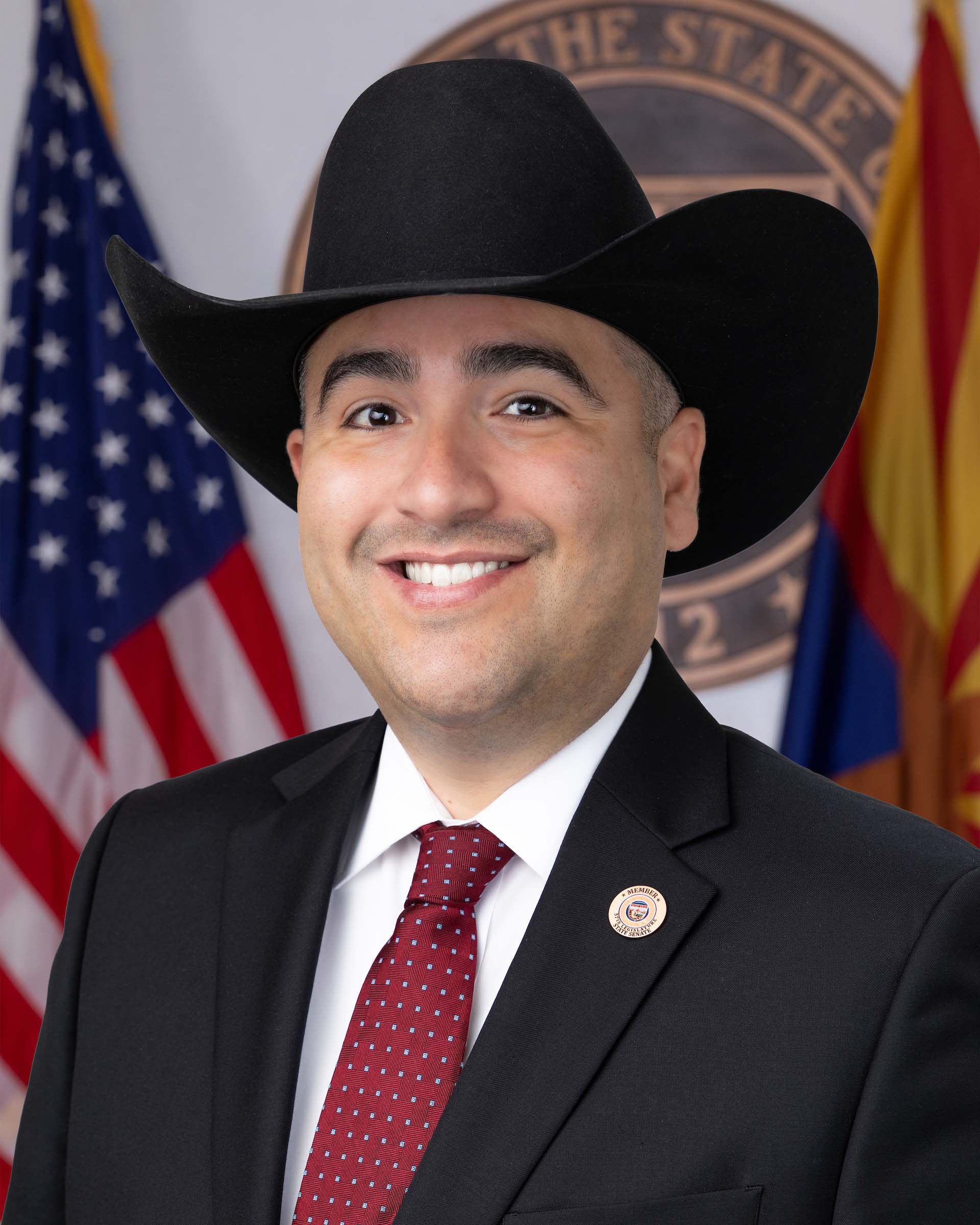
Sen. T.J. Shope
Sponsored bills
Maddy summarySB 1347 amends Arizona's AHCCCS (Arizona Health Care Cost Containment System) to add comprehensive dental care as a covered service for eligible adults. It specifically provides emergency dental care and extractions with an annual limit of $1,000 per member for individuals aged 21 and older. This expansion directly affects AHCCCS enrollees who previously had limited or no dental coverage under the program. The bill modifies existing coverage rules to include this dental benefit while maintaining other existing service limits and exclusions.
Maddy summarySB 1076 adds Duchenne muscular dystrophy (a severe muscle-wasting condition) to Arizona's mandatory newborn screening program. It requires all newborns (under 28 days old) and infants (29 days to 2 years) in Arizona to be screened for this condition as part of the state's existing newborn screening system. The bill mandates that Arizona's screening panel aligns with the federal recommended uniform screening panel, adding DMD to the list within two years of its federal inclusion. The effective date is either October 1, 2027, or two years after the federal panel adopts DMD, whichever comes first. This change expands screening coverage to detect DMD early, enabling timely medical intervention.
Maddy summarySB 1625 requires Arizona schools and districts to publicly share detailed financial data through a new transparency portal and annual website postings. Starting in 2021-2022, charter schools, individual school districts, and district schools must post their previous year's general ledger online by October 1 each year, showing exactly how money is spent (including teacher pay, supplies, and vendor payments) and where it came from (federal, state, local). The portal, developed by a third-party contractor with education finance expertise, will display school-level revenue, spending comparisons, and demographic data to help parents and communities understand funding. This law directly affects all Arizona public schools by mandating clear, standardized financial reporting to improve accountability.
Maddy summaryHB 2635 amends Arizona's tax code to add new sales tax exemptions for specific items. It exempts sales of "cash equivalents" (like gift cards, stored-value cards, and prepaid digital payment tools) and "precious metal bullion" (refined gold, silver, etc.) from retail sales tax. The bill defines "cash equivalents" as pre-paid items denominated in money redeemable for goods/services, excluding telecom prepaids, and clarifies that "monetized bullion" (coins used as currency) is exempt. This directly affects retailers selling these items, removing tax liability on such transactions. The bill focuses solely on tax policy, with no provisions related to firearm storage devices as inaccurately suggested in the title.
Maddy summarySB 1228 imposes a temporary moratorium on new housing regulations in Arizona, preventing municipalities from adopting or enforcing new rules for single-family homes, subdivisions, or planned developments from its effective date through June 30, 2028. The law only allows new regulations that protect public health/safety or reduce construction costs. It directly affects local governments (cities and towns) by restricting their ability to create new housing development standards during this period. The bill expires on June 30, 2028, and stems from legislative findings that non-essential regulations are worsening Arizona's housing shortage and affordability crisis.
Maddy summaryHB 2705 amends Arizona election laws to require strict compliance with nomination petition rules for candidates. It specifies exact wording for partisan and nonpartisan petitions, clarifies that signatures from multiple counties are acceptable for district offices, and allows post office box addresses for candidates with protected residences. The bill directly affects candidates seeking public office who must gather signatures through these standardized petitions. It failed to advance in the legislature on February 19, 2025, so these changes did not become law.
Maddy summarySB 1304 allows Arizona cities or towns to apply for an "assured water supply" designation for specific areas within their boundaries. To qualify, applicants must prove they are located within an irrigation district, have a 100-year water contract with that district for municipal irrigation use, guarantee 100 years of continuous water availability, and demonstrate financial capability to build required infrastructure. The bill directly affects cities/towns seeking long-term water security and irrigation districts providing water under these contracts. It establishes clear, measurable criteria for the state director to review and approve such designations, focusing on water reliability and financial planning.
Maddy summaryThis bill would have amended Arizona election law to change how counties establish polling places and manage voting locations. It required counties to set precinct boundaries by October 1 before elections, with specific rules for combining precincts or using voting centers where any voter can cast a ballot with ID. The bill also mandated that public schools provide space for polling places unless a principal denies it for safety or space reasons, and created procedures for emergency voting centers during elections. It directly affected county election officials, public schools, and voters across Arizona.
Maddy summarySB 1616 allows Arizona counties to establish water augmentation authorities that can issue bonds to finance water projects like storage facilities, treatment plants, or water rights acquisition. It defines "operating units" (including cities, towns, water companies, and tribes) that pay fees for services, with fees set by contract rather than state regulation. The bill streamlines bond approval by requiring board resolutions with financial data and public hearings before issuing bonds, while clarifying how bond funds are managed and invested. This primarily affects counties creating such authorities and their contracting partners, not general residents.