

Maddy summaryArizona's SB 1345 amends ambulance service regulations to set standardized response time requirements based on geographic area (urban, suburban, rural, wilderness) and population density. It requires ambulance services to meet these response times, with secondary providers having less stringent requirements than primary providers in the same area. The bill mandates ambulance services to report response time data using GPS or dispatch records, file annual financial reports, and maintain specific suboperation stations to meet service standards. These changes directly affect licensed ambulance providers across Arizona and aim to ensure consistent, evidence-based emergency response coverage.
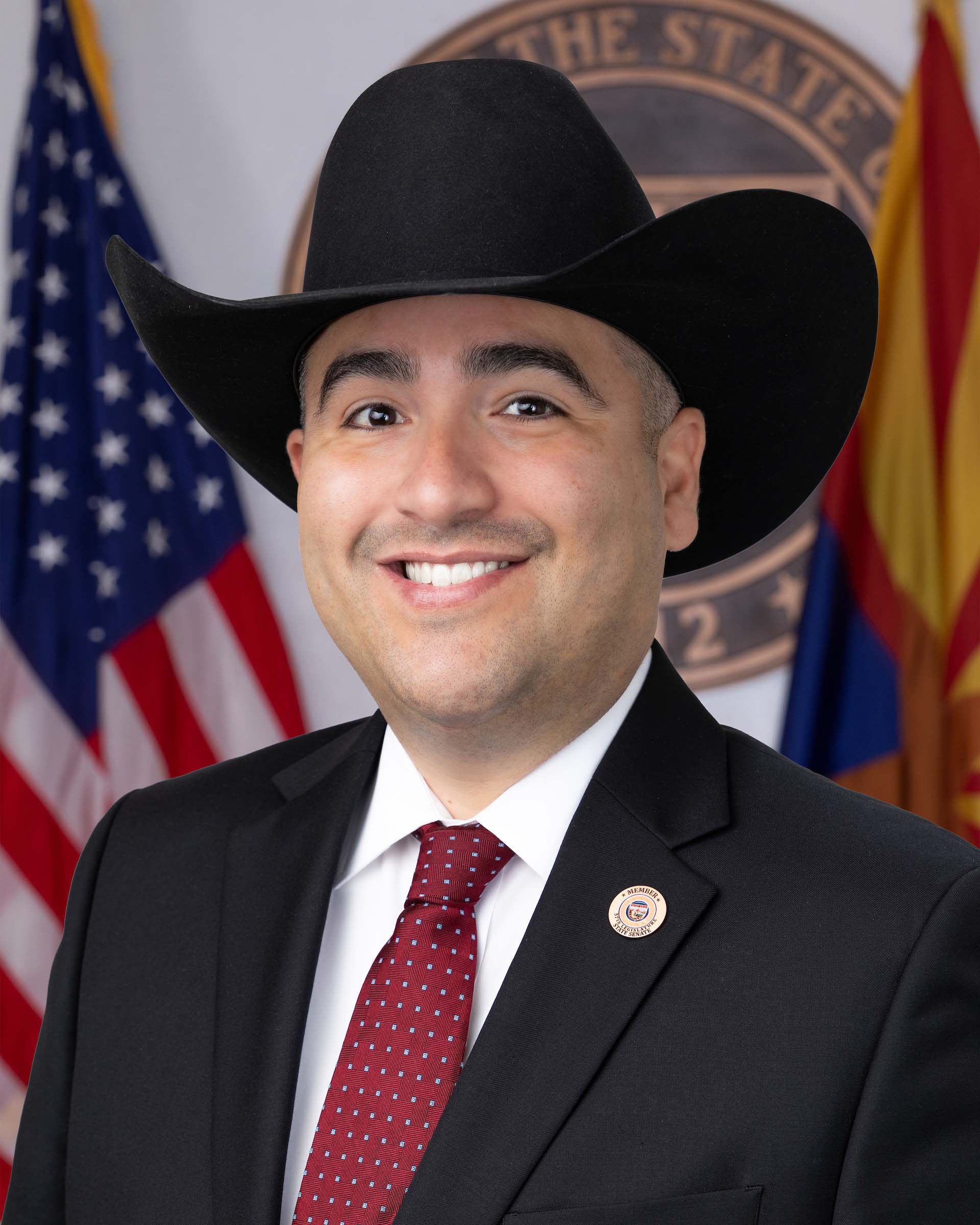
Sen. T.J. Shope
Sponsored bills
Maddy summarySB 1102 prevents pharmacy benefit managers (PBMs) from suddenly removing a prescription drug from coverage for patients already taking it, unless the drug is discontinued. It requires PBMs to provide 60 days' notice before changing drug coverage and establishes a streamlined process for doctors to request continued access to excluded medications. Patients must obtain approval through this exception process to keep using a drug that was previously covered but is now excluded from the formulary. The law applies to all health insurers and PBMs in Arizona, ensuring continuity of care for those on established prescriptions.
Maddy summarySB 1311 creates a new "West Valley Charity Special Plate" for Arizona vehicle owners. To implement this, a person must pay $32,000 to the state department upfront, then vehicle owners pay a $25 annual fee ($17 of which is donated to the West Valley Charity Special Plate Fund). The department issues the plates after design approval, and the fund receives all $17 annual donations from plate fees. This program affects Arizona drivers who choose this specialty plate, with the charity fund supporting West Valley community initiatives.
Maddy summarySB 1229 prohibits Arizona municipalities with over 70,000 residents from restricting home buyers' design choices or imposing certain development rules. It bans local requirements for shared amenities (like community pools), screening walls/fences, minimum lot sizes over 3,000 sq. ft. for new single-family homes, larger home size standards than other housing types, and excessive building setbacks (e.g., front setbacks over 10 feet, except for garages). The law directly affects home buyers, developers, and homeowners in qualifying cities by overriding local zoning and design regulations, while exempting building/fire codes, tribal land, and military zones. It applies only to new developments after the law’s effective date and does not affect existing housing or require municipalities to waive utility or safety standards.
Maddy summarySB 1128 requires Arizona's air quality agency to consider emissions from other U.S. states and solar radiation effects when updating air quality plans, while explicitly excluding emissions originating outside the United States. It also authorizes Arizona's attorney general to sue the EPA if the agency refuses to approve plans demonstrating Arizona would meet ozone standards without foreign emissions. The bill is based on Arizona's claim that over 80% of ozone pollution in the Maricopa nonattainment area (Phoenix metro) comes from outside U.S. borders. This changes how Arizona factors external pollution into its air quality strategy and provides a legal path to challenge the EPA's interpretation of federal law.
Maddy summarySB 1623 allocates $10 million from Arizona’s state general fund and $18.77 million in expenditure authority for fiscal year 2025-2026 to support graduate medical education programs. This funding directly assists hospitals and medical training programs across Arizona by covering both direct and indirect costs of residency training, including start-up expenses for new programs. The bill ensures state funds supplement, but do not replace, existing voluntary payments from local governments to hospitals running these programs. It also exempts these appropriations from standard budget lapse rules under Arizona law.
Maddy summarySB 1671 adds traditional healing services as a covered benefit under Arizona's Medicaid program (AHCCCS). This coverage applies only to AHCCCS members who qualify under federal regulations (42 CFR § 136.12) and receive services delivered by or through the Indian Health Service or a tribal facility. The bill explicitly requires federal approval for this coverage and is subject to available funding. It does not alter other existing covered services listed in the statute.
Maddy summarySB 1442 allocates $25 million from Arizona's state general fund for fiscal year 2025-2026 to fund new or retrofitted secure behavioral health residential facilities. It directly affects licensed facilities serving two specific populations: individuals with serious mental illness who are chronically treatment-resistant (court-ordered under A.R.S. § 36-550.09) or those committed via court order (A.R.S. § 13-4521). Funds must be used solely for facility construction or retrofitting, with recipients required to measure clinical outcomes, independent living skills, program participation, and physical health metrics. Facilities must report these results annually to state leadership, and the appropriation is exempt from standard funding lapsing rules. The bill requires a request for proposals by January 2026, prioritizing facilities that can open within 12 months and meet geographic needs.
Maddy summarySB 1613 provides $76.9 million in state funding (including $13.6 million from the general fund and $63.3 million from expenditure authority) for rate increases in Arizona's long-term care system during fiscal year 2025-2026. The bill directly affects assisted living centers and skilled nursing facilities by allocating funds to cover mandated rate increases for their services. It specifies the exact funding sources and amounts to ensure these rate adjustments are fully covered without requiring additional legislative action. The appropriations are exempt from standard budget lapse rules, guaranteeing the funds remain available for the intended purpose.
Maddy summarySB 1439 allocates $400,000 annually from Arizona's general fund to the state Department of Corrections for its braille transcription program, doubling the current $200,000 yearly budget. This funding directly supports incarcerated individuals who rely on braille materials for access to reading and educational resources. The bill establishes this increased amount as ongoing funding for future fiscal years, ensuring sustained support beyond the current allocation. It does not create new requirements but secures stable financial resources for an existing program serving inmates with visual impairments.