

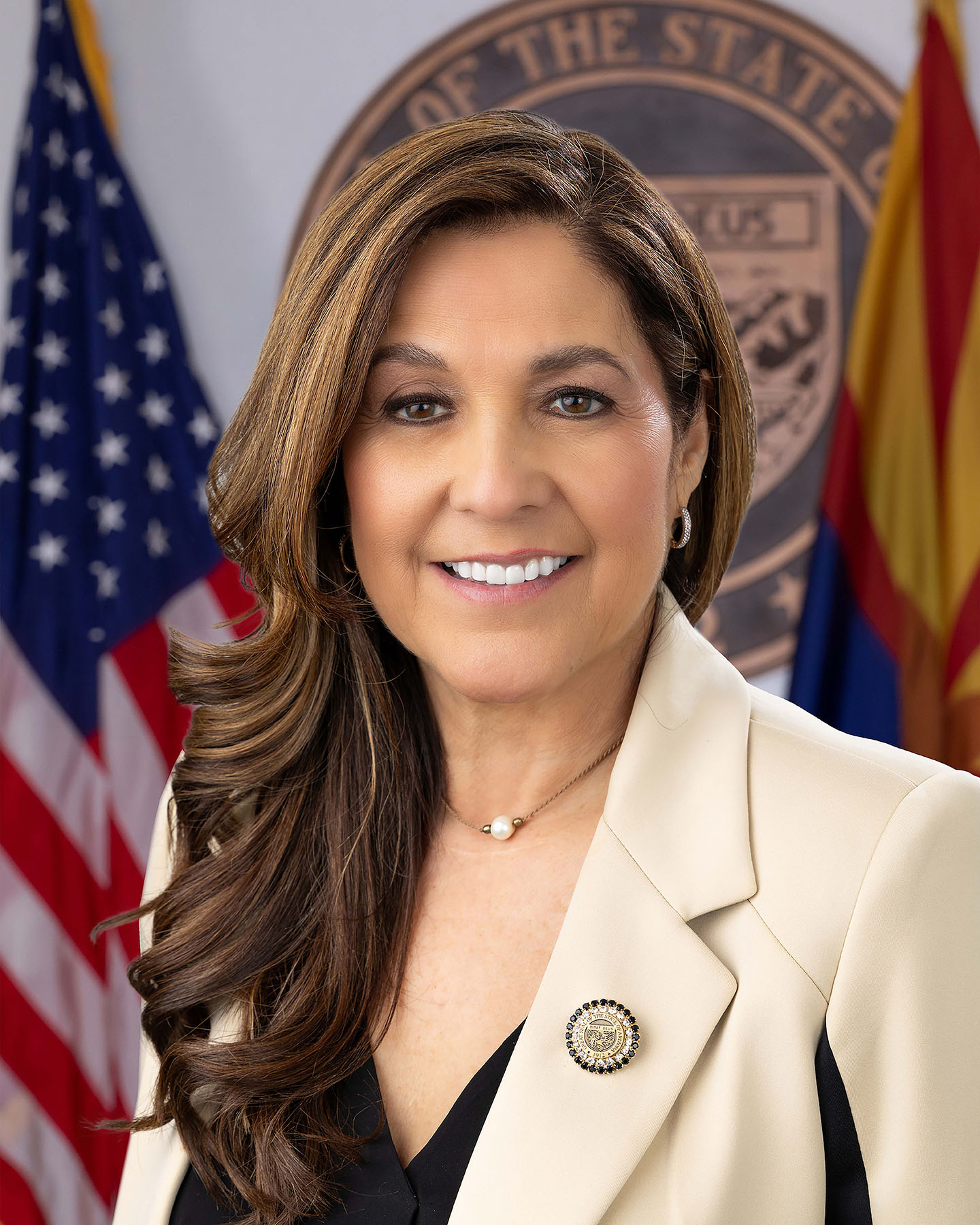
Photo of Catherine Miranda
D Arizona Senate · District 11 On the 2026 ballot

Sen. Catherine Miranda

Compare
Total votes
2,872
all sessions
Attendance
94%
159 missed
Near the chamber average
With party
92%
of cast votes
Lower than 77% of chamber peers
Bipartisan score
6%
crosses aisle rarely
Near the chamber average
Sponsored
476
bills & resolutions
Higher than 90% of chamber peers
Committees
4
assignments
476 bills and resolutions

Sponsored bills

Total
476
Primary
67
Co-sponsor
409
This page
476
matching current filters
Co-sponsor HB 2837
Introduced · Arizona House · Co-sponsor
landlord tenant; applications; fees; disclosures

Maddy summaryHB 2837 limits landlord fees and requires clear cost disclosures for renters in Arizona. It prohibits landlords from charging for background checks if tenants provide their own credit report, caps application fees at actual costs (banning separate fees for screening), and restricts landlords to one application fee per year. The bill also mandates landlords to disclose in writing at lease start: all rent amounts, mandatory fees (like trash or smart device upgrades), additional costs, property management details, and landlord contact information - both in the lease and in all promotional materials. These changes directly affect renters (by reducing hidden fees) and landlords (who must follow new disclosure rules).

Introduced Feb 13, 2025 1 co-sponsor
Co-sponsor HB 2812
Introduced · Arizona House · Co-sponsor
in-state student status; nonimmigrant aliens

Maddy summaryHB 2812 modifies Arizona law to expand in-state tuition eligibility for certain students. It allows individuals who attended Arizona high school (public, private, or homeschool) for at least two years and graduated in-state - regardless of immigration status - to qualify for in-state tuition at Arizona universities or community colleges. The bill specifically clarifies that people without lawful immigration status meet the residency requirements under this provision. It does not change requirements for nonimmigrant visa holders (e.g., students on F-1 visas). The amendment requires a three-fourths legislative vote for implementation.

Introduced Feb 12, 2025 1 co-sponsor
Co-sponsor HB 2770
Introduced · Arizona House · Co-sponsor
board members; qualifications; training requirements

Maddy summaryHB 2770 requires all Arizona school district governing board members to complete either eight hours of professional development training or attend a training workshop related to school governance. This new requirement (Section 15-349) directly affects all current and future school board members statewide, replacing the previous option of meeting education or experience standards as a qualification path. The bill amends qualification rules (Section 15-421) to allow the training to satisfy the "two years of experience" requirement in areas like school finance, student safety, or governance. It does not change existing residency, voter registration, or conflict-of-interest rules but adds training as a concrete, accessible pathway for candidates.

Introduced Feb 12, 2025 1 co-sponsor
Co-sponsor SB 1646
Introduced · Arizona Senate · Co-sponsor
appropriation; child care assistance

Maddy summarySB 1646 allocates $112.45 million from Arizona's general fund and $78.65 million in federal child care funds for the Department of Economic Security to provide child care assistance. The funding supports low-income families who qualify for state child care assistance programs. It directly affects eligible families by ensuring continued access to subsidized child care services. The bill specifies the exact funding amounts and sources for the 2025-2026 fiscal year without changing eligibility rules or program structure.

Introduced Feb 11, 2025 1 co-sponsor
Co-sponsor SB 1668
Introduced · Arizona Senate · Co-sponsor
health insurance; requirements; essential benefits

Maddy summarySB 1668 requires health insurers in Arizona to cover essential health benefits - including hospital care, mental health services, preventive care, and prescription drugs - without cost-sharing for recommended preventive services. It prohibits insurers from denying coverage, charging higher premiums, or imposing annual/lifetime limits based on preexisting conditions or health status, and mandates that dependent coverage continues until age 26. The law applies to individual, short-term, and small employer group health plans, and requires clear disclosures for short-term insurance about coverage gaps compared to federal standards. This bill aims to standardize comprehensive coverage and prevent discriminatory practices by insurers.

Introduced Feb 11, 2025 1 co-sponsor
Co-sponsor HB 2499
Introduced · Arizona House · Co-sponsor
pesticides; sale and use restrictions

Maddy summaryHB 2499 restricts the sale and use of neonicotinoid pesticides (a class including chemicals like imidacloprid and thiamethoxam) in Arizona. It requires sellers to hold a restricted-use pesticide license and limits user eligibility to certified applicators, veterinarians, or wood preservers. Exceptions cover pet care products, personal care items, indoor insect control, and wood preservatives. Violations are classified as class 3 misdemeanors, and the law takes effect January 1, 2026.

Introduced Feb 11, 2025 1 co-sponsor
Co-sponsor HB 2790
Introduced · Arizona House · Co-sponsor
working conditions; heat illness; prevention

Maddy summaryHB 2790 requires employers in agriculture, construction, landscaping, oil/gas extraction, airport work, mail/delivery, and heavy-material transportation to implement heat illness prevention measures. It mandates free access to cool water with ice (at least one cup every 15-20 minutes above 80°F), shade or climate-controlled areas within 400 feet of workspaces, and paid rest periods based on temperature. Employers must monitor workers for heat symptoms, establish emergency response protocols, and gradually acclimate new hires to hot conditions. The law directly affects outdoor and indoor workers in these high-risk industries during heat events.

Introduced Feb 11, 2025 1 co-sponsor
Co-sponsor SB 1664
Introduced · Arizona Senate · Co-sponsor
Indian child welfare; custody proceedings

Maddy summarySB 1664 establishes jurisdiction rules for child custody cases involving Indian children in Arizona. It requires state courts to transfer custody cases to tribal courts when an Indian child resides or is domiciled on a reservation, or to transfer cases to tribal courts for children not on reservation unless specific prohibited reasons exist (like the case being advanced or negative perceptions of tribal systems). The bill ensures Indian tribes and Indian custodians can intervene in all such proceedings and mandates that Arizona courts give full legal recognition to tribal court decisions on child custody. This directly affects Indian children, their tribes, parents, and Arizona state courts handling custody cases.

Introduced Feb 11, 2025 1 co-sponsor
Co-sponsor HB 2510
Introduced · Arizona House · Co-sponsor
ADEQ; waste programs; funding; rules

Maddy summaryHB 2510 creates a program to fund curbside composting in Arizona cities by establishing a dedicated "municipal composting program fund." This fund will receive money from fees on imported hazardous waste (waste classified as hazardous where generated but not in Arizona) and use it to award grants to eligible municipalities for composting programs. The bill requires the state to adopt rules setting eligibility for grants and managing the waste fees. It also establishes new rules for handling imported hazardous waste, including its transportation, treatment, storage, and disposal.

Introduced Feb 11, 2025 1 co-sponsor
Co-sponsor SB 1720
Introduced · Arizona Senate · Co-sponsor
clozapine; access; treatment protocols

Maddy summarySB 1720 requires health insurers in Arizona to cover enhanced care for patients prescribed clozapine, a medication for severe schizophrenia that requires careful blood monitoring. It mandates insurers to reimburse higher rates for psychiatric visits during the first year of treatment, cover mobile blood testing, provide less-invasive monitoring options like finger-stick devices, and include genetic testing to manage side effects. The bill also extends these requirements to inmates in county jails and state prisons, ensuring they receive clozapine access and related treatment protocols as specified in existing law. These changes directly affect patients on clozapine, health insurers, and correctional facilities.

Introduced Feb 11, 2025 1 co-sponsor
Showing 161 to 170 of 476 bills
Previous 1 … 16 17 18 … 48 Next