

Maddy summaryHB 2273 allocates unspent county transportation excise tax revenues for specific road improvement projects across Pinal County and surrounding communities in Arizona. The bill directs $45.98 million toward 12 named projects, including road widening in Florence, paving in Pinal County, traffic interchanges in Maricopa, and general transportation upgrades for cities like Queen Creek and tribal communities (Gila River, Ak-Chin, and Coolidge). Funds are distributed proportionally if total revenues exceed or fall short of the $45.98 million target. This policy change directly affects local governments and tribal entities by providing dedicated funding for infrastructure projects without creating new taxes or fees.
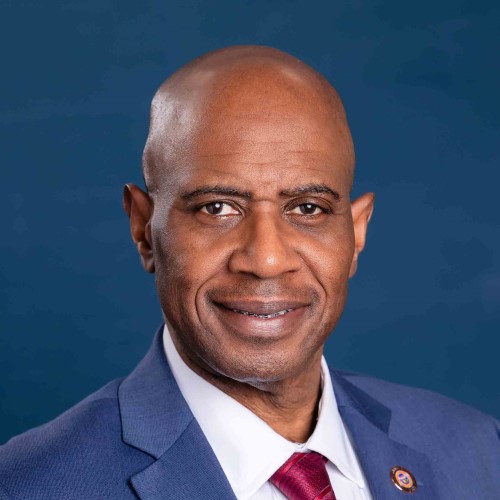
Rep. Walt Blackman
Sponsored bills
Maddy summaryHB 2617 prohibits health insurers in Arizona from requiring cost-sharing (like copays or deductibles) for diagnostic prostate cancer screenings for specific high-risk men starting January 1, 2027. It directly affects men who are 55 or older, carry BRCA1/BRCA2 genetic mutations, have a family history of prostate cancer (including first-degree relatives diagnosed or deceased from it), or are military veterans exposed to Agent Orange. The bill applies to hospital service corporations, health care organizations, disability insurers, and group disability insurers. Key provisions define "high-risk" categories and mandate coverage without cost-sharing for screenings, aiming to improve early detection access for these groups. The law does not change screening guidelines but removes financial barriers for covered services.
Maddy summaryHB 2240 provides tuition waiver scholarships at Arizona public universities and community colleges for specific groups. It directly affects: (1) children under 30 or unmarried spouses of peace officers, firefighters, correctional officers, or military personnel who died in the line of duty from PTSD-related injuries or suicide (with documented evidence); (2) Purple Heart recipients with a 50%+ VA disability rating who are Arizona residents or stationed in Arizona. The bill requires verification by state boards (like the Veterans' Services Department) and limits scholarships to 64 community college credits or a bachelor’s degree’s credit equivalent. It expands existing tuition waiver programs to include these new eligibility categories while maintaining strict documentation requirements.
Maddy summaryHB 2231 presumes that certain cancers, including adenocarcinoma, are work-related for Arizona firefighters and fire investigators who meet specific conditions. It applies to current and former firefighters diagnosed with listed cancers (like adenocarcinoma, leukemia, or lung cancer) within 15 years of leaving hazardous duty service, provided they: passed a pre-employment physical without cancer signs, served at least five years in hazardous roles, and meet medical exam standards. The presumption can be challenged if evidence shows non-occupational causes (e.g., tobacco use outside work) contributed to the cancer. This bill expands existing occupational disease protections for firefighters, adding adenocarcinoma to the list of presumed work-related cancers under Arizona law.
Maddy summaryHB 2228 requires state agencies, adult protective services, and individuals filing civil or criminal cases involving elder abuse to notify Arizona's Attorney General within 30 days of filing the action or making a decision. The Attorney General must maintain a public registry containing the person's name, nature of the alleged abuse, dates of conduct, and case outcome. The registry is accessible to the public upon written request, and individuals can submit statements to be included in their record. This bill creates a centralized tracking system for elder abuse cases without establishing new criminal penalties.
Maddy summaryHB 2856 establishes Arizona's Department of Early Childhood Education and creates a voluntary certification program for early learning institutions (like childcare centers). The department will set academic standards for children aged 3-5 (including science basics and pre-reading skills), oversee certification, audit facilities, and manage online applications for licensing, background checks, and subsidies. Certified institutions must meet these standards and use state funds solely for education, with failure to comply risking probation or revocation. The bill also grants certified centers access to the same educational grants, tax credits, and zoning privileges available to public schools.
Maddy summaryHB 2860 establishes a 12-member independent oversight committee to review Arizona's Department of Child Safety (DCS) operations. The committee, appointed with representation from legislative, judicial, tribal, foster care, and child welfare sectors, meets monthly to analyze DCS performance on child safety outcomes, response times, placement stability, and critical incident reviews. It examines DCS policies, staffing, vendor contracts, and compliance with state/federal requirements, while handling sensitive information confidentially. The committee issues findings and tracks whether DCS implements its recommendations to improve child welfare services.
Maddy summaryHR 2006 is a ceremonial resolution passed by the Arizona House of Representatives honoring Yvonne Glee Lime Fedderson, who died on January 23, 2026. The resolution expresses the House's sympathy to her family and admirers while recognizing her founding role in Childhelp and her decades of work advancing child welfare programs, including establishing the first national child abuse hotline and advocacy centers. It directs the Secretary of State to transmit copies of the resolution to her family and Childhelp organization. As a non-binding commemorative measure, it does not create new laws or affect any policies.
Maddy summaryHB 2619 amends Arizona Revised Statutes § 26-126 to correct the penalty classification for county recorders who fail to perform duties or falsify records. It changes the offense from a "petty offense" to a "class 2 misdemeanor" for recorders, while keeping the same penalty for individuals who give false information to recorders. This technical correction directly affects county recorders and enrolling officers by upgrading the legal consequences for their specific violations. The bill does not create new policy but adjusts existing penalty levels for accuracy.
Maddy summaryHB 2242 appropriates $175 million from Arizona's state general fund for safety and capacity improvements to State Route 260 between mileposts 200 and 346, directly affecting drivers, emergency responders, and wildlife in that corridor. The funds will specifically widen roads to four lanes where feasible ($95M), expand shoulders to five feet with modern guardrails ($35M), install wildlife mitigation systems ($25M), and upgrade drainage/slope stabilization ($20M). The Arizona Department of Transportation must prioritize projects using crash data, traffic volume, and safety needs, then submit annual public reports and maintain a project dashboard. The funding is exempt from standard appropriation lapsing rules until June 2036, after which the bill expires.