

Maddy summaryHB 2239 establishes Arizona's Child Care Grant Program and a dedicated Child Care Infrastructure Fund to address statewide child care shortages. The bill provides grants to eligible applicants - including child care facilities, providers, and those seeking to open licensed operations - for services like underserved community care, nonstandard-hour care, infant/toddler care, and care for children with disabilities. It funds specific infrastructure improvements such as facility expansions, property acquisitions, renovations, provider training, licensing support, and start-up costs through the newly created fund. The program aims to increase affordable, accessible child care capacity, particularly in rural and low-income areas, as highlighted in the legislature's findings on underfunded early childhood services.
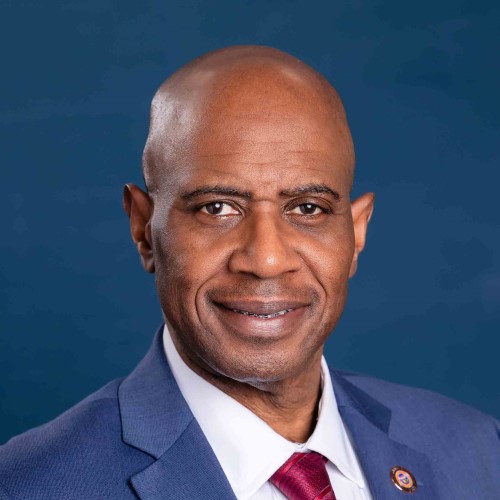
Rep. Walt Blackman
Sponsored bills
Maddy summaryHB 2968 changes how family courts handle evidence in cases involving child custody or parenting time. It requires courts to admit relevant evidence about a child’s safety, well-being, trauma, or expressed wishes, as well as evidence about parent behavior, regardless of its format or whether it fits traditional "hearsay" rules. The bill mandates that criminal records of parents must be admitted in these cases and requires courts to make written findings on evidence relevance and credibility, with failure to do so being grounds for appeal. It also ensures both parents can submit evidence equally, and courts cannot allow one parent to present evidence more freely than the other without immediate appeal rights. This directly affects family courts, parents in custody disputes, and children’s safety considerations in legal decisions.
Maddy summaryHB 4130 creates a framework for Arizona municipalities to establish "housing and economic growth zones" for up to 20 years. These zones, designated in areas with deteriorating infrastructure, affordable housing shortages, or economic stagnation, allow local governments to use increased property tax revenue ("increment revenue") generated within the zone to fund specific public improvements like affordable housing, water/sewer infrastructure, broadband, and business-supporting facilities. The bill requires municipalities to adopt detailed project plans, hold public hearings, and form a governing board with local officials and residents to oversee zone implementation. It prohibits using these funds for general government expenses or projects primarily benefiting single private entities (e.g., luxury sports facilities). The policy directly affects municipalities that create these zones and residents/businesses within them, aiming to spur targeted development without new taxes.
Maddy summaryHB 2229 allocates $3 million from Arizona's state general fund in fiscal year 2026-2027 to the Department of Health Services for funding pregnancy resource centers. The bill directly affects pregnancy resource centers that do not provide or refer patients for abortions, as funds cannot be given to centers that refer to abortion clinics or to abortion clinics themselves (as defined by Arizona law). Key provisions restrict distribution to centers that avoid abortion services or referrals, ensuring state funds support only centers aligned with the bill's restrictions.
Maddy summaryHB 2758 allows eligible entities (state, local governments, or regulated public utilities) to withdraw and transport groundwater from historically irrigated land in Arizona's McMullen Valley groundwater basin under strict conditions. It permits up to 6 acre-feet of groundwater per acre per year (or 30 acre-feet over a decade), requires hydrological studies and water-measuring devices, and mandates monthly reports on withdrawal and transport volumes. The groundwater can only be sent to specific locations, including active management areas or La Paz County (with a 10% annual volume cap), and must not cause excessive groundwater decline. Entities must submit annual reports to the state department detailing all transported water.
Maddy summaryHB 2993 amends Arizona law to clarify when state agencies can hire their own legal counsel. Typically, agencies must use the Attorney General's office for legal representation, but exceptions allow them to hire outside lawyers if the Attorney General is disqualified (e.g., due to a conflict of interest) or in specific cases like pesticide complaints involving the Department of Agriculture. The bill also requires agencies with their own legal divisions (funded by non-general revenue) to reimburse the state general fund for legal services provided by the Attorney General. This affects all state agencies, including the Department of Public Safety (DPS), by defining their legal representation options and reimbursement obligations.
Maddy summaryHCR 2038 is a non-binding legislative resolution supporting Arizona's position in ongoing negotiations for a seven-state agreement governing the Colorado River. It states Arizona's support for a mutual agreement that protects the state's vital industries (agriculture, technology, and military) reliant on Colorado River water, while acknowledging Arizona's significant water conservation efforts (including $211 million invested to save up to 6.6 million acre-feet). The resolution emphasizes Arizona's historical water use reductions (8.9 million acre-feet) and economic contributions (75% of basin jobs and crop sales in the Lower Basin) as context for negotiations. It does not create new policy but formally endorses collaborative solutions to address the river's structural deficit and uphold the 1922 Compact.
Maddy summaryHB 2610 requires Arizona municipalities to reimburse telecommunications utilities (like internet, cable, and phone companies) for relocating their facilities when construction projects funded by voter-approved municipal bonds require it. Municipalities must pay these costs within 90 days of receiving verified claims, but total reimbursements for facilities without existing land rights are capped at 2% of the project's bond funds. The bill excludes cases where utilities already have land rights or permits, and it does not apply to bond projects approved before January 1, 2017. This directly affects telecom companies needing relocation and municipalities managing bond-funded projects.
Maddy summaryHB 2063 allocates $1.5 million from Arizona's state general fund for fiscal year 2026-2027 to the Corrections Oversight Fund, which supports the Independent Correctional Oversight Office. This funding is specifically designated for the office's operations under existing law (Title 41, Chapter 59 of Arizona Revised Statutes), enabling it to conduct oversight activities within the state prison system. The bill does not create new policies or change existing laws - it solely provides financial resources for an already established oversight body. The office, which monitors correctional facilities and conditions, will use these funds for its mandated oversight functions.
Maddy summaryThis is a ceremonial resolution (HCR 2064) expressing the Arizona Legislature's condolences upon the passing of former state legislator Barbara Leff. It honors her 1996-2006 service representing Paradise Valley, her work on HMO reform and economic development, and her contributions to voter information systems. The resolution extends sympathy to her surviving family members (husband, children, grandchildren) and acknowledges her community leadership. It has no policy impact or legislative effect beyond this expression of respect.