

Maddy summaryHB 2949 requires large data centers (defined as facilities with at least 100 megawatts of peak demand) to directly pay for all energy costs related to their operations, including fuel, generation, and transmission. This applies to both public power entities (like municipal utilities) and public service corporations (like investor-owned utilities). The bill prohibits these data centers from passing these costs onto other utility customers, ensuring ratepayers aren’t burdened by the facilities’ energy expenses. The law aims to address cost allocation for high-energy data infrastructure without altering broader utility rate structures.
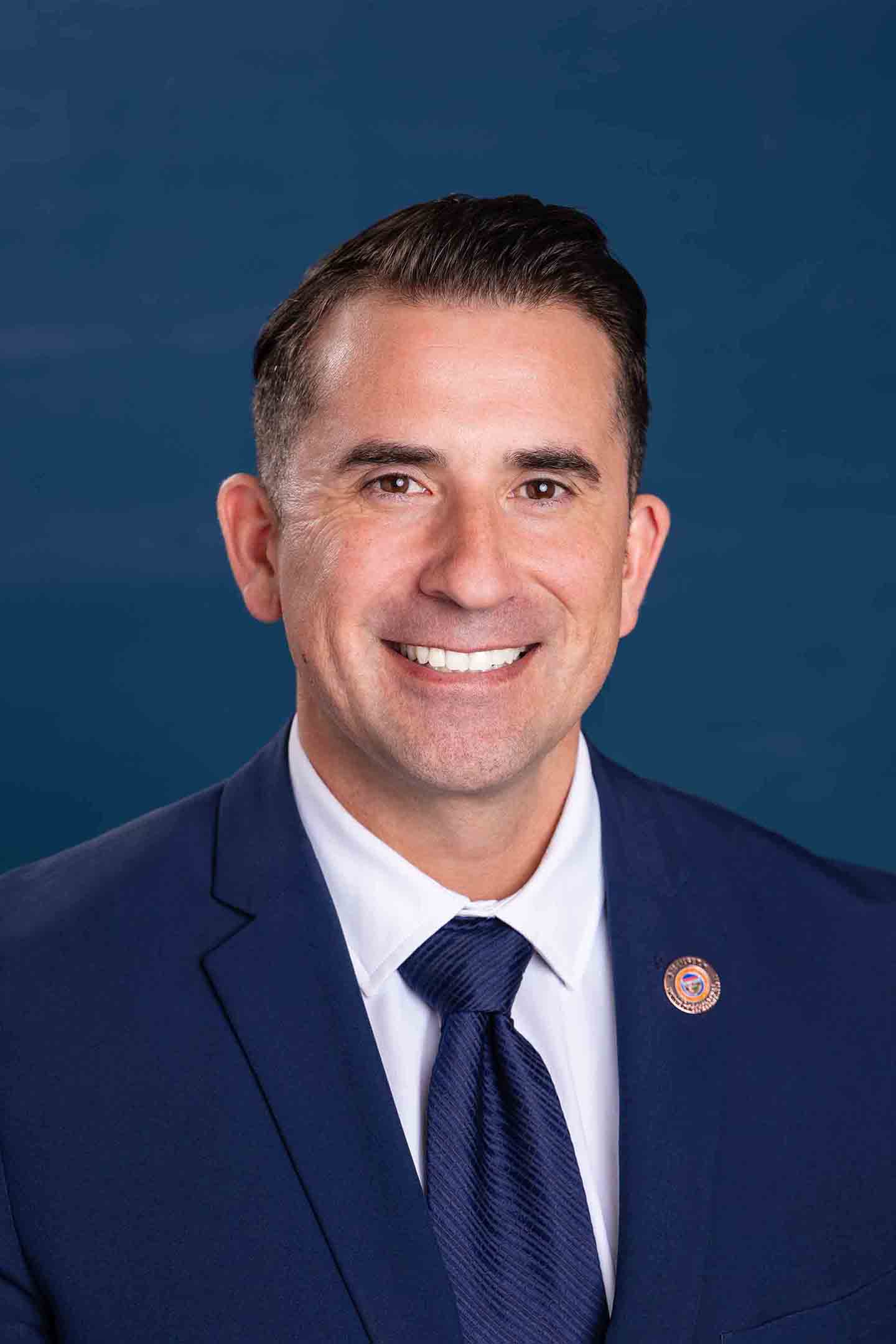
Rep. Aaron Marquez
Sponsored bills
Maddy summaryHB 2964 requires Arizona health insurers to cover specific cancer-related genetic services without cost-sharing (like deductibles or copays) starting January 1, 2027. It applies to hospital service corporations, health care services organizations, and disability insurers, directly affecting subscribers, enrollees, and insureds who have a personal or family history of cancer or inherited gene mutations. The bill mandates coverage for genetic counseling, testing (including BRCA and Lynch syndrome tests), and cancer risk assessments when recommended by a health care provider following National Comprehensive Cancer Network guidelines. This ensures access to inherited cancer risk testing without financial barriers for eligible individuals.
Maddy summarySB 1660, the "Immigration Safe Zones Act," requires Arizona's Attorney General to create policies within 60 days that limit state agency cooperation with federal immigration enforcement. These policies must protect specific public facilities - including public schools, community colleges, universities, libraries, courts, and publicly funded healthcare centers - from being used for immigration enforcement actions. The bill also mandates that state agencies remove all questions about immigration status from applications, questionnaires, or forms related to public services or education within 60 days. It defines "immigration enforcement" broadly to include federal efforts targeting individuals' presence, entry, or employment in the U.S. The law directly affects state agencies, public institutions, and residents seeking services at protected facilities.
Maddy summarySB 1577 amends Arizona law to explicitly exempt websites operating as private clubs or religious organizations from certain anti-discrimination requirements. The bill adds "websites" to the existing list of entities (like physical private clubs and religious organizations) already exempt under federal civil rights law. This means websites functioning as private clubs or religious entities would no longer be subject to the same coverage under Arizona's relevant statute. The change applies specifically to websites structured like private clubs or religious entities, not all websites.
Maddy summaryThis bill requires Arizona municipalities with over 75,000 residents to permit duplexes, triplexes, fourplexes, and townhomes in two specific areas by January 1, 2026: (1) all single-family zones within one mile of downtown, and (2) at least 20% of new developments over 10 acres. It prohibits local governments from discouraging these housing types through excessive rules, such as requiring more parking than single-family homes or applying commercial building codes. The bill excludes historic districts (per state law), areas without water/sewer services, airport zones, and unincorporated areas. If a municipality fails to adopt these rules by 2026, middle housing becomes allowed everywhere zoned for single-family homes.
Maddy summaryHB 2945 establishes Arizona's first state-administered family and medical leave insurance program, effective January 1, 2029. It provides wage replacement benefits for eligible workers needing time off for reasons including childbirth/adoption, caring for a family member with a serious health condition, pregnancy recovery, military family needs, or safe leave due to domestic violence, sexual violence, abuse, or stalking. The program guarantees up to 26 weeks of benefits for pregnancy or inpatient health conditions and up to 24 weeks for other qualifying reasons, with employers required to provide at least 12 weeks of leave. Benefit payments must begin within two weeks of a claim and continue every two weeks, applying to both employees and self-employed individuals who meet the defined eligibility criteria.
Maddy summaryHB 2948 requires large food and garden seed suppliers (those selling over $6 billion annually) to offer identical pricing terms to all retailers purchasing the same quantity of "covered goods" (food for home use and garden plants, excluding gasoline, drugs, tobacco, or alcohol). It mandates that suppliers provide anonymized sales data to retailers upon request and prohibits charging different prices based on retailer type or location. The law also restricts dominant retailers (with over $18 billion in annual sales) from forcing suppliers to violate these pricing rules. Exceptions apply for perishable goods, seasonal items, or business closures.
Maddy summaryArizona's SB 1464 creates a state-run family and medical leave insurance program starting in 2029. It provides eligible workers with up to 26 weeks of paid benefits for pregnancy, serious health conditions requiring hospitalization, or 24 weeks for caring for a newborn, family member with a serious health condition, military family leave, or "safe leave" related to domestic violence, sexual violence, abuse, or stalking. To qualify, workers must meet specific wage requirements during their base period (e.g., earning at least $390 per week in a qualifying quarter). Employers must provide at least 12 weeks of leave, with benefits paid biweekly after a claim is filed.
Maddy summaryHB 2936 repeals Arizona's requirement that construction projects subject to environmental review must include labor agreements (like neutrality agreements) as a condition for approval. This directly affects construction companies and developers seeking environmental permits for facilities like power plants or transmission lines. The bill removes a provision that previously forced applicants to negotiate or comply with certain labor agreements before receiving approval. It does not change environmental review standards or requirements for pollution control. The repeal simplifies the approval process for construction projects by eliminating this labor-related condition.
Maddy summaryHB 2928 establishes heat illness prevention standards for employers in high-risk industries like agriculture, construction, landscaping, oil and gas, airport work, and delivery services. It requires employers to provide free drinking water with ice (and electrolytes for work over an hour above 80°F), shade or climate-controlled rest areas within 400 feet of work zones when temperatures exceed 80°F, and paid rest periods (15-45 minutes per hour) based on heat levels. Employers must also monitor workers for heat symptoms, implement emergency response protocols, and hold pre-shift safety meetings for agricultural workers. These rules, to be adopted by Arizona’s Industrial Commission, apply to all indoor and outdoor workplaces in covered industries to protect workers from heat-related health risks.