

Maddy summaryHB 2960 establishes a grant program to fund specialized veterans' courts in Arizona counties and municipalities. It creates a "veterans' treatment court fund" using state appropriations, providing money to local governments to set up courts that address veterans' justice-involved behavior through individualized treatment plans for issues like PTSD, substance abuse, and traumatic brain injury. The program requires grantees to report annually on participant demographics, recidivism, treatment use, and program outcomes, with the Attorney General compiling statewide data and recommendations for improvement. This directly affects veterans involved in the criminal justice system by connecting them to targeted support services rather than standard court processing.
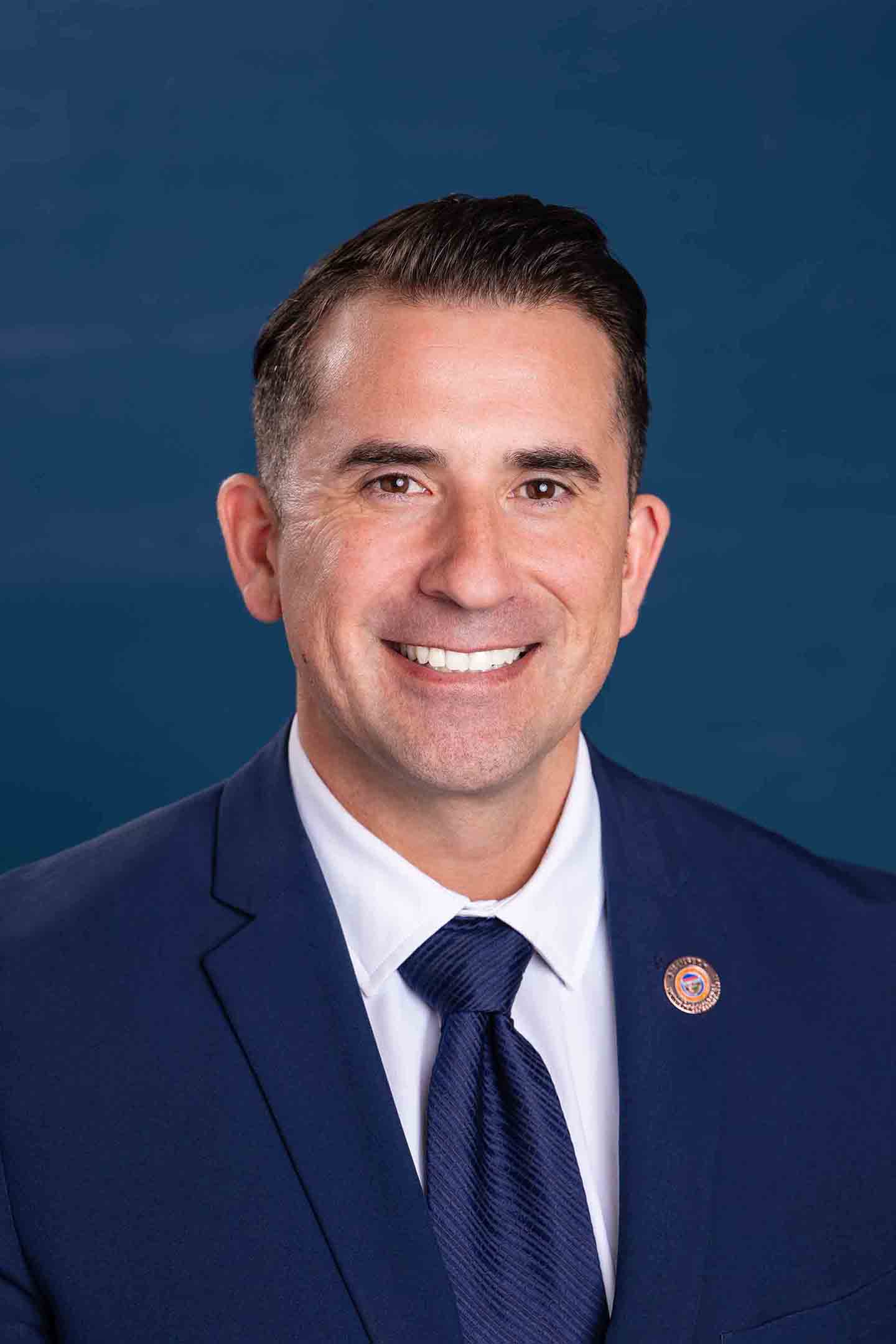
Rep. Aaron Marquez
Sponsored bills
Maddy summaryHB 4002 prevents Arizona cities from banning short-term rentals entirely and sets statewide rules for their regulation. It requires owners to notify adjacent single-family homes before renting, maintain $500,000 liability insurance, and display permit/license numbers in ads. Cities may only regulate based on health/safety, zoning (applied equally to all properties), or specific prohibited uses (e.g., illegal activity), with strict limits on permit requirements (only 6 specified items allowed). The law also mandates cities process permits within 7 business days and prohibits fines for missing contact info until after 30 days’ notice. This directly affects short-term rental owners and local governments across Arizona.
Maddy summaryThis is a commemorative resolution (HCR 2054) honoring Sheila "Ginger" Mattox, a Phoenix community advocate known as "The Fixer" for her work resolving local issues like FAA flight path changes. The resolution, passed by both Arizona legislative chambers, expresses the Legislature's sincere regret at her passing and extends condolences to her family and friends. It has no policy impact or effect on laws, as it is purely a ceremonial tribute to her life and community service. The resolution does not affect any individuals or policies beyond offering formal recognition of her contributions.
Maddy summaryHR 2005 is a symbolic resolution passed by the Arizona House of Representatives declaring gun violence a public health crisis within the state. It directly affects Arizona by formally recognizing the severity of gun-related deaths and injuries using state-specific data, including 1,265 firearm deaths in Arizona in 2020 and firearm deaths surpassing other causes as the top killer of teens aged 15-17 in 2022. The bill contains no new policies, funding, or regulatory changes - it solely makes a formal declaration based on cited statistics about gun violence impacts. This resolution does not alter laws or create new programs but aims to shift public health framing for future action.
Maddy summaryThis bill proposes amending Arizona's state constitution to explicitly protect marriage equality. It would repeal the current constitutional provision defining marriage as between one man and one woman and replace it with a new section stating that marriage cannot be denied based on sex, race, ethnicity, or national origin. If approved by Arizona voters in the next general election, this change would make same-sex marriage a constitutional right in Arizona, directly affecting all couples seeking marriage licenses. The proposal requires voter approval and does not take effect immediately.
Maddy summaryArizona's HB 4132 expands the state's Empowerment Scholarship Account (ESA) program to allow more students to access education funds. It adds income requirements ($200,000 annual threshold, adjusted for inflation after 2027) for families seeking eligibility, while also allowing students who previously attended public school to transfer to an ESA. Funds can cover tuition at participating schools, textbooks, educational therapies, tutoring (capped at $2,000 yearly), and approved online programs. The bill explicitly restricts using ESA funds for school tuition organizations concurrently and requires parents to sign agreements detailing how funds must be spent.
Maddy summaryThis is a commemorative resolution (HCR 2063), not a substantive bill. It honors Yvonne Glee Lime Fedderson, founder of Childhelp and a global humanitarian dedicated to child welfare, following her death on January 23, 2026. The resolution expresses the Arizona Legislature's sympathy to her family and admirers, and directs the Secretary of State to send copies of the resolution to her family and Childhelp. It has no policy provisions or impact on legislation.
Maddy summaryHCR 2029 prohibits certain marijuana businesses from operating in unincorporated areas completely surrounded by Indian reservations in Arizona. Specifically, it prevents the issuance of licenses for nonprofit medical marijuana dispensaries, commercial marijuana establishments, and marijuana testing facilities in those locations. The bill creates a geographic restriction based on being encircled by tribal lands within unincorporated territory. If approved by voters, this policy change would directly affect businesses seeking to operate in such areas. The measure is a referendum requiring voter approval before becoming law.
Maddy summaryHCR 2042 proposes to repeal a constitutional provision (Article IX, Section 21) that set annual spending limits for Arizona school districts and community college districts. This repeal would remove the requirement for these districts to adjust their budgets based on student population changes and cost-of-living factors. The bill directly affects all public school districts and community colleges in Arizona by eliminating these specific expenditure constraints. It does not create new rules but removes an existing constitutional requirement governing district budgeting.
Maddy summaryArizona's HB 2977 prohibits law enforcement officers from wearing face coverings that conceal their face while on duty. It requires all law enforcement agencies (including police departments, sheriff's offices, and state agencies) to create and publicly post policies emphasizing transparency, with exceptions for medical masks, safety gear like helmets during tactical operations, or authorized undercover work. The law defines "facial covering" broadly but excludes items like clear masks, medical masks, or safety equipment necessary for health or physical safety. It applies to all sworn officers across Arizona's public law enforcement entities.