

Maddy summarySCR 1019 is Arizona's resolution formally approving the Equal Rights Amendment (ERA), a constitutional amendment proposed by Congress in 1972. The ERA would require that the U.S. Constitution guarantee equal rights under the law regardless of sex. Arizona's legislature is voting to ratify this amendment, meaning it supports adding it to the Constitution. The state will transmit this resolution to federal officials as part of the process for the amendment to become binding nationwide.
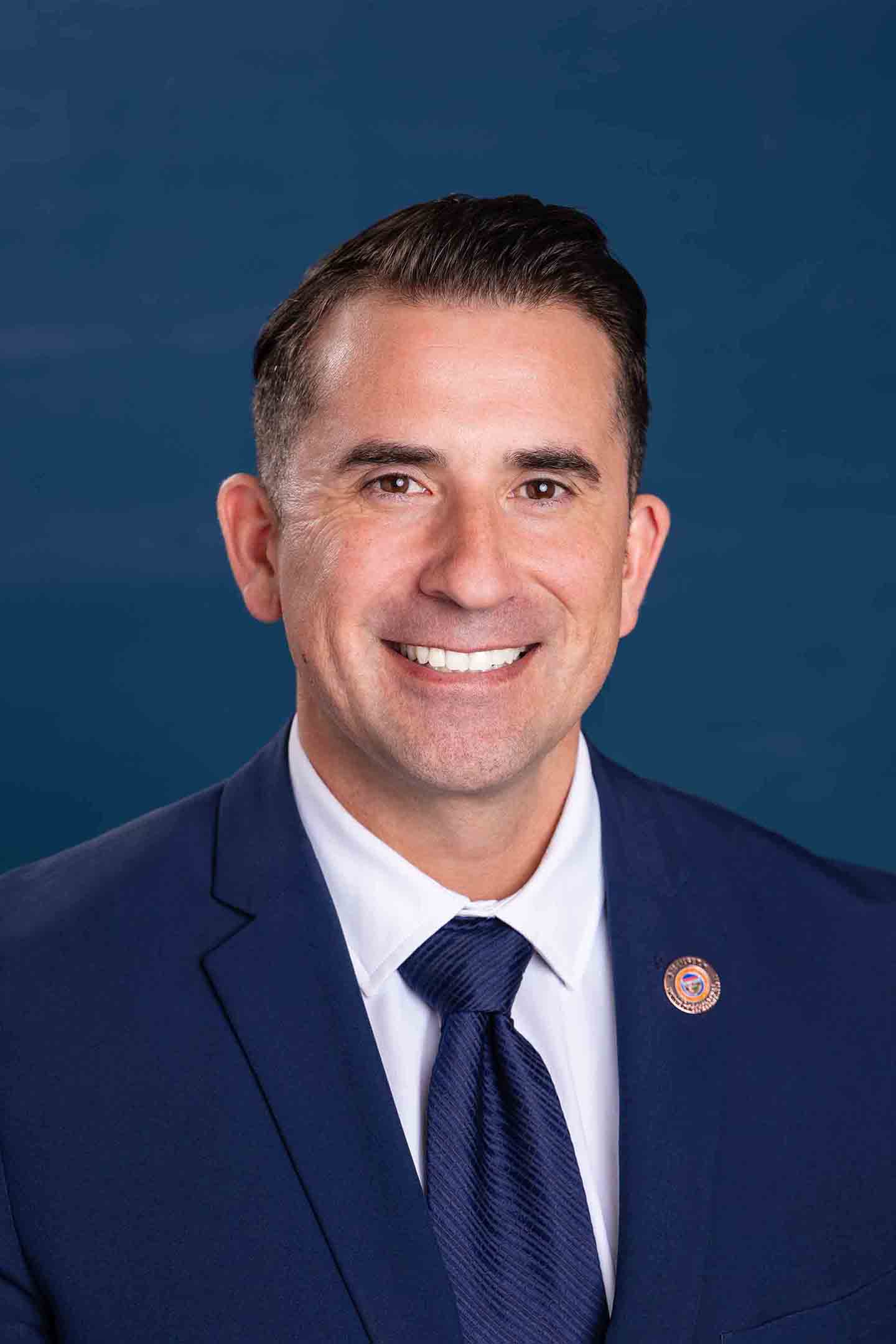
Rep. Aaron Marquez
Sponsored bills
Maddy summaryHB 2673 requires Arizona county sheriffs and state correctional facilities to address mental health needs of incarcerated individuals. It mandates that prisoners showing symptoms of mental illness receive a licensed physician examination within 24 hours, ensures continuity of prescribed medications and treatments upon jail entry, and requires screening for prior mental illness diagnoses. For state facilities, it creates a process where prisoners displaying severe mental health symptoms may be transferred to specialized treatment facilities after a court hearing with appointed legal representation. The bill also requires quarterly condition reports from treatment facilities to correctional authorities and courts. This applies directly to prisoners in county jails (for misdemeanor cases) and state correctional facilities.
Maddy summaryHB 2574 amends Arizona law to clarify the process for appealing traffic penalty judgments. It directly affects drivers who face traffic fines and wish to appeal court decisions. The bill requires courts to report stays (pauses) in enforcement to the state department, prevents the department from taking action during an appeal, and states that posting an appeal bond automatically pauses enforcement. It also allows superior court commissioners to handle these appeals, streamlining the process. The changes apply to all traffic penalty cases where a judgment is under appeal.
Maddy summaryThis resolution expresses the Arizona Legislature's sincere regret and deepest condolences regarding the death of former Senate Majority Leader Alfredo Gutierrez. It formally acknowledges his life of public service, highlighting his advocacy for civil rights, education, and immigrant communities, as well as his significant legislative achievements such as establishing the Arizona Department of Transportation and expanding Medicaid. The bill does not enact new laws or policies but serves as a commemorative gesture to honor his legacy and offer support to his surviving family members.
Maddy summaryHCR 2053 is a legislative resolution expressing the Arizona House of Representatives' regret at the passing of Bradley "Brad" Brauer, a community leader and realtor. It formally extends condolences to his husband, Andrew Sansoni, and other surviving family members. This resolution has no policy impact - it solely serves as a formal expression of sympathy from the legislature, honoring Brauer's life and community contributions.
Maddy summaryThis bill is a resolution of condolence honoring Sheila "Ginger" Mattox, a community leader and former General Electric employee who passed away in January 2026. The text expresses the House of Representatives' sincere regret for her death and extends sympathies to her family and friends. It does not create new laws or policies but serves as a formal acknowledgment of her life and contributions to the Phoenix historic district. The resolution was processed through the House in March 2026 and transmitted to the Secretary of State for official record.
Maddy summaryHB 2437 establishes Arizona’s participation in the Emergency Medical Services (EMS) Licensure Interstate Compact. It allows Arizona-licensed EMTs, AEMTs, and paramedics to practice temporarily in other participating states without obtaining new licenses, while ensuring public safety through standardized requirements. To maintain reciprocity, Arizona must require national registry exams (NREMT), have complaint investigation systems, conduct background checks for new licenses, and share adverse action information with the compact’s commission. This directly affects EMS personnel who work across state lines, including military members and their spouses transitioning to civilian roles. The bill creates a framework for mutual recognition but does not change Arizona’s existing licensure rules for in-state practice.
Maddy summaryHB 2951 requires businesses offering automatic subscription renewals to clearly disclose key terms (like cancellation policies and recurring charges) before consumers agree. It mandates explicit consumer consent before charging, provides simple one-click cancellation options, and requires advance notice (25-40 days before renewal) for all auto-renewing contracts. The law directly affects consumers who subscribe to services with automatic renewal and businesses selling such subscriptions in Arizona. Key provisions include standardized disclosures, verified consent records, and clear language to prevent surprise charges.
Maddy summaryHB 2373 allows Arizona taxpayers to voluntarily contribute a portion of their income tax refund to a veterans' fund via their tax return. The bill creates a new provision (43-623) enabling this donation, which the Department of Revenue will transfer to the Veterans' Donations Fund. This fund includes specific subaccounts: one for the Enduring Freedom Memorial (via section 28-2431), another for women veterans' services (via section 28-2447), and two for military family scholarships (via sections 28-2454 and 28-2470.10). The bill directly affects taxpayers who choose to donate, veterans' service organizations (501(c)(19) qualified), and the Departments of Veterans Services and Revenue.
Maddy summaryHB 2438 creates a compact allowing podiatric physicians (foot doctors) licensed in one participating state to more easily obtain licenses in other participating states through a streamlined process. It requires physicians to designate a "state of principal license" (where they primarily practice or reside) and ensures they must comply with the licensing rules of the state where the patient is located during treatment. The compact adds a new pathway for cross-state practice without changing existing state laws governing podiatric medicine. This directly affects podiatric physicians seeking to practice across state lines in states that adopt the compact.