

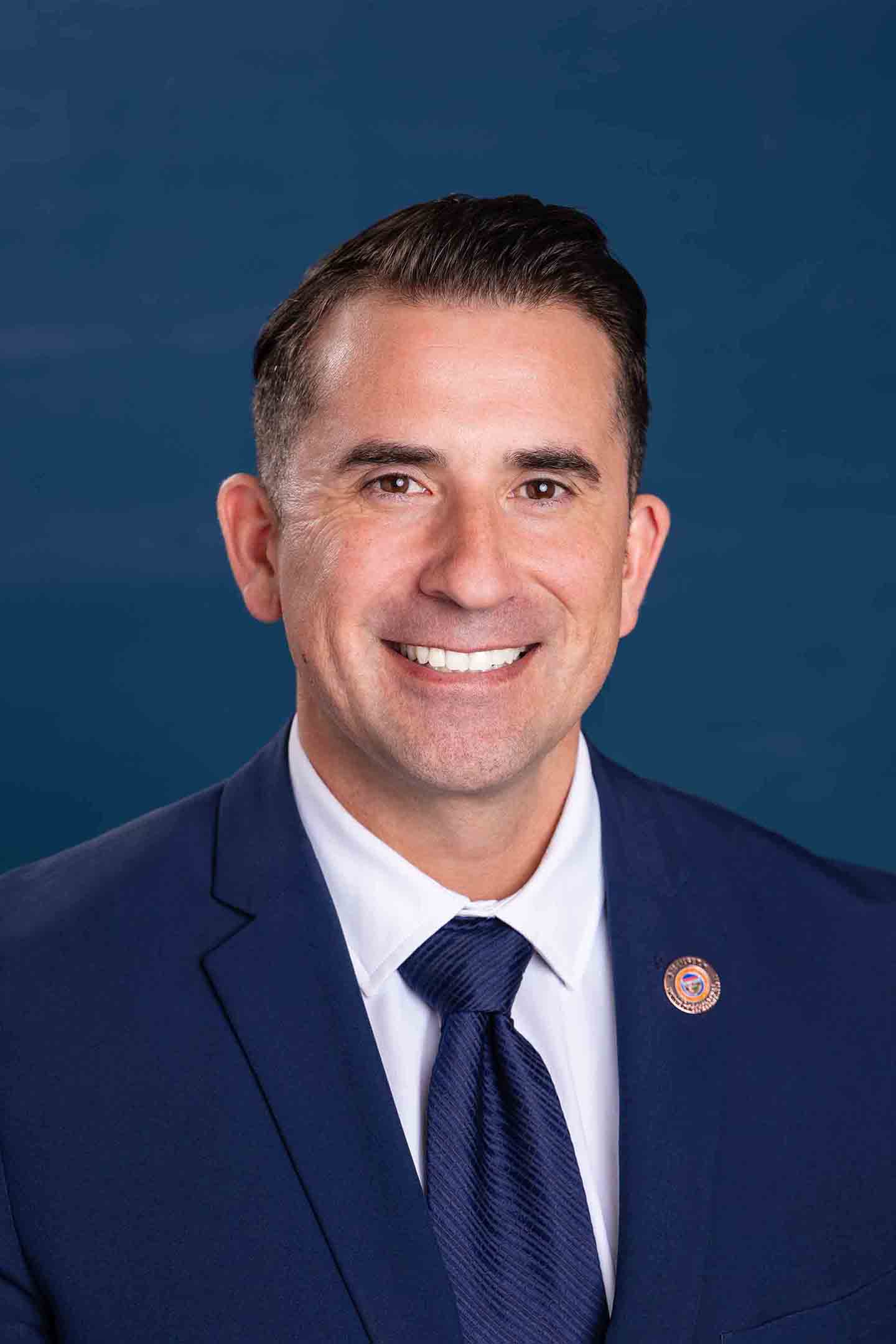
Photo of Aaron Marquez
D Arizona House · District 5 On the 2026 ballot

Rep. Aaron Marquez

Compare
Total votes
1,672
all sessions
Attendance
98%
36 missed
Near the chamber average
With party
95%
of cast votes
Near the chamber average
Bipartisan score
5%
crosses aisle rarely
Near the chamber average
Sponsored
285
bills & resolutions
Higher than 90% of chamber peers
Committees
3
assignments
285 bills and resolutions

Sponsored bills

Total
285
Primary
37
Co-sponsor
248
This page
285
matching current filters
Co-sponsor HB 2816
Introduced · Arizona House · Co-sponsor
appropriations; DES; developmental disabilities program

Maddy summaryHB 2816 appropriates $122,300,300 from Arizona's state general fund and $402,981,400 in Medicaid funding for the Department of Economic Security's developmental disabilities program during fiscal year 2024-2025. This bill provides specific supplemental funding to cover program expenses without altering eligibility or service requirements. The funding directly supports the state's developmental disabilities services, which assist individuals with disabilities and their families. As a funding measure, it does not change program rules or create new policy.

Introduced Feb 12, 2025 1 co-sponsor
Primary HB 2747
Introduced · Arizona House · Lead sponsor
weapons; permit; firearms safety training

Maddy summaryThe bill title "HB 2747: weapons; permit; firearms safety training" does not match the provided text, which is exclusively about alcohol regulations under Arizona Revised Statutes §4-244. The actual bill text regulates liquor licensing, sales restrictions (e.g., prohibiting sales to minors, requiring specific signage for transport), and employment rules for alcohol retailers. It does not address weapons, firearm permits, or safety training. This appears to be an error in the bill title or description provided.

Introduced Feb 11, 2025 0 co-sponsors
Co-sponsor HB 2773
Introduced · Arizona House · Co-sponsor
liquor licenses; issuance; prohibition.

Maddy summaryHB 2773 amends Arizona's liquor license laws (ARS § 4-203) to clarify how licenses are issued, transferred, and handled during ownership changes. It creates a rebuttable presumption that public convenience was met when an existing license location applies for a new license of the same type, unless the location has been unused for over 180 days. The bill requires businesses to notify authorities within 30 days of ownership changes and mandates local governments to review new owners' qualifications before approval. These changes directly affect bars, liquor stores, and beer/wine bars seeking new licenses, transfers, or ownership transitions in Arizona.

Introduced Feb 11, 2025 1 co-sponsor
Co-sponsor HB 2790
Introduced · Arizona House · Co-sponsor
working conditions; heat illness; prevention

Maddy summaryHB 2790 requires employers in agriculture, construction, landscaping, oil/gas extraction, airport work, mail/delivery, and heavy-material transportation to implement heat illness prevention measures. It mandates free access to cool water with ice (at least one cup every 15-20 minutes above 80°F), shade or climate-controlled areas within 400 feet of workspaces, and paid rest periods based on temperature. Employers must monitor workers for heat symptoms, establish emergency response protocols, and gradually acclimate new hires to hot conditions. The law directly affects outdoor and indoor workers in these high-risk industries during heat events.

Introduced Feb 11, 2025 1 co-sponsor
Co-sponsor SB 1545
Introduced · Arizona Senate · Co-sponsor
pet stores; pet dealers

Maddy summarySB 1545 restricts Arizona pet stores and dealers from selling dogs or cats obtained from unlicensed breeders or those with recent USDA violations under the Animal Welfare Act. It requires stores to verify breeder compliance using the USDA’s online inspection tool before purchasing and to display the breeder’s name, USDA license number, and website on all animal listings. Violations trigger escalating civil penalties ($1,000 to $5,000 per violation) and potential three-year sales bans for repeat offenders. The law permits sales only from USDA-licensed breeders, public shelters, or nonprofit humane societies, with stores required to maintain records for two years.

Introduced Feb 11, 2025 1 co-sponsor
Co-sponsor HCR 2050
Introduced · Arizona House · Co-sponsor
school districts; expenditure limitation

Maddy summaryHCR 2050 is a proposed constitutional amendment that would establish annual spending limits for Arizona school districts and community colleges. It requires the Economic Estimates Commission to calculate each year’s spending cap by adjusting 1979-1980 local revenue expenditures for changes in student population and cost of living, then applying a 10% multiplier. The amendment excludes specific funding sources (like bond proceeds, federal grants, and tuition) from the cap calculation. If approved by voters, this would limit total school district spending growth unless the legislature passes a two-thirds vote concurrent resolution allowing an exception. The bill is currently in early legislative stages (House first/second reading) and requires voter approval to take effect.

Introduced Feb 11, 2025 1 co-sponsor
Co-sponsor SB 1544
Introduced · Arizona Senate · Co-sponsor
eviction limit; heat; temperature settings

Maddy summarySB 1544 requires landlords in Arizona to maintain air conditioning at or below 82°F during cooling seasons and prohibits them from setting temperatures higher. It also bans evictions during any week with two or more days exceeding 90°F outdoors. The bill directly affects landlords and tenants in rental housing across Arizona by setting concrete temperature standards and protecting tenants from eviction in extreme heat. These provisions amend Arizona Revised Statutes § 33-1324 (landlord maintenance duties) and add § 33-1379.01 (eviction prohibition during heatwaves).

Introduced Feb 11, 2025 1 co-sponsor
Co-sponsor HB 2777
Introduced · Arizona House · Co-sponsor
expenditure limitation; school districts; repeal.

Maddy summaryHB 2777 repeals Section 15-911 of Arizona law and amends Section 15-1285 to exempt school districts and career technical education districts from budgetary, expenditure, and revenue control limits when using certain state funds. This means these districts can spend funds received under specific programs without being constrained by the usual spending caps that apply to other local revenues. The bill also modifies how county expenditure limits are calculated, including annual adjustments based on GDP changes for construction projects and justice of the peace compensation. The primary effect is to provide greater flexibility for school districts in managing state-funded programs.

Introduced Feb 11, 2025 1 co-sponsor
Co-sponsor HB 2745
Introduced · Arizona House · Co-sponsor
fertility treatment; access

Maddy summaryHB 2745 establishes legal rights for individuals seeking fertility treatments in Arizona, defining key terms like "fertility treatment" (including IVF, embryo storage, and genetic testing) and "health care provider." It guarantees individuals the right to access these treatments without unreasonable restrictions, retain control over their reproductive materials, and continue ongoing care per written agreements. Health care providers gain explicit rights to perform or counsel on fertility treatments within their scope, while insurers retain the right to cover such services. The bill also exempts the Department of Health Services and health boards from standard rulemaking requirements for one year to implement these provisions, as outlined in Section 36-1305.01.

Introduced Feb 11, 2025 1 co-sponsor
Primary HB 2616
Introduced · Arizona House · Lead sponsor
public service scholarship fund

Maddy summaryHB 2616 creates a state scholarship fund administered by the Arizona Board of Regents to support students who complete federal national service programs (like AmeriCorps) and receive a federal post-service education award. The fund provides scholarships equal to the federal award amount, but only to students attending eligible Arizona schools (such as state universities or community colleges) who use the federal award first. Recipients must maintain good academic standing, use scholarship funds within three years of service completion, and cannot access funds until their federal award is fully exhausted. The state appropriates funds for this program in fiscal year 2025-2026.

Introduced Feb 11, 2025 0 co-sponsors
Showing 211 to 220 of 285 bills
Previous 1 … 21 22 23 … 29 Next