

Maddy summaryHB 2635 amends Arizona's tax code to add new sales tax exemptions for specific items. It exempts sales of "cash equivalents" (like gift cards, stored-value cards, and prepaid digital payment tools) and "precious metal bullion" (refined gold, silver, etc.) from retail sales tax. The bill defines "cash equivalents" as pre-paid items denominated in money redeemable for goods/services, excluding telecom prepaids, and clarifies that "monetized bullion" (coins used as currency) is exempt. This directly affects retailers selling these items, removing tax liability on such transactions. The bill focuses solely on tax policy, with no provisions related to firearm storage devices as inaccurately suggested in the title.
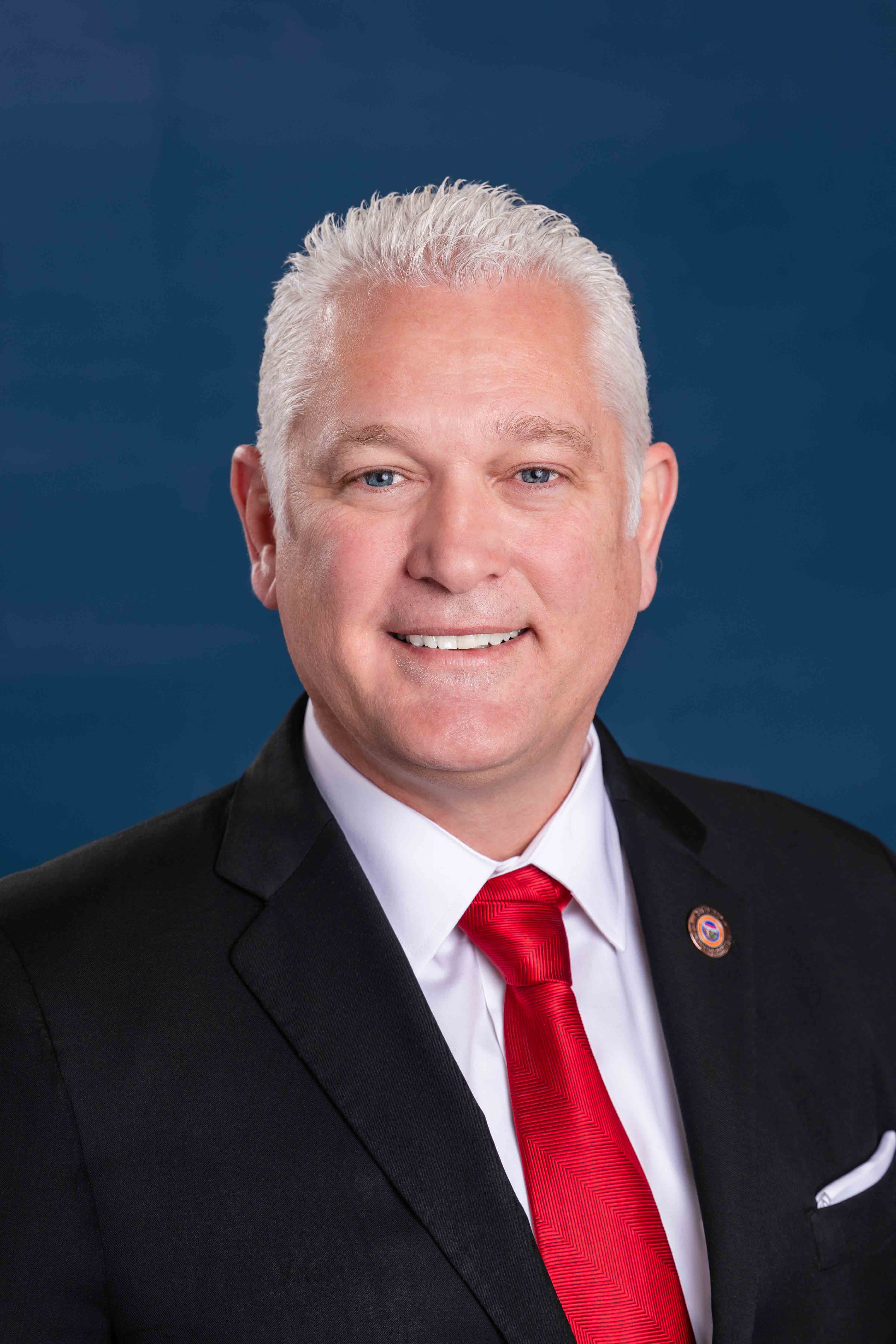
Rep. Michael Carbone
Sponsored bills
Maddy summaryHB 2259 amends Arizona's railroad crossing safety laws to clarify when drivers must stop and how they must proceed. It requires all drivers approaching a crossing to stop 15-50 feet from the tracks if signals are active, gates are down, trains are visible, or conditions are hazardous. Specific rules apply to commercial vehicles (must ensure space on the other side), school buses (must follow district policy), and heavy equipment (must notify railroads and confirm safety before crossing). The bill also prohibits U-turns on tracks, proceeding around gates, and pedestrians lingering in active crossing zones. These changes directly affect all drivers, commercial operators, and heavy equipment users at railroad grade crossings statewide.
Maddy summaryHB 2926 amends Arizona's tax confidentiality statute (ARS 42-2003) to clarify who may access taxpayer information. It expands authorized disclosures to include specific corporate roles like "chief tax officer" and updates rules for sharing data with agencies like the Arizona Commerce Authority for tax incentive programs (e.g., renewable energy credits). The bill does not address residential development or TPT reimbursement as the title suggests; these appear to be errors in the bill's description. The changes primarily affect tax administrators, businesses, and government agencies handling taxpayer data. This is a technical revision to existing tax administration procedures, not a new policy.
Maddy summaryHB 2124 is a definitional bill that amends Arizona's emergency medical services statutes to clarify terms related to hospital interfacility transport. It defines key terms like "ambulance attendant," "advanced life support base hospital," and "centralized medical direction" without changing existing service requirements or creating new obligations. The bill specifically updates definitions for ambulance services, medical personnel, and transport protocols used in hospital-to-hospital transfers. As a procedural definition amendment, it does not directly affect patients, providers, or services but ensures consistent terminology in existing law. This bill is currently in the legislative process (DPA status as of March 2025).
Maddy summaryHB 2869 allows property owners or their contractors to hire licensed independent providers (not affiliated with them) to review building permit applications or conduct inspections instead of using municipal staff. The bill requires these providers to carry professional liability insurance ($2 million/$4 million coverage for projects under $5 million) and mandates municipalities to reduce application/inspection fees by the amount they save. It sets a 5-business-day timeline for municipalities to approve applications reviewed by independent providers or provide written reasons for rejection, with automatic approval if deadlines pass. The law directly affects property developers, contractors, and municipalities in Arizona, streamlining permitting while ensuring provider accountability and cost savings for applicants.
Maddy summaryHB 2113 prohibits displaying most flags on Arizona public property, applying only to state and local government entities (including schools and agencies). The bill allows specific exceptions: the American flag (per federal guidelines), POW/MIA flag, Arizona state flag, tribal flags, first responder flags (with design rules), and service flags like blue/gold star flags. It does not restrict flag displays by private individuals or entities. The law aims to standardize flag usage on government property while preserving recognized symbols.
Maddy summaryHB 2123 would allow certain individuals at risk (including public officials, peace officers, and people with protection orders) to request that their personal information - such as home addresses and full names - be removed from public county records. To qualify, applicants must file an affidavit detailing safety concerns and specific property details; a judge would then review the request and, if approved, block public access to that information for five years. The bill applies to documents recorded by county recorders, such as property deeds, and requires counties to restrict access after court approval. This is pending legislative action in Arizona (currently on the House Consent Calendar). Note: The bill’s title mentions "religious leader," but the text focuses on safety-related confidentiality for a broader group of at-risk individuals.
Maddy summaryHB 2925 amends Arizona zoning law to require municipalities to mandate public dedication of rights-of-way, streets, alleys, drainage, and utilities as a condition of rezoning approvals. This directly affects property owners and developers seeking to change land use designations, as they must now secure public infrastructure commitments before rezoning can proceed. The key provision prohibits municipalities from referring these infrastructure dedication requirements to other administrative bodies, ensuring the requirement is handled directly within the rezoning process. The bill does not alter existing zoning powers but adds this specific procedural step for rezoning decisions.
Maddy summaryHB 2891 requires Arizona wireless carriers to share a device's real-time location with law enforcement during emergencies involving risk of death or serious injury. Carriers must provide contact details to the state Department of Public Safety quarterly and notify the person whose location was shared within 48 hours, unless the request involves domestic violence or stalking restrictions. Law enforcement must obtain a court order confirming probable cause within 48 hours of requesting location data. The bill protects carriers from liability for sharing location in good faith during emergencies and prohibits sharing with individuals subject to certain restraining orders.
Maddy summaryHCM 2016 is a symbolic resolution (not a binding bill) passed by the Arizona House of Representatives. It urges the U.S. Congress to support the Palo Verde Generating Station, Arizona's largest nuclear power plant, highlighting its role as a major clean energy source (supplying 70% of Arizona's carbon-free energy), economic contributor ($2.3 billion annual impact), and employer (2,000+ full-time workers). The resolution cites the plant's use of recycled water, lower costs compared to solar, and public support for nuclear energy (56% in a 2024 survey) to make its case. It does not create new policy but requests congressional recognition and support for the facility.