

Maddy summaryHB 2803 repeals Arizona Revised Statute 15-911 and amends ARS 15-1285 to exempt school districts and career technical education districts from state budgetary spending limits. Specifically, funds received by these districts under the relevant chapter are not counted as local revenue for constitutional budget calculations and cannot be restricted by existing expenditure caps. This allows school districts to use state-provided funds without being constrained by the usual spending limits that apply to local revenue. The bill also includes related adjustments to expenditure limitation calculations for counties but focuses primarily on increasing school district financial flexibility.
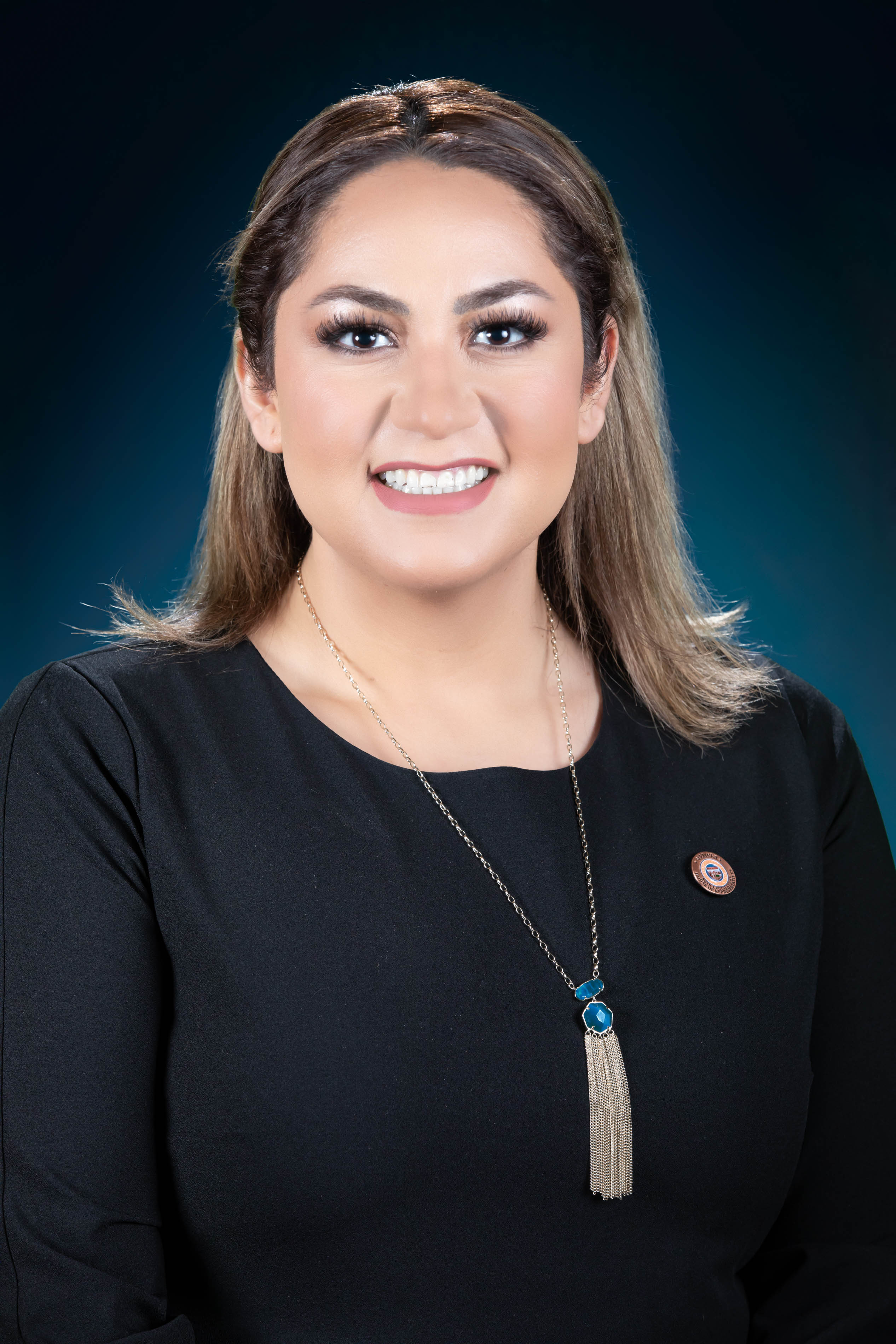
Rep. Consuelo Hernandez
Sponsored bills
Maddy summaryHB 2685 allocates $5 million from a consumer restitution fund to provide three-year grants for up to three telehealth mental health providers serving Arizona K-12 schools. The grants fund providers who offer free, evidence-based mental health services (like therapy for anxiety and depression) via telehealth during school hours, coordinate with school staff, and serve all students regardless of insurance or payment ability. Providers must meet specific criteria, including not having received prior state funding for similar services and demonstrating capacity to serve diverse communities from urban to tribal schools. The funding is exempt from standard appropriation lapsing rules until June 2029. This bill directly affects Arizona public school students by expanding access to in-school mental health support through telehealth.
Maddy summaryHB 2316 allows Arizona middle schools (grades 6-8) to offer career technical education (CTE) courses that count toward both 8th-grade promotion and high school graduation. Schools must partner with approved CTE providers like community colleges or state-approved programs, and students must pass courses to earn credit. The bill requires schools to report course offerings and completions annually, with a final report due by 2029, and expires in 2037. It permits CTE districts to fund middle school CTE courses without raising property taxes but prohibits counting middle school students in district enrollment totals.
Maddy summaryHB 2670 prohibits Arizona employers (including state agencies) from threatening or punishing employees for declining to attend meetings or participate in communications about religious beliefs or political matters, such as elections or political parties. Employees who face retaliation can file a civil lawsuit within 120 days to seek reinstatement, back pay, benefits, and attorney fees. The law does not apply to communications required by law, necessary for job duties, or part of academic programs at colleges, nor does it cover religious organizations exempt under federal law. It requires employers to post a notice of these rights within 30 days of the law taking effect.
Maddy summaryHB 2684 requires Arizona employers to implement heat and cold safety programs for workers. For heat (80°F+), it mandates written plans covering hydration (1 quart of water per hour), 10-minute cool-down breaks every 2 hours (more frequently during extreme heat), thermometer monitoring, shade access, and acclimatization for new workers. For cold (60°F-), it requires similar written programs with warm areas, cold-prevention training, and reduced exposure schedules. The bill directly affects all Arizona employers with indoor or outdoor workplaces, including construction, agriculture, and vehicle-based jobs (requiring vehicle AC below 80°F).
Maddy summaryHB 2678 adds a new exemption to Arizona's retail sales tax code, removing sales tax on diapers and feminine hygiene products. This directly affects consumers who purchase these essential items and retailers selling them. The bill amends Arizona Revised Statutes § 42-5061 to explicitly exempt "diapers and feminine hygiene products" from the state's retail sales tax, aligning with similar exemptions for items like food and medical supplies. The change applies to all qualifying products sold within Arizona, effective upon enactment.
Maddy summaryHB 2743 repeals a requirement for healthcare providers in Arizona to report certain abortion-related data to the state. It directly affects healthcare facilities and providers who previously had to submit this information under Arizona Revised Statutes Title 36, chapter 20, article 2. The bill removes this specific reporting obligation by eliminating the referenced statute from state law. This is a straightforward repeal of an existing administrative requirement with no new provisions or funding.
Maddy summaryHB 2806 commits Arizona to the National Popular Vote Interstate Compact (NPVIC), requiring the state to award its electoral votes to the presidential candidate who wins the nationwide popular vote. If enough states join the compact to control 270 electoral votes (a majority), Arizona would certify its electors based on the national popular vote winner, not the state's winner. The bill adds a new chapter to Arizona law outlining how member states would coordinate to implement this system, including requiring states to share vote totals and certify electors for the national popular vote winner. This affects Arizona's election process and its presidential electors, but only takes effect once the compact reaches the required threshold of electoral votes.
Maddy summaryHB 2744, titled the "Arizona Right to Contraception Act," establishes a legal right for Arizonans to access contraception and for health professionals to provide it. The bill prohibits any state or local law that singles out contraception services or makes access harder - such as requiring special permits for birth control or restricting where it can be distributed. It also mandates that patients must give voluntary, informed consent for sterilization procedures. This bill does not create new access to contraception but aims to protect existing access by preventing restrictive laws targeting contraceptive care.
Maddy summaryThe bill title "HB 2746: abortion; providers; waiting period; ultrasound" does not match the provided bill text, which amends Arizona's nursing board regulations (Section 32-1606, A.R.S.). The text states the board lacks authority to decide scope of practice for abortion (referencing A.R.S. §36-2151) but contains no provisions about waiting periods, ultrasounds, or abortion access. Instead, it details the nursing board's powers, such as licensing, disciplinary actions, and program approvals. This appears to be a mislabeled bill; no concrete policy changes related to abortion are described in the text.