

Failed Feb 12, 2020
1 co-sponsor
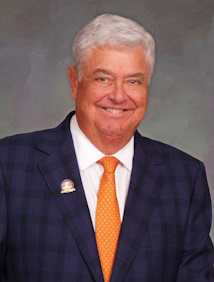
Sen. Mike Gierau
Total votes
4,382
all sessions
Attendance
90%
397 missed
Near the chamber average
With party
97%
of cast votes
Higher than 95% of chamber peers
Bipartisan score
9%
crosses aisle rarely
Near the chamber average
Sponsored
190
bills & resolutions
Lower than 83% of chamber peers
Committees
7
assignments
190 bills and resolutions
Sponsored bills
Total
190
Primary
34
Co-sponsor
156
This page
190
matching current filters
Failed Feb 12, 2020
1 co-sponsor
County zoning authority-private schools.
Maddy summaryThis bill exempts qualifying private schools from county zoning regulations in Wyoming. It specifically applies to private schools located on 35 or more contiguous acres with a capacity for at least 50 students, as defined in state law. County zoning rules can no longer restrict the location, use, or occupancy of such schools. The policy change took effect July 1, 2019, directly affecting only private schools meeting these two size and capacity requirements.
Signed into law Mar 15, 2019
1 co-sponsor
Wyoming public lands day.
Maddy summaryWyoming's HB 99 designates the fourth Saturday in September each year as "Public Lands Day" to recognize the importance of public lands for the state's economy, open spaces, wildlife, and recreation. The bill requires the governor to issue a proclamation by September 1 each year encouraging public and school observances, though it does not mandate school closures or affect business operations. Public schools may hold appropriate events, but the designation has no impact on commercial agreements, court proceedings, or government office hours. This is a ceremonial observance with no new regulations or funding, effective July 1, 2019.
Signed into law Mar 8, 2019
1 co-sponsor
District court filing fees.
Maddy summaryHB 125 increases filing fees for probate cases in Wyoming district courts from $50 to $75 and for civil cases from $85 to $110. It specifies that $25 of the civil filing fee funds court automation and $10 supports indigent civil legal services, with the remaining amounts covering court operations. This bill directly affects individuals and organizations filing probate or civil cases in Wyoming district courts. The fee changes took effect on July 1, 2019.
Signed into law Feb 28, 2019
1 co-sponsor
Alcoholic beverages-business flexibility.
Maddy summaryHB 212 allows microbreweries and wineries in Wyoming to hold both their existing permits and a manufacturer's license simultaneously. This changes existing rules by removing restrictions that previously prevented these small producers from owning both license types, specifically exempting them from Section 12-5-401's ownership rules. The bill directly affects microbrewery and winery owners who wish to expand production or retail operations under a single business structure, effective July 1, 2019.
Signed into law Feb 28, 2019
1 co-sponsor
Driver's licenses.
Maddy summaryHB 243 changes Wyoming driver's license expiration rules by extending the validity period from four to five years. Specifically, licenses now expire on the holder's birthday in the fifth year after issuance (previously the fourth year), and drivers may receive a five-year renewal extension without a test (previously listed as a choice between four or five years) if their license hasn't been suspended in the past five years. These changes apply to licenses issued or renewed on or after July 1, 2019, affecting all Wyoming drivers with new or renewed licenses after that date.
Signed into law Feb 28, 2019
1 co-sponsor
Lifetime fishing licenses for permanently disabled persons.
Maddy summaryHB 169 authorizes Wyoming's Game and Fish Commission to issue free, lifetime fishing licenses and conservation stamps to residents who are permanently and totally disabled. It directly affects eligible disabled residents by eliminating annual license fees and the requirement to purchase conservation stamps. The bill amends existing statutes to create a process for issuing these complimentary licenses, requiring the Commission to establish rules by July 1, 2019. The policy change takes effect July 1, 2019, providing permanent cost savings for this specific group of residents.
Signed into law Feb 27, 2019
1 co-sponsor
Mental health and substance use coverage parity.
Maddy summaryHB 211 requires all health insurance plans sold in Wyoming to provide equal coverage for mental health and substance use disorder treatment as they do for physical health conditions, starting July 1, 2019. It applies to every individual and group health insurance policy, including plans from health maintenance organizations, that is delivered, renewed, or modified after that date. The law mandates compliance with the federal Mental Health Parity and Addiction Equity Act of 2008 (42 U.S.C. § 300gg-26), as updated through 2018. This ensures people with mental health or substance use conditions receive coverage without stricter limits than for medical or surgical care.
Signed into law Feb 27, 2019
1 co-sponsor
Child labor penalties.
Maddy summaryThis bill increases penalties for violating Wyoming's child labor laws, raising the maximum fine from $500 to $750 and adding potential jail time of up to 100 days for employers who break the rules. It clarifies that children under 14 may still work for parents, grandparents, or family-owned businesses in non-hazardous jobs outside school hours. The bill repeals one outdated provision and takes effect July 1, 2019. It directly affects employers who hire children in violation of these specific regulations.
Signed into law Feb 27, 2019
1 co-sponsor
Ask Maddy
·
AI policy assistant
Ask Maddy about Mike Gierau
Scope: wyoming
Hi! I can help you understand Mike Gierau's legislative record. What would you like to know?
Try one of these
i
Maddy answers using official bill text and legislative records. Always verify before sharing.
Sources cited inline