

Maddy summaryHB 123 establishes Wyoming's first state licensing board for naturopathy practitioners. The bill requires all naturopaths practicing in Wyoming to hold a license, which mandates graduation from an accredited naturopathic program, passing a national exam (NABNE), and meeting board-set standards. It creates a five-member board with specific qualifications (including practicing naturopaths and healthcare professionals) to oversee licensing, enforce practice standards, and handle disciplinary actions like license suspension. This directly affects current and future naturopathy practitioners in Wyoming, requiring them to comply with state licensing rules starting January 1, 2020, to legally use titles like "naturopathic doctor" or practice.
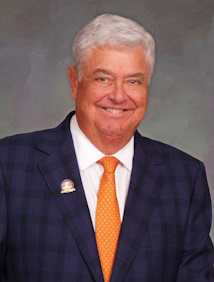
Sen. Mike Gierau
Sponsored bills
Maddy summaryHB 147 changes Wyoming law to make foreign language instruction for kindergarten through second grade optional for school districts, rather than mandatory. School districts may choose to offer such programs, but if they do, they must follow state board standards for instruction. This bill directly affects all Wyoming public school districts serving K-2 students. It became effective July 1, 2019, after passing the Education Committee unanimously.
Maddy summaryWyoming's HB 152, the Underground Facilities Notification Act, requires construction planners and contractors to identify and mark underground utility locations (like gas lines or water pipes) before excavation. It directly affects contractors, engineers, and utility operators by mandating pre-excavation checks at no cost to utility companies, pre-marking of excavation areas, and specific emergency protocols if damage occurs (e.g., calling 911 for gas leaks). For government projects over $750,000 in public rights-of-way, it adds requirements for pre-design meetings with utility operators. The bill also specifies that hand-digging or "soft digging" must be used near utilities to prevent damage and clarifies that compliance doesn’t eliminate liability for negligence.
Maddy summaryThis bill repeals a rule that previously excluded certain noncitizens from eligibility for the Hathaway scholarship program. It directly affects noncitizen students in Wyoming who were previously barred from receiving this state-funded scholarship. The key change removes the specific exclusion provision (W.S. 21-16-1303(e)(i)) from the scholarship law. The bill would have allowed eligible noncitizens to apply for the scholarship, effective immediately upon enactment.
Maddy summaryWyoming's SF 164 adjusts state school funding for the 2019-2020 school year based on specific cost increases. It modifies the education resource block grant formula by applying adjustments to four categories: professional labor, nonprofessional labor, educational materials, and energy costs. Each adjustment uses 50% of published cost data (like wage indexes and price indices for supplies/power) to reflect inflation. The bill directly affects Wyoming public schools receiving state funding under this block grant model. It took effect July 1, 2019.
Maddy summaryWyoming's SF 82 establishes a legal framework for "do not resuscitate" (DNR) directives, allowing any adult with medical decision-making capacity to formally request no CPR in end-of-life situations. The bill enables individuals to have a DNR designation visibly marked on their Wyoming driver's license or ID card, alongside standardized medical bracelets or signed directives. It specifies that DNR orders apply to medical care except in cases of trauma (like car crashes), and protects emergency responders and healthcare providers who follow valid DNR directives in good faith. The law also creates standardized forms for creating, revoking, and removing DNR designations from licenses.
Maddy summaryThis bill allows businesses with retail liquor licenses in Wyoming to purchase alcohol directly from other retail liquor licensees for resale, up to a maximum of nine liters per day. It affects retail liquor stores that want to buy alcohol from other retail locations (instead of only from the state-run division) to resell. The key requirement is that sellers must record each purchase with the buyer's name, signature, date, and time, and keep these records for one year for potential state inspection. The law took effect on July 1, 2019.
Maddy summaryThis bill provides $5.25 million to Wyoming's Department of Family Services and $15.18 million to the Department of Health for the 2019-2020 fiscal year. The funds are specifically for programs recommended by the governor in his supplemental budget, directly supporting existing services in these departments. The bill requires strict use of funds for these designated purposes and sets an effective date of July 1, 2019, with unspent funds reverting to the general fund by June 30, 2020.
Maddy summaryWyoming's SF 140 allows federally licensed distillers to operate one additional sales location ("satellite") separate from their main manufacturing site, subject to local approval. Distillers selling alcohol not obtained through the state's Division of Alcoholic Beverages must pay the state a monthly assessment based on the profit they would have generated if they bought from the Division. The bill clarifies that local authorities can issue these permits (with possible $100 fees) and requires compliance with existing licensing rules, operating hours, and building regulations. It does not change Wyoming's rule that the Division remains the exclusive wholesale distributor of alcoholic beverages. This directly affects licensed distillers seeking to expand retail sales within the state.
Maddy summaryThis bill appropriates $15 million from Wyoming's commercial air service improvement account to fund contracts supporting commercial air service within the state. The aeronautics commission must secure governor approval for contracts that include specific performance measures for air service delivery, with no more than $6 million spent annually per contract. Funds not used for contracts by June 30, 2020, revert to the improvement account, and unused funds from a 2019 deadline reappropriated to maintain existing service through 2020. The bill directly affects Wyoming's commercial air service providers and passengers by funding contract-based service enhancements.