

Maddy summaryHB 69 requires written consent from surface landowners (who aren't the mine permit holder or mineral owner) before any mine permit or reclamation plan can be revised. The bill amends Wyoming law to mandate this approval for all permit revisions or plan changes submitted after July 1, 2024, directly affecting landowners whose property is impacted by mining operations. Key provisions include prohibiting revisions without the surface owner's written agreement and applying to all mining permits except surface coal mining. This change shifts decision-making authority to landowners for modifications to existing mining operations on their land.
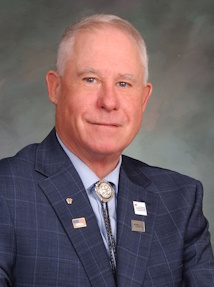
Rep. Bill Allemand
Sponsored bills
Maddy summaryHB 105 exempts insurance settlement payments used to purchase replacement vehicles from Wyoming's sales and use taxes. It directly affects Wyoming residents who receive insurance payouts after vehicle damage and use those funds within 90 days to buy a new motor vehicle, house trailer, trailer coach, or similar vehicle. The bill amends tax code sections to exclude the insurance payment amount from the taxable sales price of the replacement vehicle, provided the original vehicle was acquired by the insurance company through a damage settlement. This change applies only to vehicles subject to sales tax and requires the replacement purchase to occur within 90 days of receiving the insurance payment. The bill was introduced in February 2024 but failed committee consideration on February 14, 2024.
Maddy summaryHB 129 establishes a new standing committee within Wyoming's legislature called the "Joint and Standing Committee on Federal Review." This committee will review federal laws, regulations, and actions to determine if they infringe on Wyoming's state sovereignty or violate the U.S. Constitution's specific enumerated powers of the federal government. The committee must report its findings and recommendations to the legislature, including suggesting new state legislation if needed. This bill directly affects Wyoming's legislative process by creating a dedicated body to monitor and respond to federal actions.
Maddy summaryHB 102 would allow school employees with valid concealed carry permits to carry firearms on school property if their district board adopts specific rules. School boards that choose not to adopt such rules must submit a written explanation to the state education department. The bill appropriates $100,000 for a statewide marketing campaign to promote this authority, with funds restricted to use from July 2024 through June 2026. The bill failed its introduction in the Wyoming House on February 14, 2024, with a vote of 35-26.
Maddy summaryHB 157 clarifies that Wyoming property tax valuations must consistently follow the state law definition of "fair market value" as specified in W.S. 39-11-101(a)(vi). The bill requires county assessors and the Department of Revenue to use appraisal methods aligned with this definition when annually valuing taxable property. It directly affects property taxpayers and local assessors by mandating uniform valuation practices under existing tax statutes. The bill, which failed committee passage in February 2024, takes effect July 1, 2024, if enacted.
Maddy summaryThis joint resolution (SJ 1) is a non-binding request from Wyoming's legislature to the U.S. Congress. It demands that Congress extinguish federal ownership of public lands and subsurface resources within Wyoming (currently covering about 46% of the state's surface area and 69% of its subsurface resources) to fulfill Wyoming's constitutional "equal footing" status as a state admitted to the Union. The resolution requires Congress to confirm its intent to transfer these lands to Wyoming by October 1, 2024, and proposes that the transferred lands remain state public lands. It is a procedural resolution, not a law, and has not advanced beyond the introduction stage in the Wyoming Senate (failed 17-14).
Maddy summaryWyoming's SF 109 prohibits the use of specific abortion drugs (like mifepristone and misoprostol) for terminating pregnancies, affecting doctors, pharmacists, and anyone distributing or prescribing these drugs. Exceptions include contraceptive use before pregnancy confirmation, treatment of natural miscarriages under medical guidelines, and cases where a patient faces an immediate physical danger to life or health (excluding psychological conditions), or pregnancy from incest/sexual assault. Violations carry misdemeanor penalties of up to six months in jail or a $9,000 fine. Women seeking abortions using these drugs are explicitly exempt from criminal prosecution under this law.
Maddy summaryWyoming's SF 174 creates a new Wyoming Charter School Authorizing Board to oversee public charter schools statewide. The board, consisting of five members (including the state superintendent and appointees from the governor, Senate, and House), will approve, renew, and oversee charter schools under specific quality standards. The bill modifies how charter schools are authorized (replacing school district oversight with the state board), adjusts funding rules, and requires transparency in decision-making. This directly affects public charter schools, their governing boards, and the state education department as the local education agency.
Maddy summaryThis bill requires Wyoming's state treasurer to accept gold or silver coins (called "specie") as legal payment for state and local taxes, subject to authentication. It mandates the treasurer to set and publish real-time exchange rates between precious metal coins and regular currency, and to exchange these coins for other legal tender. The treasurer must also hold and potentially invest in precious metals, with rulemaking authority to implement these changes. This directly affects taxpayers who pay with coins and the treasurer's office, which gains new duties under the Wyoming Legal Tender Act.
Maddy summaryHB 100 requires Wyoming's Department of Revenue to hire a consultant to study converting the state's residential property tax system from current assessed value to one based on a property's original purchase price (acquisition value). The study must analyze revenue impacts across Wyoming, develop at least three implementation options - including one using 2017 values with annual 2% inflation - and address technical details like agricultural properties, new construction, and sales exclusions. The consultant must report findings to the Joint Revenue Committee by September 1, 2023, with the committee then determining if legislative action is needed. The bill appropriates $10,000 for this study, which is a preliminary step toward potential future tax system changes, not an immediate policy shift. This study directly affects how Wyoming might eventually calculate property taxes for homeowners.