

Maddy summaryHB 100 creates Wyoming's Critical Resilient Infrastructure Board to strengthen the state's critical systems - including water, power, transportation, and telecom - against extended outages (e.g., grid-down events from cyberattacks or disasters). The board, led by the Homeland Security director and including utility, energy, and telecom representatives, will align state efforts with federal programs like the Infrastructure Investment and Jobs Act. Key provisions require hardening infrastructure to prevent long-term power failures, ensure water/wastewater systems remain functional during outages, and leverage federal funding and defense technology for resilience. The bill directly affects public utilities, energy providers, and state infrastructure operations by mandating specific resilience planning and federal collaboration.
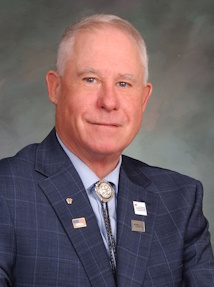
Rep. Bill Allemand
Sponsored bills
Maddy summaryHB 182 prohibits payment processors from assigning special merchant category codes to firearm or ammunition retailers, requiring them to be classified as general merchandise or sporting goods retailers instead. This directly affects payment entities (like banks and credit card networks) and firearm retailers who must use standard retail codes. Violations carry a $1,000 fine per violation. The bill does not change gun laws or purchase requirements but modifies payment processing rules, effective July 1, 2024.
Maddy summaryHB 158 requires Wyoming's governor to rescind all existing refugee resettlement plans by July 1, 2024, and submit new plans to the legislature for approval before they take effect. The bill mandates that proposed plans include specific details on promoting refugee economic self-sufficiency, language training, employment services, coordination of resources, care for unaccompanied minors, medical needs, and detailed funding projections. A legislative committee must review these plans, hold public hearings, and report recommendations to the legislature. This bill directly affects state agencies and the governor's office by shifting authority for refugee resettlement oversight from executive action to legislative approval and public input.
Maddy summaryHB 130 would change Wyoming driver's license expiration rules, extending the standard renewal period from every 5 years to every 7 years. It also allows certain licensees - active-duty military personnel, government employees stationed out of state, and their dependents - to renew licenses without a test every 7 years, provided their license hasn't been suspended in the prior 7 years. The bill applies to licenses issued or renewed on or after July 1, 2024. Note: This bill was withdrawn by its sponsor on February 16, 2024, and is not currently law.
Maddy summaryWyoming's SF 108 would regulate chemical abortions by requiring healthcare providers to physically examine patients, be present during the first drug dose, and provide biohazard-labeled waste bags for disposal. It mandates that providers schedule follow-up visits within seven days and instruct patients on proper disposal of medical waste. The bill also holds manufacturers responsible for the environmental remediation of abortion drugs and their byproducts entering water systems. This law directly affects healthcare providers prescribing abortion drugs and drug manufacturers, with penalties including up to three years in prison or $10,000 fines for violations.
Maddy summarySF 127 revises how Wyoming distributes sales and use tax revenue. It reduces the state general fund's share of these taxes from 69% to 66% for both sales and use tax collections. The bill also increases the portion of out-of-state vendor tax revenue distributed to counties, cities, and towns from 29.5% to 34%, and doubles the fixed annual payments to counties (from $20,000 to $40,000 for sales tax, and from $5,000 to $10,000 for use tax). These changes take effect on July 1, 2024.
Maddy summaryThis Wyoming legislative bill (SJ 3) proposes amending the state constitution to require future constitutional amendments to be approved by a majority of voters in at least three-fourths of Wyoming's counties (not just statewide). It would directly affect all future constitutional amendment proposals by adding this county-level approval requirement. The key change modifies Article 20, Section 1 of the Wyoming Constitution, which currently only requires statewide voter approval. The bill failed to advance after a 14-17 vote against introduction on February 16, 2024.
Maddy summaryHB 50, titled "What is a Woman Act," defines "sex" for legal purposes as a person's biological sex at birth, requiring all state laws, rules, and regulations to use this definition. It mandates that "woman" and "female" refer exclusively to individuals born with female biology (XX chromosomes, reproductive system for ova), and "man" and "male" refer to individuals born with male biology (XY chromosomes, reproductive system for fertilization). The bill requires state agencies, schools, and public facilities to collect vital statistics identifying people as male or female based on birth sex and to maintain separate accommodations (e.g., restrooms, shelters, prisons) based on biological sex. It applies directly to Wyoming state agencies, schools, and public entities collecting data or managing facilities. The bill failed its introduction in the Wyoming House on February 15, 2024.
Maddy summaryHB 109 would repeal a three-year tax exemption for wind energy production in Wyoming. It directly affects wind energy producers who currently benefit from this exemption, ending the tax break for new projects after the bill's effective date. The bill specifies that the existing exemption would still apply to wind turbines that began generating electricity for sale before the bill takes effect. The bill failed its House introduction on February 15, 2024, with a vote of 36-25-1.
Maddy summaryHB 53 amends Wyoming law to clarify the process for declaring and managing public health emergencies. It requires the governor to immediately call the legislature into session within two days of declaring an emergency, allowing lawmakers to vote remotely via video/audio conference to either confirm the emergency or end it. The bill updates the definition of "public health emergency" to include epidemics, pandemics, or biological threats posing significant health risks, and specifies that healthcare provider exemptions (like out-of-state physical therapists or acupuncturists) during emergencies apply only to declarations after July 1, 2024. These changes directly affect the governor, legislature, and healthcare providers seeking temporary practice authorization during declared emergencies.