

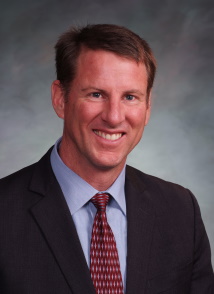
Photo of Ben Hornok
R Wyoming House · District 42

Rep. Ben Hornok

Contact Email
Compare
Total votes
876
all sessions
Attendance
100%
of floor votes
Higher than 81% of chamber peers
With party
66%
of cast votes
Lower than 85% of chamber peers
Bipartisan score
19%
some cross-party votes
Higher than 84% of chamber peers
Sponsored
63
bills & resolutions
Higher than 78% of chamber peers
Committees
0
assignments
63 bills and resolutions

Sponsored bills

Total
63
Primary
9
Co-sponsor
54
This page
63
matching current filters
Co-sponsor HB 137
Introduced · Wyoming House · Co-sponsor
Chemical abortions-ultrasound requirement.

Maddy summaryWyoming's HB 137 would require healthcare providers to show a pregnant person an ultrasound (including the heartbeat if audible) at least 48 hours before providing medication for a chemical abortion. The law mandates providers document the ultrasound details (date, time, physician, and fetal age) and verify the ultrasound occurred before dispensing abortion drugs. Violations could result in felony charges with fines up to $20,000 or up to five years in prison, though pregnant people would not face criminal penalties. This bill directly affects medical providers and individuals seeking medication-based abortions in Wyoming.

Introduced Feb 17, 2024 1 co-sponsor
Co-sponsor HB 124
Introduced · Wyoming House · Co-sponsor
Vaccination for smallpox-repeal.

Maddy summaryHB 124 repeals Wyoming's law (W.S. 35-4-106) that authorized the Department of Health to require smallpox vaccinations. It removes the state's legal authority to mandate such vaccinations, effective July 1, 2024, while allowing existing requirements to remain valid until that date. This is a procedural repeal of an outdated provision, as smallpox has been eradicated globally and no longer poses a public health threat in Wyoming.

Introduced Feb 17, 2024 1 co-sponsor
Co-sponsor HB 190
Introduced · Wyoming House · Co-sponsor
Parental rights in education.

Maddy summaryWyoming's HB 190 requires schools to notify parents about student health changes, name/pronoun adjustments, and well-being questionnaires, while prohibiting classroom instruction on sexual orientation or gender identity for K-12 students. The bill mandates parental consent for school health services and prohibits schools from restricting parental access to student records or discouraging parent involvement in student welfare decisions. School staff violating these provisions face disciplinary action, and schools may be subject to civil penalties of up to $5,000 per violation. The law directly affects K-12 students, parents/guardians, and school staff, with implementation set for the 2024-2025 school year. It also establishes legal remedies for parents alleging violations by schools or staff.

Introduced Feb 17, 2024 1 co-sponsor
Primary HB 201
Introduced · Wyoming House · Lead sponsor
State Auditor payment transparency.

Maddy summaryHB 201 requires Wyoming's State Auditor to publish detailed vendor payment information on the auditor's public website. It mandates posting, within 30 days of payment, the date, vendor name, state agency, total amount, and payment description for all payments made over the previous five fiscal years. This applies to all state payments made on or after July 1, 2024, directly affecting state agencies and vendors receiving public funds. The bill aims to increase transparency by making vendor payment data accessible for public inspection and download.

Introduced Feb 17, 2024 0 co-sponsors
Co-sponsor HB 132
Introduced · Wyoming House · Co-sponsor
Ban on teaching and training critical race theory.

Maddy summaryHB 132 bans public school teachers, administrators, and state employees from teaching or using public funds for instruction on specific concepts related to race, ethnicity, sex, or national origin. It prohibits lessons that claim any group is inherently superior/inferior, blame individuals for past actions of their group, or label people as inherently racist or oppressive - except when teaching historical oppression or using approved primary sources. The bill allows private lawsuits against violators and imposes civil penalties up to $5,000 per violation for schools or state agencies. It also prohibits public employers from requiring training on these concepts and exempts sexual harassment training. The law directly affects K-12 educators, school districts, and state agencies using public funds for instruction or employee training.

Introduced Feb 17, 2024 1 co-sponsor
Co-sponsor HB 162
Introduced · Wyoming House · Co-sponsor
Public meetings-executive sessions amendment.

Maddy summaryHB 162 changes Wyoming law to require public hearings for most appointments of public officers, professionals, or employees by local government bodies (like city councils or county commissions). It removes the option for these bodies to hold private "executive sessions" when making such appointments, unless the employee themselves requests a private hearing. The law applies to all agency appointments made on or after July 1, 2024, and mandates that decisions be made in open meetings. This directly affects how local governments handle hiring, employment, and disciplinary actions for public staff.

Introduced Feb 17, 2024 1 co-sponsor
Co-sponsor HB 117
Introduced · Wyoming House · Co-sponsor
Bond elections-voter threshold requirement.

Maddy summaryHB 117 would require bond election proposals held outside general elections to meet two conditions: a majority of votes cast must support the bonds, and at least 51% of voters from the most recent general election must participate. This applies only to local bond votes not held on the same day as general elections, directly affecting cities, counties, and school districts seeking to issue bonds. If turnout falls below 51%, the proposal cannot be resubmitted for at least 12 months. The bill, effective July 1, 2024, aims to ensure broader voter engagement in bond decisions. It does not affect bond elections held on general election days or those already completed before its effective date.

Introduced Feb 17, 2024 1 co-sponsor
Co-sponsor HB 61
Introduced · Wyoming House · Co-sponsor
Fiscal accountability and transparency in education.

Maddy summaryHB 61 requires Wyoming school districts to submit detailed annual reports to the state education department about funding and activities related to "covered programs," defined as initiatives addressing diversity, equity/inclusion (DEI), political/social activism, or divisive social issues. School districts must report employee roles/salaries tied to these programs, budget allocations, training sessions for staff and students, disciplinary actions, and supporting policies. The state department must make all submitted data publicly searchable on its website. The bill also prohibits school districts from requiring staff or students to use pronouns inconsistent with biological sex. This focuses on transparency around program funding and implementation, not on advocating for or against specific policies.

Introduced Feb 17, 2024 1 co-sponsor
Co-sponsor HB 78
Introduced · Wyoming House · Co-sponsor
Pornography and obscenity-crimes and penalties.

Maddy summaryHB 78 requires websites publishing over one-third material harmful to minors to implement age verification for access, using government ID or transaction data. It prohibits retaining personally identifying age information after verification and bans websites from allowing minors to access such content without verification. Violations carry fines of up to $1,000 per day for non-compliance with age verification or data retention rules. The law applies to websites accessible in Wyoming and becomes effective July 1, 2024. It directly affects website operators hosting content meeting the defined "material harmful to minors" standard.

Introduced Feb 17, 2024 1 co-sponsor
Co-sponsor HB 128
Introduced · Wyoming House · Co-sponsor
Wyoming Freedom Scholarship Act.

Maddy summaryWyoming HB 128, the Wyoming Freedom Scholarship Act, creates education savings accounts (ESAs) providing eligible students with $6,000 annually (adjusted for inflation) to cover qualified educational expenses. It directly affects Wyoming residents who are public school-eligible but haven’t graduated high school, allowing parents to use ESA funds for tuition at qualified schools (including private or online programs), textbooks, tutoring, technology, and other approved educational costs. The state treasurer administers the accounts, which are funded by state appropriations - not local tax revenues - and require parental agreements specifying eligible uses. The bill explicitly states qualified schools are not considered state or federal agents and establishes oversight mechanisms for the program.

Introduced Feb 17, 2024 1 co-sponsor
Showing 21 to 30 of 63 bills
Previous 1 … 2 3 4 … 7 Next