

Maddy summaryHB 276 requires Wyoming county sheriffs to negotiate written agreements with the U.S. Attorney General to enforce federal immigration laws, including detaining individuals for immigration purposes. County sheriffs must report annually on agreement status to the Wyoming Attorney General, who then reports to a legislative committee, with counties failing to pursue agreements losing eligibility for certain law enforcement funds. This bill directly affects all Wyoming county sheriffs and their counties, mandating specific cooperation with federal immigration enforcement under 8 U.S.C. § 1357(g).
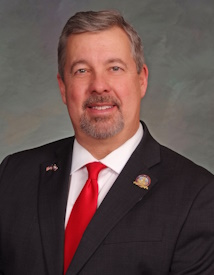
Rep. Ken Clouston
Sponsored bills
Maddy summaryHB 76 requires Wyoming health insurers to have Wyoming-licensed physicians or healthcare providers make decisions on prior authorization denials and review appeals, instead of relying solely on insurance company staff. It amends state insurance code sections to mandate that all such decisions be made by licensed providers with current Wyoming practice permits. The law applies to all prior authorization decisions made on or after July 1, 2025. This directly affects insurers, healthcare providers, and patients seeking coverage approvals in Wyoming.
Maddy summaryHB 227 sets a 30-day expiration limit for Wyoming governors' executive orders after the issuing governor leaves office, or at the end of their term - whichever comes first. It directly affects governors and state agencies implementing executive orders, requiring them to renew or replace orders before the 30-day window ends. The bill specifies that no executive order can remain effective beyond 30 days after a governor's departure from office. This applies to all executive orders issued on or after July 1, 2025, and takes effect on that date. The legislation aims to prevent long-term executive actions without legislative oversight.
Maddy summaryThis bill clarifies that multipurpose vehicles (like SUVs or vans used for personal and light commercial purposes) are eligible for existing special license plate programs in Wyoming. It amends multiple statutes to explicitly include "multipurpose vehicle" alongside passenger cars, trucks, and motorcycles in the list of qualifying vehicle types for special plates. This affects owners or lessees of multipurpose vehicles seeking special plates for veterans, firefighters, University of Wyoming affiliation, or other designated groups, ensuring they can apply for these plates without eligibility confusion. The change does not create new plate types but updates current rules to include these vehicles.
Maddy summaryWyoming's HB 171 amends the legal definition of "explicit sexual conduct" under the state's child exploitation statute (W.S. 6-4-303(a)(iii)). The bill specifically expands the definition to include acts like genital-genital contact, oral-genital contact, bestiality, masturbation, and lascivious exhibitions of genitals or breasts. This change directly affects how prosecutors define and prosecute cases involving the sexual exploitation of children in Wyoming. The amendment will take effect on July 1, 2025, strengthening the legal framework for addressing such crimes.
Maddy summarySF 144 creates the Wyoming-Ireland Trade Commission to promote economic collaboration between Wyoming and Ireland. The commission, composed of nine appointed members (including representatives from Wyoming businesses, higher education, and the Irish-American community), will focus on expanding trade, investment, and business/academic exchanges. It requires quarterly meetings, annual reports to the governor and legislature, and reimburses non-legislative members for travel and per diem expenses. This bill directly establishes a formal structure to advance Wyoming-Ireland economic partnerships, affecting businesses, educational institutions, and the Irish-American community through their representation on the commission.
Maddy summaryThis bill allocates over $143 million in state funds to address wildfire impacts in Wyoming from 2024. It provides $1 million for wildfire suppression coordination, $30 million to the state fire suppression account, and $100 million for restoring vegetation, habitats, and public infrastructure on both private and state lands, plus $10 million for water system repairs. A steering committee - including state agency representatives, legislators, and agricultural experts - will review grant applications and recommend fund distribution, with annual reports due until December 2026. The bill directly affects landowners, communities, state agencies, and wildfire-impacted areas by funding immediate restoration and prevention efforts.
Maddy summaryHB 31 requires all Wyoming school districts to adopt formal safety and security policies, including threat assessment procedures, by their boards of trustees. These policies and drafts must remain confidential and not be public records, allowing school boards to discuss them in closed sessions. The bill also limits the state fire marshal's authority by prohibiting bans on door securement devices used under these policies, though the marshal may create rules for their proper use during threats or drills. The law takes effect July 1, 2025, directly affecting school districts and the state fire marshal's regulatory role.
Maddy summaryWyoming's SJ 1 is a joint resolution requesting Congress to call a constitutional convention under Article V. It asks for a convention limited to proposing amendments that would impose fiscal restraints on the federal government, reduce federal power over states, and limit terms for federal officials. The resolution includes specific safeguards, such as requiring two-thirds of states to agree on the same purpose before Congress acts, clarifying Congress only has the power to set a time and place for the convention, and stating states would vote one state, one vote. This procedural bill directly affects Wyoming's application to Congress and sets boundaries for any potential convention.
Maddy summaryWyoming's SF 106 establishes rules for how new vehicle dealers can set rates for warranty repairs. It allows dealers to set hourly labor rates and parts markup rates based on their actual non-warranty service pricing, requiring mutual agreement with manufacturers or submission of specific repair order data. The bill specifies calculations (dividing total charges by hours for labor, or parts charges by cost for markup) and excludes routine maintenance, collision repairs, and other non-qualifying work from rate calculations. Manufacturers must pay approved warranty claims within 30 days and follow new procedures for audits. This directly affects dealers who perform warranty work and manufacturers who pay for those services.