

Maddy summaryWyoming's HB 228 prohibits state and county election officials (including county clerks) from accepting private money, grants, or services for election administration costs like voter education, registration, or outreach. The bill requires all election-related expenses to be funded solely with public money, with exceptions only for meals provided to poll workers on election day or during training. It also bans private entities from offering such funds and explicitly allows federal election funding. The law takes effect July 1, 2025, and creates misdemeanor penalties for violations.
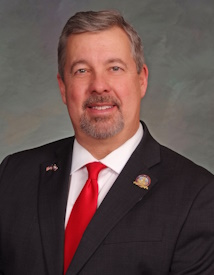
Rep. Ken Clouston
Sponsored bills
Maddy summaryHB 279 clarifies the order in which multiple property tax exemptions apply to a single property in Wyoming. It requires the Department of Revenue to apply exemptions sequentially: percentage-based exemptions (like senior citizen discounts) must be applied from smallest to largest percentage, while non-percentage exemptions (like homestead exclusions) come after. This affects property owners who qualify for more than one exemption, ensuring consistent application without conflicting reductions. The bill does not change existing exemptions but mandates a specific, transparent process for their combined use. It takes effect immediately upon becoming law.
Maddy summaryHB 280 modifies Wyoming's sex offender registration requirements for specific offenders. It mandates that people convicted of certain crimes involving minors (e.g., offenses with victims under 13 years old) must verify their address in person every 3 months with local sheriffs, instead of every 6 months for other offenses. The bill also prohibits these individuals from petitioning to be removed from the sex offender registry. These changes apply only to convictions occurring on or after July 1, 2025.
Maddy summaryThis Wyoming bill (SF 22) amends state law to allow a child's parental rights to be terminated if the child has been under a relative's guardianship for over 24 months *and* the parent is found unfit. It specifically adds this scenario as a legal ground for termination, requiring clear evidence of both the extended relative guardianship and parental unfitness. The change directly affects parents whose children are in long-term relative care and have been deemed unfit by a court. The law takes effect July 1, 2025.
Maddy summaryThis bill establishes a uniform 9.5% property tax rate for all residential real property in Wyoming, including owner-occupied primary residences, single-family homes, condos, mobile homes, and related land (up to 35 acres). It defines "owner occupied primary residence" as property where the owner lives at least six months annually and clarifies "residential real property" to include dwellings for up to four families. The change applies to all residential property classes, replacing prior differentiated rates, and takes effect for tax year 2025. It directly affects Wyoming homeowners and property assessors by standardizing the tax calculation method.
Maddy summaryThis Wyoming bill (HB 123) modifies the state's adverse possession law by stopping the 10-year clock for someone claiming ownership through long-term occupation whenever the property owner pays all property taxes. It directly affects property owners who pay taxes and individuals attempting adverse possession claims. The key provision states that the adverse possession timeline pauses during any period the owner has paid all taxes on the property. The law applies to claims starting after July 1, 2025, and takes effect on that date.
Maddy summaryWyoming's HB 60 requires all public schools, the University of Wyoming, and Wyoming community colleges to designate athletic teams by sex and prohibits male students from competing on teams designated for female students. The bill creates legal remedies allowing schools or students harmed by violations to seek damages, attorney fees, and injunctions through private lawsuits within two years of the violation. It defines "female" and "male" based on biological reproductive systems and prohibits schools from participating in female-designated sports with teams known to include male students. The law takes effect July 1, 2025, for all institutions.
Maddy summaryThis bill (SF 37) proposes creating a new "enhanced concealed carry permit" in Wyoming, allowing qualified individuals to carry concealed weapons in locations where standard permits would not apply. To qualify, applicants must complete a handgun safety course within the past year, provide fingerprints, hold a Wyoming ID, and meet other standard requirements. The bill does not change restrictions for school zones - its title misrepresents the content, as the text focuses solely on permit requirements and administration. The attorney general would issue these permits, maintain an online registry for law enforcement, and require applicants to acknowledge federal firearm laws. The bill died in committee in March 2025 and never became law.
Maddy summaryHB 209 repeals Wyoming's low-carbon energy standards for public utilities, removing requirements that previously mandated certain carbon-reduction measures. The bill directly affects electric utilities by eliminating statutory obligations related to low-carbon energy generation and dispatchable/reliable power definitions. Key provisions repeal specific sections of Wyoming law (W.S. 37-1-101, 37-18-101, and 37-18-102) that established these standards. The Public Service Commission must then create new rules to implement the repeal, with the bill taking effect immediately upon enactment.
Maddy summaryHB 161 would impose a severance tax on hydrogen production in Wyoming, specifically targeting hydrogen separated from ground water. It sets two tax rates: 3% for hydrogen from "by-product water" (as defined in existing law) and 6% for all other hydrogen production. The tax would be calculated based on the fair market value of the hydrogen, similar to how natural gas is taxed, and collected by the state department. The bill, which died in committee in March 2025, would have taken effect July 1, 2025, but is not currently law.