

Maddy summaryHB 127 requires Wyoming health care facilities to allow in-person visits from clergy members (like priests, ministers, or religious counselors) during public health emergencies, at the request of patients or their authorized family members. It prohibits facilities from blocking these visits unless clergy refuse to follow safety rules set by health authorities (such as CDC or state health officer guidelines). The law applies to all patients/residents in facilities defined under state health codes, including hospitals and nursing homes. It takes effect July 1, 2023.
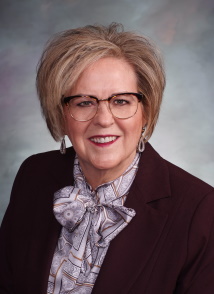
Rep. Martha Lawley
Sponsored bills
Maddy summaryHB 112 increases penalties for repeat theft offenses by establishing a new felony classification for a fifth or subsequent conviction. It directly affects individuals convicted of a fifth or later theft-related crime, including shoplifting, larceny, or property theft under state or local laws. The bill imposes a maximum penalty of 10 years in prison, a $10,000 fine, or both for these offenses. This change takes effect on July 1, 2023, modifying existing theft penalty statutes to create a separate felony tier for repeat offenders.
Maddy summaryHB 145 expands access to criminal identification and intelligence information to specific state agencies, including law enforcement, the state board of parole, department of corrections, the office of homeland security (for purposes under W.S. 19-13-105), designated agencies under W.S. 14-6-227, and the department of family services. Agencies holding this information must implement security precautions to prevent unauthorized access, with rules tailored to each agency's specific use and security practices. The bill amends existing law to formalize these access provisions and security requirements. It takes effect on July 1, 2023.
Maddy summaryWyoming's HB 253, the "Credit Card Defense Act," requires merchants selling firearms or ammunition in the state to use a "sporting goods" merchant category code for all transactions, instead of codes specifying firearms. Financial institutions, credit cards, and payment processors must not collect or generate personally identifying information beyond this category code for such purchases. The law directly affects firearm retailers, banks, and payment processors handling these transactions in Wyoming. It mandates that all relevant financial institutions adopt this coding standard by July 1, 2023, to limit transaction data collection related to firearm purchases.
Maddy summaryHB 230 establishes a 60-day deadline for Wyoming's Department of Transportation to impose driver's license penalties after a conviction for offenses like driving under the influence (DUI). Specifically, the department must initiate administrative actions - such as license revocation, suspension, or requiring an ignition interlock device - within 60 days of a court's conviction order or deferral of prosecution, or the penalty cannot take effect. This bill does not change the penalties themselves but ensures they are applied within a clear timeframe, directly affecting individuals convicted of traffic offenses and the department's enforcement process.
Maddy summaryHB 77 modifies Wyoming's definition of "average daily membership" (ADM), the metric used to calculate state school funding. It lowers the threshold for counting part-time students as full-time from 80% to 75% of a full-time schedule, allowing districts to include more part-time students in funding calculations. The bill clarifies that part-time enrollment is prorated based on actual hours attended versus full-time hours, and excludes students absent over 10 consecutive days or withdrawn. This change directly affects school districts receiving state education funding starting with the 2023-2024 school year.
Maddy summaryHB 194, the Wyoming Freedom Scholarship Act, creates education savings accounts (ESAs) providing eligible Wyoming students with $6,000 annually (adjusted for inflation) to cover approved educational expenses. It directly affects K-12 students who are Wyoming residents and not yet graduated, allowing parents to use funds for tuition at qualified schools, online programs, tutoring, textbooks, technology, and other approved educational services. The state treasurer administers the program, prohibits using local tax revenues for funding, and requires parents to sign agreements outlining permitted uses. The bill died in committee in February 2023 and was never enacted.
Maddy summaryWyoming's HB 192 requires all public school districts to provide daily lunch to every enrolled student starting in the 2023-2024 school year. It creates a state financial assistance program covering up to 50% of unpaid meal costs from the previous school year, funded by $150,000 in state appropriations (with $75,000 available annually). School districts must apply by September 30 each year, charge a state-determined minimum meal price, and report program details to the education department. The law directly affects all Wyoming public school districts and their students, with funds administered by the state education department through a new rulemaking process.
Maddy summaryHB 130 creates a state grant program to fund county, city, and town law enforcement agencies in purchasing or training dogs to detect fentanyl. It allocates $4 million from the general fund for grants up to $300,000 per agency, with applications due by July 1, 2024. The Attorney General will administer the program, requiring agencies to apply and report on grant use by June 2025. The program expires December 31, 2024, with unspent funds reverting to the state.
Maddy summaryHB 261 creates a new misdemeanor offense for disturbing peace in health care facilities, applying to individuals who cause unreasonably loud noise, use threatening or abusive language, or engage in violent actions with knowledge they will disturb others. The law specifically covers facilities including hospitals, clinics, and offices of licensed health care providers like doctors, dentists, and nurses. Violations carry penalties of up to 90 days in jail, a $750 fine, or both. The bill takes effect July 1, 2023, and defines "health care facility" per existing Wyoming law to include all licensed provider settings.