

Maddy summaryThis bill creates a new alternative teaching certification pathway for K-12 teachers in Wyoming. It requires alternative certification programs to meet specific criteria: operating in at least five states, having run for 10+ years, requiring subject and teaching methods exams, and having certified 10,000+ teachers. The certification would be limited to the exact subject areas and grade levels the applicant completed through the program. This directly affects new teachers seeking certification through approved alternative programs, not current certified educators.
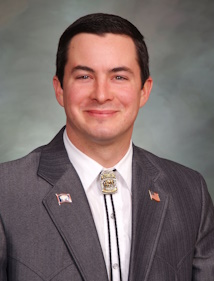
Rep. Dalton Banks
Sponsored bills
Maddy summaryHB 219 grants permanent rights for existing county and municipal roads to use state and school lands without fees. It applies to roads established before January 1, 2025, that already cross state/school lands. The bill requires counties and cities to submit documentation by April 2030 to secure these rights, with the state land board handling recording and fees. New roads built after 2025 must follow separate procedures, not automatic rights. This directly affects local governments managing roads on public lands.
Maddy summaryHB 136 allows volunteer firefighters, emergency medical technicians, and search/rescue personnel in Wyoming to join the state employees' group health insurance plan without being disqualified due to participation in government health programs - except for the Affordable Care Act marketplace. It permits first responder departments to contribute toward volunteers' insurance premiums and requires volunteers to submit annual proof of their active status to their department. The bill takes effect July 1, 2025, and modifies existing rules to streamline enrollment and ongoing eligibility for these volunteers.
Maddy summaryThe Wyoming Religious Freedom Restoration Act (HB 207) protects individuals and religious organizations from government actions that interfere with their religious practices, unless the government proves it has a compelling reason and uses the least restrictive approach possible. It defines government interference as denying benefits, imposing penalties, excluding from programs, or blocking access to facilities, and requires strict justification for such actions. People affected by these government actions can challenge them in court to seek remedies like injunctions, compensation, or other relief. The law applies to all state and local laws, rules, and policies, effective July 1, 2025.
Maddy summarySF 127 requires the Wyoming legislature to approve "major agency rules" before they take effect. This affects state agencies creating significant regulations (like environmental or business rules) and the legislature, which must vote to approve or reject these rules within the next regular or special session after receiving them. The bill establishes a timeline for review, specifies that rules not approved become void, and allows the governor to temporarily bypass this for emergency rules (limited to 120 days). Key provisions include requiring agencies to provide impact analyses and ensuring rules cannot take effect without legislative approval, except for short-term emergencies.
Maddy summarySF 132 prohibits operating drones over critical infrastructure (including power plants, water facilities, hospitals, prisons, and military sites) for intentional photography, loitering, or criminal activity. Exceptions allow federal-authorized drone use, government operations, infrastructure owners, model aircraft in parks, and emergency services like police or disaster response teams. Violations face misdemeanor penalties ($2,500 fine or 6 months jail) for first offenses, escalating to felony charges ($5,000 fine or 2 years jail) for repeat violations. Law enforcement may disable violating drones, and the Wyoming National Guard can assist with enforcement, effective July 1, 2025.
Maddy summaryHB 188 exempts home-based child care providers who care for up to four children from multiple families (with no more than two children under age two) at one parent's home from standard child care facility certification requirements. This directly affects informal caregivers operating in private residences, allowing them to provide care without full licensing while still meeting basic safety standards. The bill requires the Wyoming Department of Family Services to create implementing rules within 180 days. It takes effect immediately upon becoming law, streamlining oversight for small-scale, family-shared home care arrangements. The legislation does not alter certification rules for licensed child care centers or larger facilities.
Maddy summaryHB 310 allows owners of commercial trailers (defined as part of a commercial vehicle under Wyoming law) to permanently register their trailers for a one-time $350 fee instead of paying annual registration fees. This applies to trailers qualifying as commercial vehicles under existing statutes, directly affecting commercial trailer owners and operators. The bill creates a permanent registration option with fee exemptions for these trailers, while directing 50% of the $350 fee to county treasurers and 50% to the highway fund. It amends several statutes to establish this process and clarifies that permanent registration does not transfer to new owners upon sale.
Maddy summaryHB 125 repeals Wyoming’s existing law (W.S. 31-11-102) that defined "unauthorized use of a vehicle" as a crime. This bill directly affects the state’s criminal code by removing this specific offense, meaning the unauthorized use of a vehicle will no longer be prosecuted under this statute. The repeal takes effect on July 1, 2025, and does not create new penalties or alter other vehicle-related laws. The bill is procedural, with no additional mechanisms or provisions beyond the repeal.
Maddy summaryThis bill requires Wyoming public school districts to designate all multiple-occupancy restrooms and changing rooms as exclusively for males or females based on sex assigned at birth. It mandates reasonable accommodations like single-occupancy rooms for students who cannot use designated facilities, while allowing exceptions for maintenance staff, emergency medical help, and coaches under specific conditions (e.g., accompanied by same-sex adults). School districts failing to comply risk losing accreditation, and parents can sue for noncompliance. The law directly affects public school students, staff, and districts, with enforcement tied to state education standards. (Note: Bill is pending in Wyoming Legislature as of 2025.)