

Maddy summaryHB 182 clarifies that for voting purposes in Wyoming, "residence" refers only to a person's primary home where they actually live and intend to return, excluding secondary or commercial addresses not used for habitation. The bill amends election code definitions to prevent voters from registering using vacation homes, rental properties, or business locations as their official residence. It directly affects Wyoming voters who might attempt to register at non-primary addresses. The bill died in committee in March 2025 and never became law, with no effective date implemented.
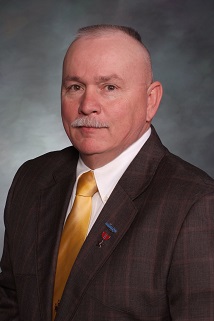
Rep. Clarence Styvar
Sponsored bills
Maddy summaryThis bill clarifies that multipurpose vehicles (like SUVs or vans used for personal and light commercial purposes) are eligible for existing special license plate programs in Wyoming. It amends multiple statutes to explicitly include "multipurpose vehicle" alongside passenger cars, trucks, and motorcycles in the list of qualifying vehicle types for special plates. This affects owners or lessees of multipurpose vehicles seeking special plates for veterans, firefighters, University of Wyoming affiliation, or other designated groups, ensuring they can apply for these plates without eligibility confusion. The change does not create new plate types but updates current rules to include these vehicles.
Maddy summaryWyoming's HB 224 restricts land ownership by "foreign adversaries" (defined as entities or individuals linked to Russia, China, terrorism-designated countries, or specific international sanctions lists) in all Wyoming real property, except for personal residences under one acre. Owners must register with the Homeland Security office within 60 days of acquisition or July 1, 2025 (whichever is later), and update annually. Failure to register incurs a $5,000 daily civil penalty, and county clerks must report violations to Homeland Security. The law also requires tax assessment notices to inform property owners about the ownership restrictions and registration requirements.
Maddy summaryHB 282 establishes that for certain properties (like recently purchased residential real estate), the purchase price (acquisition value) is presumed correct for property tax assessment, unless proven otherwise. This directly affects property owners who recently bought land or buildings, as it shifts the burden to tax assessors to justify using a different value. The bill clarifies that sworn statements about acquisition value must remain confidential but can be used by county assessors and the state board of equalization to determine tax value, while maintaining privacy protections. It amends Wyoming's property tax code to formalize this presumption and update related definitions and procedures. The bill does not change tax rates but changes how property value is initially determined for tax purposes.
Maddy summaryHB 307 amends Wyoming election law to regulate poll watchers, who are certified volunteers from political parties. The bill limits poll watchers to one per political party per polling place (with exceptions for multiple precincts), requires electronic certification to county clerks before voting begins, and specifies they may observe voter check-in, ballot counting, and polling place setup/shutdown without challenging voters or disrupting voting. It mandates polling places provide chairs for watchers and allows optional ID badges, while prohibiting removal for failure to schedule. The law takes effect July 1, 2025.
Maddy summaryThis Wyoming joint resolution (SJ 8) requests Congress to propose a constitutional amendment allowing states and Congress to establish reasonable limits on money spent to influence elections. It specifically seeks authority to distinguish between natural persons (individuals) and artificial entities like corporations, unions, or AI when setting these limits. The resolution argues that current Supreme Court interpretations equating unlimited spending with free speech undermine political equality, election integrity, and local representation. It does not create new laws but formally asks Congress to initiate a constitutional amendment process to address these concerns.
Maddy summaryThis bill (SF 119) creates faster licensing pathways for military service members and their spouses in Wyoming who want to work in licensed professions. It requires licensing boards to issue expedited licenses within 30 days for applicants with active out-of-state licenses and military IDs, and to provide fee-free temporary permits valid up to 3 years while they complete full licensure requirements. The bill also mandates that boards consider military training and experience when evaluating qualifications and ask applicants about military status on all license forms. It applies to all licensed professions and takes effect July 1, 2025.
Maddy summaryWyoming's SF 39 allows vehicle owners to automatically transfer title to a named beneficiary upon death, bypassing probate. Owners complete a beneficiary designation form listing the vehicle details, all current owners, and the beneficiary's name, then sign it. Upon the owner's death, the beneficiary presents the form, proof of death, and a fee to the county clerk to receive a new title - without needing court involvement or the estate's approval. This applies only to vehicles with a properly executed form and does not affect existing liens or ownership interests.
Maddy summaryHB 172 repeals restrictions on concealed weapons in specific public spaces, allowing permit holders to carry guns in government meetings, school athletic events on public property, and school facilities (like classrooms and offices). It also strengthens Wyoming’s state law by preventing local governments from regulating firearms, declaring that only the state legislature can set rules for guns, ammunition, and weapons. The bill includes exceptions for health facilities, explosive materials, and private property rules, and adds penalties for blocking someone from entering permitted areas. School districts must establish training rules for employees carrying concealed weapons, requiring 16 hours of initial training and annual 12-hour recertification.
Maddy summaryWyoming's SF 120 (the Wyoming PRIME Act) allows small-scale producers to sell meat from their own livestock (cattle, sheep, swine, or goats) directly to consumers in Wyoming, provided the animals were raised, slaughtered on the producer's property or at a custom slaughter facility, and processed within the state. Producers must provide a clear written warning stating the meat hasn't been inspected, prohibit resale or donation by consumers, and avoid implying state approval. The law won't take effect until the governor certifies that federal law permits such sales, with a planned effective date of July 1, 2025, pending this federal action. This directly affects Wyoming producers of small-batch meat and their local end consumers.