

Failed Feb 14, 2020
1 co-sponsor
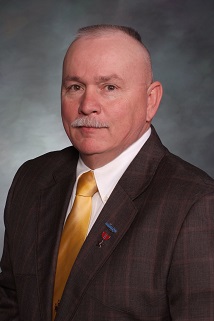
Rep. Clarence Styvar
Total votes
3,677
all sessions
Attendance
99%
51 missed
Near the chamber average
With party
69%
of cast votes
Near the chamber average
Bipartisan score
18%
some cross-party votes
Near the chamber average
Sponsored
201
bills & resolutions
Near the chamber average
Committees
1
assignment
201 bills and resolutions
Sponsored bills
Total
201
Primary
20
Co-sponsor
181
This page
201
matching current filters
Introduced Feb 14, 2020
1 co-sponsor
Introduced Feb 14, 2020
1 co-sponsor
Introduced Feb 14, 2020
1 co-sponsor
Failed Feb 12, 2020
1 co-sponsor
Failed Feb 12, 2020
1 co-sponsor
State offices-contract transparency.
Maddy summaryHB 148 requires Wyoming's five elected state officials and all legislators to annually disclose contracts they have with state entities. Specifically, they must list the business name, address, contract type, and dates for any contract involving a business they financially own (excluding small stock holdings under 1% or minor business interests). This disclosure must be submitted by January 31 each year to the Secretary of State. The bill does not change state spending rules but mandates transparency about potential conflicts of interest in existing contracts. It applies to all state agencies and judicial branches, effective July 1, 2019.
Signed into law Mar 15, 2019
1 co-sponsor
Community colleges-bachelor of applied science programs.
Maddy summaryWyoming's SF 111 authorizes community colleges to offer applied bachelor's degree programs (called "baccalaureate of applied science" degrees) for the first time. It requires the Community College Commission to approve all new such programs before they can receive state funding. The bill also updates the Hathaway scholarship program to cover these new degrees, allowing students to use scholarships for up to eight semesters to complete them while maintaining a 2.25 GPA. This directly affects community college students pursuing applied bachelor's degrees and the colleges offering them.
Signed into law Mar 15, 2019
1 co-sponsor
Lifetime fishing licenses for permanently disabled persons.
Maddy summaryHB 169 authorizes Wyoming's Game and Fish Commission to issue free, lifetime fishing licenses and conservation stamps to residents who are permanently and totally disabled. It directly affects eligible disabled residents by eliminating annual license fees and the requirement to purchase conservation stamps. The bill amends existing statutes to create a process for issuing these complimentary licenses, requiring the Commission to establish rules by July 1, 2019. The policy change takes effect July 1, 2019, providing permanent cost savings for this specific group of residents.
Signed into law Feb 27, 2019
1 co-sponsor
Food trucks.
Maddy summaryHB 179 establishes a statewide licensing system for food trucks in Wyoming, replacing local permitting requirements. Food truck operators must obtain a $100 annual state license, carry $1 million in general liability insurance, and comply with food safety and fire safety standards. The law prevents cities and counties from imposing additional fees or stricter rules than those set by the state. It directly affects food truck businesses and local governments, excluding ice cream trucks and pushcarts from the definition of "food truck."
died Feb 27, 2019
1 co-sponsor
Ask Maddy
·
AI policy assistant
Ask Maddy about Clarence Styvar
Scope: wyoming
Hi! I can help you understand Clarence Styvar's legislative record. What would you like to know?
Try one of these
i
Maddy answers using official bill text and legislative records. Always verify before sharing.
Sources cited inline