

Maddy summarySB 425 establishes an annual sales tax holiday for specific school-related items, directly affecting families purchasing back-to-school supplies. The bill defines "eligible property" to include clothing (excluding accessories like belts), school supplies (e.g., notebooks, calculators), school art supplies (e.g., paints, sketch pads), and instructional materials (e.g., textbooks), while excluding items like protective gear or computer accessories. It creates new statutory provisions (77.54 (76)) to clarify qualifying items and mandates state reimbursement to counties/municipalities for lost tax revenue (via 20.835 (4)(a)). The holiday applies annually during a designated period, allowing tax-free purchases of these defined items.
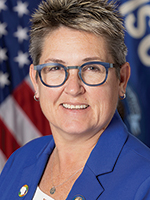
Sen. Kristin Dassler-Alfheim
Sponsored bills
Maddy summarySB 517 requires election officials to complete one hour of accessibility training focused on complying with existing laws (sections 5.25(4) and 6.82). It directly affects chief inspectors (under section 7.31(6)) and other officials like municipal clerks, inspectors, and election registration staff (under section 7.315(5)). The bill mandates this training before the 2027 spring election to ensure officials can properly assist voters with disabilities. It amends existing statutes to integrate these accessibility requirements into standard election official training protocols. The law does not change voting procedures but adds a specific training component for accessibility compliance.
Maddy summarySB 514 allows 16- and 17-year-olds to preregister to vote using standard registration methods, such as online or mail-in forms. The bill creates a new section (6.31) specifying that preregistration is available for eligible individuals aged 16 or 17 under existing voter eligibility rules. Crucially, preregistered names cannot appear on official voter lists until the individual turns 18, ensuring they cannot vote before reaching the legal voting age. This change streamlines the process for young people to become active voters once they turn 18, without altering the minimum voting age requirement.
Maddy summarySB 503 creates a $200,000 annual grant program to fund safe firearm disposal initiatives run by counties or law enforcement agencies. Eligible entities must advertise the program, use law enforcement personnel (with possible overtime funding), securely store firearms until destruction, prevent fraud, require dealer inspections before payment, and restrict gift cards from being redeemed for firearms. The bill requires grantees to report firearm details and program outcomes to the Department of Justice, with annual reports due by July 1, 2028. This program directly affects local jurisdictions implementing firearm disposal services, providing funding to support their safe collection and destruction efforts.
Maddy summarySJR 104 is a ceremonial resolution recognizing September 23, 2025, and September 23, 2026, as "Celebrate Bisexuality Day" in Wisconsin. It does not create new laws or allocate funding but formally acknowledges the bisexual community's contributions and resilience. The resolution highlights the annual observance of this day nationally and internationally, aiming to increase visibility and respect for bisexual individuals. It directly affects Wisconsin's bisexual community by affirming legislative support for their recognition. This is a symbolic gesture, not a substantive policy change.
Maddy summarySB 261 prevents veterans and surviving spouses from claiming the property tax credit if they also claim certain other specific credits for the same tax year. It amends the law to block the property tax credit if a claim is filed under sections (3m), (9), or subchapters VIII or IX for that year. This applies to taxable years starting January 1, 2025, directly affecting eligible veterans and surviving spouses who might otherwise qualify for multiple credits. The bill creates a clear limitation to avoid overlapping claims for the same tax year.
Maddy summarySJR 42 is a ceremonial resolution that declares 2025 as "the Year of the Snake" to honor the Lunar New Year and celebrate Asian American cultural traditions in Wisconsin. It does not create new laws or policies; instead, it symbolically recognizes the significance of the Lunar New Year in Asian cultures and the positive traits associated with the snake in Chinese tradition. The resolution aims to foster appreciation for Wisconsin's diverse Asian American communities and their contributions to the state's cultural fabric. This is a non-binding proclamation with no direct impact on legislation or affected populations.
Maddy summarySB 272 amends Wisconsin's Family Care eligibility rules to directly include individuals who are deaf-blind, as defined by federal law (29 U.S.C. § 1905). This change means deaf-blind individuals will now qualify for Family Care services without needing to undergo a separate assessment of their care needs. The bill updates the statute to establish deaf-blindness as a clear, standalone eligibility category, simplifying access to this state-supported care program for this specific group.
Maddy summarySJR 55 is a ceremonial resolution recognizing the U.S. Army's 250th anniversary on June 14, 2025. It symbolically honors the Army's history of service, sacrifice, and dedication since its founding in 1775, with specific emphasis on Wisconsin's connections - including over 10,000 Army personnel stationed in the state, 100,000 veterans, and Fort McCoy's $1.4 billion economic impact. The resolution has no binding policy changes or financial obligations; it serves only as a formal statement of appreciation from the Wisconsin Legislature. It does not directly affect any individuals or programs, as ceremonial resolutions like this typically express support without altering laws or funding.
Maddy summarySJR 62 is a ceremonial joint resolution that formally proclaims January 1, 2025, through December 31, 2025, as the "Wisconsin State Park System 125th Anniversary." It commemorates 125 years of the state park system, established in 1900 with Interstate Park, now encompassing over 307,000 acres and welcoming approximately 20 million annual visitors. This resolution has no policy impact or cost; it is purely symbolic recognition of the park system's history, conservation efforts, and economic contributions (e.g., $11.2 billion in state GDP). It affects no individuals or entities through new requirements or funding.