

Maddy summaryAB 967 increases funding by $500,000 for Wisconsin's Family Foundations home visitation program to provide parental education about social media's effects on children and healthy social media practices. It directly affects parents eligible for Medical Assistance who are assessed as at-risk for child abuse or neglect under the existing program. The bill modifies the Department of Children and Families' budget to allocate these funds specifically for social media education components within home visitation services. This is a concrete policy change expanding an existing program's educational focus, not a new initiative.
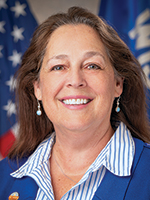
Rep. Jill Billings
Sponsored bills
Maddy summaryAB 972 allows banks and credit unions to refuse or delay specific financial transactions and decline to accept a power of attorney for vulnerable adults when they reasonably suspect financial exploitation. Financial institutions must report suspected exploitation to adult-at-risk agencies and notify authorized account holders (excluding suspected perpetrators), while maintaining legal immunity for good-faith actions. This law directly affects vulnerable adults (elderly or disabled individuals at risk of exploitation), financial institutions, and the agencies that handle exploitation reports. It creates clear procedures for institutions to act preventively without facing liability, focusing on concrete safeguards rather than new penalties or funding.
Maddy summaryAB 974 establishes a permanent "public affairs network fund" to provide annual grants to WisconsinEye, the public affairs network broadcasting state government proceedings. The bill creates a new trust fund using state appropriations, donations, and interest earnings, which will fund WisconsinEye’s operating costs for live broadcasts, civic events, and free online archives of unedited government proceedings. WisconsinEye must meet specific requirements, including appointing legislative designees to its board, focusing coverage on official government business, and providing continuous free public access to broadcasts and archives. If WisconsinEye ceases operations, it must repay all grant funds to the state and transfer its archives to the state historical society.
Maddy summaryAB 960 requires most social media platforms operating in the state to display a clear, prominent mental health warning each time a user in the state accesses the platform. The warning must inform users about potential negative mental health effects and provide access to crisis resources like the 988 suicide hotline. It applies to platforms defined as user-generated content services (excluding search engines, email, business communication tools, and streaming services), and prohibits hiding warnings in terms of service or allowing users to disable them without specific conditions. Violations may result in fines up to $5,000 per incident, enforced by state departments.
Maddy summaryAB 765 creates a state bonding program to fund lead service line replacement for private water users connected to public water systems. It authorizes up to $274.95 million in state bonds (increasing previous limits) and allocates $200 million from bond proceeds to provide forgivable loans covering up to 50% of replacement costs for homeowners. The bill directly affects private residents with lead pipes by reducing their financial burden for replacing hazardous infrastructure. Key provisions include the new bonding authority and the specific allocation for forgivable loans to address public health concerns related to lead in drinking water.
Maddy summaryAB 769 creates a new grant program to fund food waste reduction pilot projects, allocating $100,000 annually for fiscal years 2025-26 and 2026-27. The grants support projects focused on preventing food waste, redirecting surplus food to hunger relief organizations, and composting food waste. The Department of Agriculture must prioritize proposals serving low-income census tracts (below statewide median income) without grocery stores. The bill also authorizes the department to create rules for administering the program. This directly affects local pilot projects and hunger relief organizations in underserved communities.
Maddy summaryAB 708 extends the lifespan of tax incremental districts (TIDs) used for housing improvements by up to three years after a city pays off project costs. It directly affects cities that have established TIDs for housing development, allowing them to continue using tax increment financing beyond the district's original expiration. The bill requires cities to submit extension resolutions to the Department of Revenue and obtain joint review board approval for extensions longer than one year. This change aims to provide more flexibility for cities to complete housing projects without losing access to dedicated funding streams.
Maddy summaryAB 711 increases funding for the Family Foundations home visitation program by $1.2 million in fiscal year 2026-27. This appropriation directly supports the Department of Children and Families' program under section 48.983, which provides home visits to families with young children. The bill modifies the existing budget allocation without changing program eligibility or requirements. It was introduced in December 2025 with multiple co-authors and is currently under review by the Committee on State Affairs.
Maddy summaryAB 706 modifies Wisconsin's tax increment district (TID) rules by reducing the local tax base limit from 18% to 12% of a city's total taxable value for certain districts. It restricts residential use in mixed-use TID projects to 35% of the district area and expands allowable TID spending to include park development costs. These changes directly affect cities and towns operating TIDs by altering how they calculate tax base limits and fund eligible projects. The bill aims to clarify TID management while controlling tax impacts on non-district areas.
Maddy summaryAB 735 creates a centralized online clearinghouse for Wisconsin small businesses, requiring the state Department to compile and publish key information on a single website. The clearinghouse will include details on government contract bidding opportunities, economic development programs, business training/events, licensing/permit requirements, and tax/fee obligations from state and local agencies. This bill directly affects Wisconsin small businesses by making it easier to access government resources and compliance information in one place. The clearinghouse will be coordinated with agencies like the Wisconsin Economic Development Corporation and the Department of Revenue.