

Maddy summaryAB 811 creates a $25 million annual grant program for businesses opening new locations or expanding into vacant commercial spaces, administered by the Wisconsin Economic Development Corporation (WEDC). It directly affects eligible businesses in commercial districts, continuing a similar program from June 2023 while explicitly excluding nonprofit organizations from receiving grants. The bill allocates $25 million for the 2025-26 and 2026-27 fiscal years to fund these "Main Street Bounceback Grants" through WEDC's existing grant framework. Key provisions require WEDC to follow eligibility rules nearly identical to the prior "Wisconsin Tomorrow" program, focusing on revitalizing underutilized commercial properties.
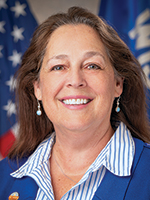
Rep. Jill Billings
Sponsored bills
Maddy summaryAB 797 creates a $2.5 million grant program to help counties, cities, and towns test privately owned wells for water quality and map well locations. It provides up to $10,000 per grant for well testing, groundwater assessment, and geologic studies, plus separate grants for county health departments to offer well-testing education. The bill also requires municipalities with private wells to inform residents about testing importance and exempts the department from standard emergency rule procedures for implementing this program. The law appropriates funds for fiscal years 2025-26 and 2026-27 to support these concrete actions.
Maddy summaryAB 804 establishes two new grant programs: a $200,000 annual "Farm to Fork" grant for non-school entities (like businesses, hospitals, or universities with cafeterias) to connect local farms with food service operations, and a $250,000 annual "Farm to School" grant for school districts to expand local food sourcing. The bill prioritizes innovative proposals, high-need schools (where many students qualify for free/reduced meals), and projects supporting value-added agricultural products. It requires the Agriculture Department to administer the grants, provide annual legislative reports, and create rules for implementation. The legislation also adds one dedicated staff position to manage the Farm to Fork program.
Maddy summaryAJR 3 is a symbolic resolution that officially recognizes January 2025 as "Human Trafficking Awareness and Prevention Month" in Wisconsin. It does not create new laws or allocate funding but aims to raise public awareness about human trafficking, highlighting its prevalence across all 72 Wisconsin counties and its impact on vulnerable groups like youth and individuals with disabilities. The resolution aligns with broader state and national efforts to combat trafficking through education and community engagement. As a procedural resolution, it focuses solely on designation and awareness, with no direct policy changes or obligations for state agencies.
Maddy summaryAB 62 establishes a Prescription Drug Affordability Review Board to address prescription drug costs. The board, with members representing pharmaceutical companies, health insurers, healthcare providers, and the public, must meet quarterly and avoid conflicts of interest. Key provisions include creating a $500,000 annual grant program for healthcare providers to develop tools showing patients the cost of prescriptions (Section 601.415), launching a diabetes medication pilot project (Section 601.41), and repealing a section requiring copayments for certain Medicaid services (Section 7). This bill directly affects insurers, pharmacies, drug manufacturers, and healthcare providers who must disclose drug costs to patients.
Maddy summaryAB 48 creates a state program to reimburse public and private schools for the cost of providing free meals to all students, including lunch and breakfast. Schools must participate in federal meal programs and offer free meals to every student without charge. The state will pay schools an amount equal to the federal reimbursement rate for free meals (minus any federal funds received), based on meals served in the prior school year. This applies to public, private, charter, tribal, and specialized schools meeting eligibility requirements.
Maddy summaryAB 52 expands the homestead income tax credit for homeowners with low to moderate income. It establishes new income-based limits: households earning $8,060 or less get credit covering 80% of property taxes, while higher earners get credit on taxes exceeding 5.614% of income over $8,060. The credit is unavailable if household income exceeds $35,000. The law also adds automatic inflation adjustments to these thresholds starting in 2026.
Maddy summaryAB 125 designates February 18 as a special observance day in Wisconsin public schools to honor Vel R. Phillips' birthday. The bill adds this date to school calendar requirements, directing schools to recognize Vel R. Phillips' contributions during the school year following the law's effective date. This applies directly to all Wisconsin public schools.
Maddy summaryAB 79 prevents the prosecution of minors under 18 for prostitution offenses when a court determines it serves the minor's best interests and protects public safety. Instead, the court may use diversion programs like consent decrees or deferred prosecution agreements under existing laws. The bill amends statutes to remove prosecution as an option for juveniles in these cases while maintaining DNA collection and expungement requirements for other serious juvenile offenses. This change directly affects minors charged with prostitution under section 944.30 (1m) by prioritizing rehabilitation over criminal prosecution.
Maddy summaryAssembly Bill 147 establishes a "right to repair" for agricultural equipment, directly affecting manufacturers, owners, and independent repair providers of farm machinery like tractors and combines. The bill mandates that manufacturers must make available documentation, diagnostic data, embedded software, replacement parts, and repair tools. These resources must be provided to equipment owners and independent repair providers upon request. This access must be offered under "fair terms" and "fair costs," which includes providing digital documentation and embedded software for free, without requiring specific authorizations or affiliations.