

Maddy summaryAB 967 increases funding by $500,000 for Wisconsin's Family Foundations home visitation program to provide parental education about social media's effects on children and healthy social media practices. It directly affects parents eligible for Medical Assistance who are assessed as at-risk for child abuse or neglect under the existing program. The bill modifies the Department of Children and Families' budget to allocate these funds specifically for social media education components within home visitation services. This is a concrete policy change expanding an existing program's educational focus, not a new initiative.
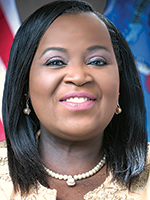
Rep. Shelia Stubbs
Sponsored bills
Maddy summaryAB 974 establishes a permanent "public affairs network fund" to provide annual grants to WisconsinEye, the public affairs network broadcasting state government proceedings. The bill creates a new trust fund using state appropriations, donations, and interest earnings, which will fund WisconsinEye’s operating costs for live broadcasts, civic events, and free online archives of unedited government proceedings. WisconsinEye must meet specific requirements, including appointing legislative designees to its board, focusing coverage on official government business, and providing continuous free public access to broadcasts and archives. If WisconsinEye ceases operations, it must repay all grant funds to the state and transfer its archives to the state historical society.
Maddy summaryAB 987 amends a state statute to update the purpose statement that local governments must follow when creating zoning regulations. The bill adds specific goals including promoting solar/wind energy access, protecting groundwater, encouraging diverse housing types, advancing "complete streets" for all users, and preserving burial sites. These changes require cities to consider these factors when developing zoning rules that affect land use, housing, transportation, and environmental protection. The bill directly impacts local zoning authorities and the communities they serve by shaping how land development is regulated.
Maddy summaryAB 985 adjusts how cities and towns calculate property tax increases when redeveloping parking lots into commercial or residential buildings. It specifically applies to political subdivisions (like cities) that convert at least 40% of a parcel's paved parking area into new construction, such as buildings. The key change adds a 50% boost (multiplying by 1.5) to the property tax value increase from these parking lot redevelopments when calculating annual tax growth limits. This adjustment applies to all qualifying projects, with separate rules for certain tax increment districts (TIDs) created after 2024.
Maddy summaryAB 989 creates annual grants of up to $50,000 per year to community health organizations serving economically disadvantaged minority groups. The bill requires recipients to provide 50% in matching funds (cash or in-kind) and prioritizes non-federally qualified health centers and providers offering maternal/child health services. These grants, funded from a specific state appropriation account, aim to improve health outcomes for underserved minority populations through direct community health programs. The legislation directly affects community health providers and minority-serving organizations eligible to apply for these state-funded grants.
Maddy summaryAB 986 modifies property tax valuation rules for local governments (like cities and towns) that build qualifying infill housing projects. It defines "qualifying infill housing" as projects adding 2-6 new homes on older residential parcels (with 90% of the area developed for 10+ years), using existing infrastructure, and increasing total units. The bill changes how new construction value affects annual tax levy limits by including 90% of new property value in tax incremental districts (TIDs) and excluding removed improvements from these calculations. This adjustment aims to ease tax levy constraints for municipalities developing such housing without altering tax rates themselves.
Maddy summaryAB 976 clarifies how tax credits for low-income housing projects are claimed by business entities. It modifies rules so partnerships, limited liability companies, and tax-option corporations cannot claim the credit directly; instead, their members or shareholders (including insurers who are part of such entities) may claim it based on the entity's eligible costs. The bill requires entities to calculate and distribute credit amounts to members/shareholders, with specific allocation rules for ownership interests or written agreements. It directly affects housing developers, investors, and insurers involved in low-income housing projects financed through tax-exempt bonds in the state. The changes standardize credit allocation across multiple tax code sections without altering eligibility or credit amounts.
Maddy summaryAB 988 requires surgical facilities (like hospitals and ambulatory centers) to offer patients the option to have their surgical procedure recorded on video. The video must be continuous, include audio, show the time/date, cover the entire surgical suite from preparation through cleanup, and include preoperative discussions and discharge instructions if requested. Facilities must inform patients (or parents/guardians for minors, or authorized representatives for incapacitated patients) about this option, associated fees, and procedures before surgery. The bill does not mandate recording but gives patients a choice, with facilities required to comply if a surgical practitioner requests it and the patient consents.
Maddy summaryAB 960 requires most social media platforms operating in the state to display a clear, prominent mental health warning each time a user in the state accesses the platform. The warning must inform users about potential negative mental health effects and provide access to crisis resources like the 988 suicide hotline. It applies to platforms defined as user-generated content services (excluding search engines, email, business communication tools, and streaming services), and prohibits hiding warnings in terms of service or allowing users to disable them without specific conditions. Violations may result in fines up to $5,000 per incident, enforced by state departments.
Maddy summaryAB 730 mandates that inmates in state correctional facilities and county jails must be allowed at least two in-person visiting periods per week, with limited exceptions for lockdowns (up to 10 days). It requires facilities to allow inmates to designate up to 25 visitors, permits physical embraces for 20 seconds at the start and end of visits, and provides visitors with paper and writing supplies upon request. Inmates may keep original artwork or notes created during visits using facility-provided materials. The bill directly affects incarcerated individuals and their visitors, while setting clear operational requirements for correctional departments and sheriffs.