

Maddy summaryAB 589 eliminates specific abortion-related requirements from medical licensing regulations. It removes references to abortion procedures from statutes governing medical board investigations (amending §448.02) and repeals sections requiring parental consent, ultrasound disclosures, or abortion-specific definitions (like §253.10). This directly affects physicians and medical licensing boards by removing mandatory reporting obligations related to abortion care. The bill streamlines medical oversight by excluding abortion-related violations from the list of unprofessional conduct that triggers board investigations.
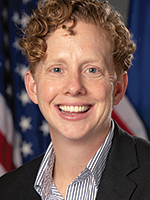
Rep. Angela Stroud
Sponsored bills
Maddy summaryAB 600 establishes new rules for faculty tenure and probationary appointments at University of Wisconsin System institutions. It defines "probationary appointments" as temporary positions (capped at 7 consecutive academic years, excluding approved leaves) and "tenure appointments" as permanent roles. The bill requires tenure decisions to follow a multi-step process: a chancellor's recommendation, a committee review if the academic department rejects tenure, and adherence to board-defined rules prohibiting discriminatory or irrelevant factors in decisions. It also clarifies that tenure is institution-specific and mandates procedural safeguards, including due process for dismissals, for both tenured and probationary faculty.
Maddy summaryAB 591 modifies Wisconsin's fee remission program for veterans and their dependents enrolled in the University of Wisconsin System or technical colleges. It removes outdated provisions (like sections 36.27 (3n) (bm) 2. and 39.50 (3m)) and clarifies that the state will reimburse institutions for waived tuition and fees, with proration if funds are insufficient. This directly affects veterans and dependents who qualify for fee waivers, ensuring they receive proportional reimbursement when state funds fall short. The changes take effect for students enrolled in Fall 2026.
Maddy summaryAB 608 allocates $10 million annually for two years (2025-26 and 2026-27) to support student success and retention programs at University of Wisconsin System institutions and Wisconsin technical colleges. The funding, designated as a continuing appropriation, directly supports institutions in enhancing academic advising and other retention-focused initiatives. It creates new statutory provisions to channel these funds through the University of Wisconsin System and technical college district boards. The bill does not establish new programs but provides dedicated annual funding for existing student support efforts at these public institutions.
Maddy summaryAB 513 modifies Wisconsin law to clarify procedures for employment discrimination cases involving unfair honesty testing or genetic testing. It allows individuals or the department to file civil lawsuits in circuit court within 300 days of an alleged violation, with courts able to award compensatory damages and punitive damages up to specific caps based on employer size (e.g., $50,000 for businesses with ≤100 employees). The bill also establishes a process for automatic annual adjustments to these damage caps using the consumer price index. It ensures complainants receive clear notices about their right to pursue legal action after administrative decisions.
Maddy summaryAB 567 bans most post-employment non-compete agreements in the state, making them illegal and unenforceable for employees after their job ends. The bill specifically allows exceptions only for protecting a customer list or intellectual property (like trade secrets or proprietary data). Employers must post clear notices about this ban in visible locations and on their websites. The law applies only to new non-compete clauses entered into, renewed, or modified after the bill’s effective date.
Maddy summaryAB 583 helps people wrongfully imprisoned in Wisconsin by providing them with tax-exempt compensation, health coverage, and transition support. It exempts state compensation payments for wrongful imprisonment from state income tax, covers health insurance premiums (with shared costs), and requires a 5-day transition plan for released individuals to access housing, job help, and healthcare. The bill creates new funding mechanisms (like appropriations under 20.515) to pay for these benefits and mandates state agencies to coordinate with counties on post-release support. It directly affects individuals who receive state compensation under wrongful imprisonment claims (s. 775.05) and the state budget.
Maddy summaryAB 469 modifies Wisconsin's unemployment insurance rules for claimants who concealed work. It repeals outdated provisions and amends Section 108.04(11)(bm) to clarify that claimants who hid work (triggering ineligibility) will not earn "waiting period credit" during their ineligibility period. Instead, if no benefit rate applies to their claim week, the department will use their next benefit year's rate to calculate any reduction. This directly affects unemployed workers who previously concealed employment when filing for benefits.
Maddy summaryAB 594 creates a state income tax subtraction for Wisconsin taxpayers who pay principal or interest on qualified education loans (defined by federal tax code). It allows a deduction of up to $5,130 for 2026, adjusted annually based on the previous year's August CPI inflation rate (rounded to the nearest $10). The subtraction excludes amounts withdrawn from college savings accounts and payments already deducted for federal income tax purposes. This policy directly affects Wisconsin residents with qualifying education loans by reducing their state taxable income.
Maddy summaryAB 482 repeals provisions that allowed cities, towns, and counties to create local family and medical leave ordinances. It directly affects local governments (like cities and counties) that previously could require employers to provide such leave, and employers in those jurisdictions. The bill amends statutes to prohibit local governments from enacting or enforcing any ordinance requiring employers to provide family or medical leave benefits, including existing ordinances in effect as of April 18, 2018. This shifts authority away from local governments to the state level for family leave policies.