

Maddy summaryAB 59 restricts how private community water systems can use federal capitalization grant funds for infrastructure projects. It specifically prohibits using these funds for principal forgiveness on loans, except when the loan is exclusively for replacing lead service lines. This directly affects private water system owners who receive federal grants under the Safe Drinking Water Act. The bill was withdrawn from committee in June 2025 and did not advance further.
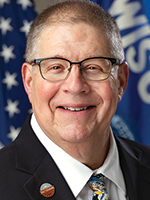
Rep. Dave Armstrong
Sponsored bills
Maddy summaryAB 132 creates a "nuclear power summit board" to organize, promote, and host a Wisconsin nuclear power summit in Madison, requiring the event to occur within one month after a specific university academic term begins. The board includes appointed legislators (two senators, two assembly members), the Wisconsin Economic Development Corporation CEO, a governor-appointed member, and nonvoting industry/faculty representatives. It is funded through a dedicated appropriation from the Wisconsin Economic Development Corporation, with the summit allowing free attendance for Wisconsin residents and varying registration fees for others. The board must disband 180 days after the summit concludes, returning remaining assets to the University of Wisconsin-Madison's nuclear engineering program.
Maddy summaryAB 107 establishes a legal process for nonprofit cooperative health care associations (organized under §185.981) to convert into service insurance corporations. It requires the cooperative’s board to create a detailed conversion plan (including reasons, terms, and new name), which must be approved by the state insurance commissioner before member voting. If approved by both the commissioner and members, the cooperative files articles of conversion with the Department of Financial Institutions, becoming a new service insurance corporation that inherits all assets and obligations. This bill directly affects health care co-ops seeking to operate under a different corporate structure, with no financial compensation allowed for conversion-related work beyond regular salaries.
Maddy summaryAJR 6 is a symbolic resolution passed by the Wisconsin State Legislature declaring support for nuclear and fusion energy as critical clean energy sources. It states the legislature's commitment to advancing nuclear power, fusion technology, and related innovations to meet energy demands, reduce carbon emissions, and create high-paying jobs - citing current nuclear plants powering 1.2 million homes and avoiding 6.4 million tons of carbon emissions annually. The resolution does not create new laws or allocate funding but formally endorses expanding nuclear energy development. The bill was introduced in February 2025, referred to committees, and ultimately laid on the table in June 2025 without further action.
Maddy summaryAB 233 amends Wisconsin law to expand funding for child advocacy centers by adding two new recipients: the Lakeshore Regional Child Advocacy Center in Sheboygan County and a statewide "Child Advocacy Centers of Wisconsin" entity. It authorizes $17,000 annually per center for education, training, and quality assurance activities related to child maltreatment response. The bill directly affects existing centers (like those in Milwaukee, Kenosha, and Racine Counties) and the newly added entities by securing their grant funding from the Department of Justice’s existing appropriation. The policy change specifies concrete funding recipients and mechanisms without altering eligibility criteria for current centers.
Maddy summaryAB 63 authorizes the Wisconsin Health and Educational Facilities Authority (WHEFA) to provide working capital loans to participating health, educational, and nonprofit institutions for operating expenses. It expands WHEFA's ability to make loans for facility projects, requiring security like mortgages and limiting loan amounts to project costs or approved working capital. The bill permits out-of-state projects only if they include a substantial Wisconsin component, as determined by WHEFA. It also sets salary caps for WHEFA's executive staff based on state pay scales for specific leadership roles.
Maddy summaryAB 279 creates a state grant program to help municipalities and eligible nonprofits recruit new residents from outside the state. The program provides grants (capped at $500,000 per municipality annually) to cover costs of talent recruitment initiatives, with half the funds paid upfront and the second half released only if half the target number of relocating households is met. Households must earn at least $55,000 annually, live outside the state when applying, and commit to relocating to qualify for incentives. Recipients must submit detailed semiannual reports tracking applications, approved households, costs, incomes, and economic impacts like tax revenue.
Maddy summaryAB 53 amends Wisconsin law to classify intentionally causing bodily harm or threatening harm to a community service officer (or their family) as a Class H felony under specific conditions. It directly affects community service officers and their families by creating a new felony charge when the harm occurs in response to the officer's official duties. The bill requires that the perpetrator knew the victim was a community service officer (or family member) and that the act was retaliation for an official action taken by the officer. This policy change strengthens criminal penalties for attacks targeting these officers during their work, without altering existing protections for other law enforcement roles.
Maddy summaryAB 190 modifies state public records law to allow requesters who win partial victories to recover attorney fees. Specifically, it enables fee recovery when a government agency voluntarily releases a contested record *after* a lawsuit is filed, and a court determines the lawsuit was a substantial factor in that release. This directly affects public record requesters who successfully pressure agencies to disclose documents through litigation without a full court judgment. The bill creates a clear mechanism for fee awards in these specific scenarios, avoiding the need for a formal court order on the record's disclosure.
Maddy summaryThis joint resolution (AJR 73) is a symbolic recognition by the Wisconsin Legislature that June 2025 will be observed as Black Music Month in Wisconsin. It directly affects Wisconsin residents by formally acknowledging the state's support for celebrating Black musical contributions. The resolution highlights the historical significance of Black music genres like jazz, soul, and hip-hop, and honors Black artists' global influence on music and culture. As a commemorative measure with no new laws or funding, it serves solely to affirm and celebrate this cultural legacy through official state recognition.