

Maddy summaryAB 218 limits foreign ownership of agricultural land in the state to 50 acres (down from 640 acres), affecting foreign corporations, LLCs, partnerships, and trusts with over 25% foreign ownership. It also prohibits foreign entities from owning real property within 10 miles of military installations, with limited exceptions for inheritances, treaty rights, or debt collection. The bill requires entities exceeding these limits to divest or forfeit land within 3 years, and mandates reporting for exceptions. These changes apply to land acquired after the bill’s effective date, not retroactively.
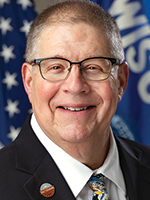
Rep. Dave Armstrong
Sponsored bills
Maddy summaryAB 304 provides $1 million in state funding to Lutheran Social Services of Wisconsin and Upper Michigan for renovating an existing facility in Chippewa Falls to create a 50-bed treatment center specifically for men with substance use disorders. The grant will cover costs for purchasing and remodeling the Libertas Treatment Center to provide recovery services. This bill directly affects men in Chippewa Falls seeking treatment for substance use disorders and the organization operating the facility. The legislation authorizes the Department of Administration to disburse the funds in the 2025-26 fiscal year.
Maddy summaryAB 392 creates a state Task Force focused on addressing the crisis of missing and murdered African American women and girls in Wisconsin. The task force will develop recommendations to improve responses, prevention efforts, and support services for this community. The bill includes a funding appropriation to cover the task force’s operational costs. It was introduced by multiple legislators and referred to the Committee on Criminal Justice and Public Safety for further review.
Maddy summaryAB 58 restricts flags displayed on state and local government buildings, requiring only the U.S. flag, Wisconsin state flag, or a state agency flag to be flown from flagpoles or exteriors. Exceptions allow flags for veterans (e.g., POW/MIA), federally recognized tribes, neighboring states at border crossings, or emergency services, but only for ceremonial or safety purposes. The bill explicitly prohibits any flag supporting political parties, social causes, racial/sexual identities, or extremist groups, including flags designed for specific holidays. It applies to all state office buildings, schools, and local government facilities, with limited exemptions for leased properties.
Maddy summaryAB 369 creates a state tax credit for businesses that provide child care, allowing them to claim a credit equal to the federal employer-provided child care credit (under IRS Section 45F) on their state tax return. The credit applies to taxable years beginning after December 31, 2024, and directly affects businesses that already claim the federal credit. Key provisions require the state credit to match the federal amount claimed, prohibit claims for out-of-state child care expenses, and mandate adjustments if federal tax increases under Section 45F(d). This bill aligns state tax treatment with the federal credit system without changing the federal rules.
Maddy summaryAB 284 streamlines the management of state construction projects by raising the cost threshold for mandatory project enumeration from $1 million to $2 million. It requires quarterly budget reports for projects needing increases, sets a 6-month deadline for the Claims Board to resolve certain construction claims, and mandates state agencies to collaborate with energy conservation contractors on pilot projects. The bill also clarifies responsibilities for utility costs in contracts, modifies bidding procedures, and transfers $32 million from the general fund to the state building trust fund for infrastructure. These changes primarily affect state agencies, the building commission, and contractors managing public construction projects.
Maddy summaryThe bill title claims to address LLC filing fees, but the provided text actually amends a statute about student enrollment requirements (183.0122), not business fees. The bill text specifies that a student must be enrolled in a postsecondary institution, public/private/tribal high school, or home-based private program to qualify for certain benefits. It does not change LLC filing fees or affect business entities. The mismatch between the title and the actual content in the bill text makes it impossible to summarize the LLC fee aspect as described. This appears to be an error in the provided bill text.
Maddy summaryAB 181 modifies grant eligibility for county forest programs by allowing counties to receive funding for one professional forester in a county forest administrator or assistant role. The bill specifies that grants cover up to 50% of the forester’s salary and up to 40% of fringe benefits (capped at 40% of salary), using funds from a designated appropriation. It defines a qualifying "county forest administrator" as someone with a forestry degree (or equivalent), natural resources degree with 3+ years’ experience, or an associate degree in forestry with 3+ years’ experience managing county forests - excluding department employees. The changes apply retroactively to grant applications submitted on or after the bill’s effective date (January 1, 2025). This bill directly affects counties managing forest programs seeking state funding for their designated forest administration staff.
Maddy summaryAB 214 modifies Wisconsin town government procedures for appointing clerks and treasurers. It allows towns with 2,500+ residents to combine these roles under new rules, including immediate implementation when both positions become vacant or upon vacancy in one role. The bill updates deputy appointment rules (removing residency requirements) and adjusts highway discontinuance timelines. These changes primarily affect municipal officials in Wisconsin towns operating under the specified statutes.
Maddy summaryAB 148 allows courts to permit interpreters to provide services remotely via telephone or live video in civil and criminal court proceedings (excluding trials), upon a party's request. This amendment updates statutes to explicitly include remote interpretation as an option for civil cases (via 807.14) and criminal cases (via 967.09), replacing previous restrictions. It directly affects individuals involved in court cases who require language assistance, making it easier to access interpreters without in-person attendance. The bill does not mandate remote interpretation but expands court flexibility in approving it. This change applies to all relevant civil and criminal proceedings where an interpreter is requested.