

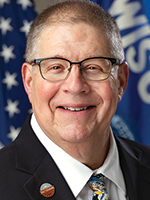
Photo of Dave Armstrong
R Wisconsin Assembly · District 67 On the 2026 ballot

Rep. Dave Armstrong

Compare
Total votes
569
all sessions
Attendance
98%
14 missed
Near the chamber average
With party
99%
of cast votes
Near the chamber average
Bipartisan score
0%
crosses aisle rarely
Near the chamber average
Sponsored
797
bills & resolutions
Near the chamber average
Committees
7
assignments
797 bills and resolutions

Sponsored bills

Total
797
Primary
797
Co-sponsor
0
This page
797
matching current filters
Primary AB 8
Failed · Wisconsin Assembly · Lead sponsor
Relating to: agreements for direct primary care.

Maddy summaryAssembly Bill 8 establishes a legal framework for "direct primary care agreements" between health care providers and patients. These agreements allow patients or their employers to pay a direct subscription fee for a defined set of primary care services, rather than billing an insurer on a fee-for-service basis for those specific services. The bill outlines criteria for valid agreements, including requirements for written contracts, clear disclosures that these are not health insurance, and rules regarding termination and patient selection. It prohibits providers from declining or terminating an agreement solely based on a patient's health status or other protected characteristics.

Failed Mar 23, 2026 0 co-sponsors
Primary AJR 37
Passed · Wisconsin Assembly · Lead sponsor
Relating to: declaring May 2025 as Ehlers-Danlos Syndromes and Hypermobility Spectrum Disorders Awareness Month.

Maddy summaryAJR 37 is a joint resolution that declares May 2025 as Ehlers-Danlos Syndromes and Hypermobility Spectrum Disorders Awareness Month in Wisconsin. This aims to increase understanding of these inherited connective tissue disorders among both medical professionals and the general public.

Passed Mar 23, 2026 0 co-sponsors
Primary AB 159
Failed · Wisconsin Assembly · Lead sponsor
Relating to: creating a rural creative economy development grant program. (FE)

Maddy summaryAB 159 creates a grant program to support rural creative economy development in Wisconsin. It provides competitive grants of up to $50,000 to eligible applicants - including rural cities, tribes, nonprofits, and economic development organizations - for projects like renovating public spaces, supporting public arts, and promoting local creative businesses. Applicants must secure matching funds from nonstate sources (with no more than 25% in-kind), and grants must directly benefit rural areas defined as populations under 10,000 or non-urbanized regions. The Wisconsin Economic Development Corporation must report on the program's effectiveness by May 2027.

Failed Mar 23, 2026 0 co-sponsors
Primary AB 292
Failed · Wisconsin Assembly · Lead sponsor
Relating to: the use of artificial intelligence or other machine assisted translation in court proceedings and of telephone or live audiovisual interpretation in criminal trials. (FE)

Maddy summaryAB 292 allows courts to use artificial intelligence or machine-assisted translation services instead of or alongside human interpreters in both civil and criminal court proceedings. It also updates rules to permit telephone or live audiovisual interpretation in criminal trials (beyond just non-trial stages) and clarifies that using AI translation does not require a waiver that would normally be needed for alternative interpretation methods. This bill directly affects court proceedings involving language barriers, expanding options for language assistance without mandating AI use. The law amends specific statutes to implement these changes, focusing on procedural flexibility for courts.

Failed Mar 23, 2026 0 co-sponsors
Primary AB 40
Failed · Wisconsin Assembly · Lead sponsor
Relating to: school safety grants and making an appropriation. (FE)

Maddy summaryAB 40 establishes a competitive grant program to fund school safety improvements and security training for school personnel. It allocates $30 million for the 2025-26 fiscal year to public, private, and tribal schools, with a maximum grant of $20,000 per school. The program prioritizes schools that have not previously received similar grants under Section 165.88 and requires annual reports to the Joint Committee on Finance. Grants must be awarded by June 30, 2027, after which no new funding will be issued.

Failed Mar 23, 2026 0 co-sponsors
Primary AB 231
Failed · Wisconsin Assembly · Lead sponsor
Relating to: creating a tax credit for expenses related to film production services and for capital investments made by a film production company, granting rule-making authority, and making an appropriation. (FE)

Maddy summaryAB 231 creates a 25% tax credit for film production companies in Wisconsin covering eligible expenses (like wages, equipment, and location costs) and capital investments for accredited productions. It directly affects film production companies operating in Wisconsin that meet minimum spending thresholds ($50,000 or $100,000 depending on production length) and excludes news, sports, or corporate content. The bill establishes a State Film Office to administer the program, requiring accredited productions to include a state acknowledgment in the final film and mandating annual reports on credit allocations. It caps annual tax credits at $10 million statewide and $1 million per company, with strict eligibility rules and third-party audit requirements to ensure compliance.

Failed Mar 23, 2026 0 co-sponsors
Primary AB 27
Failed · Wisconsin Assembly · Lead sponsor
Relating to: expanding veterans benefits to individuals who served in Laos in support of the United States during the Vietnam War.

Maddy summaryAB 27 expands eligibility for state veterans' benefits to include individuals who served in Laos supporting U.S. forces during the Vietnam War and were naturalized under the federal Hmong Veterans Naturalization Act of 2000. The bill updates state statutes to define these veterans as qualifying for property tax exemptions (under 36.27) and other benefit programs (under 38.24 and 45.01). It specifically adds them to eligibility criteria for benefits previously limited to other veteran categories. This change directly affects Hmong veterans residing in the state who meet the federal naturalization requirements. The bill passed committee unanimously and is now pending in the Rules committee.

Failed Mar 23, 2026 0 co-sponsors
Primary AB 172
Failed · Wisconsin Assembly · Lead sponsor
Relating to: consumer data protection and providing a penalty. (FE)

Maddy summaryAB 172 creates a new consumer data protection law by defining key terms like "personal data," "biometric data," "sale of personal data," and "consumer" in section 100.80 of the statutes. This bill directly affects businesses that collect or process personal data of state residents, requiring them to follow standardized handling practices for such data. The law includes penalty provisions for violations, though specific penalty amounts and enforcement details are not provided in the available bill text.

Failed Mar 23, 2026 0 co-sponsors
Primary AB 303
Failed · Wisconsin Assembly · Lead sponsor
Relating to: 988 Suicide and Crisis Lifeline grants. (FE)

Maddy summaryAB 303 creates a new state grant program to fund crisis intervention services for people contacting the national 988 Suicide and Crisis Lifeline from within the state. The bill requires the state department to award grants to organizations providing crisis care coordination to individuals who call or text 988. This directly affects crisis service providers that serve callers within the state's geographic boundaries. The key mechanism is a state-funded grant program administered by the department to support these organizations, ensuring consistent access to crisis care for 988 users. The bill does not change the 988 hotline's operation but provides state funding to support local crisis response services.

Failed Mar 23, 2026 0 co-sponsors
Primary AB 260
Failed · Wisconsin Assembly · Lead sponsor
Relating to: a pilot school-centered mental health program. (FE)

Maddy summaryAB 260 establishes a two-year pilot program providing school-centered mental health services to at-risk students and families in two schools per year (one rural, one urban/suburban). The program requires schools to already offer some behavioral health resources and agree to surveys/data sharing. It funds full-time therapists and family coaches to deliver year-round, evidence-based services - including in-school therapy, family coaching on mental health support, and connections to community health resources - while measuring impacts on students' mental health symptoms, academic performance, and basic needs like housing or food. A report on outcomes must be submitted to the legislature after the pilot ends.

Failed Mar 23, 2026 0 co-sponsors
Showing 101 to 110 of 797 bills
Previous 1 … 10 11 12 … 80 Next