

Maddy summaryAB 894 prohibits businesses from selling gift cards or certificates with expiration dates shorter than 5 years (or 5 years after reloading for reloadable cards). It bans hidden inactivity or dormancy fees unless clearly disclosed on the card, limits such fees to once per month, and requires specific fee details to be visible. Consumers can seek double damages or $200 per violation, and businesses face state penalties of $100-$10,000 per violation. The law directly affects gift card buyers and sellers, applying to all gift obligations sold after its effective date.
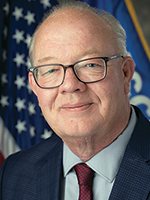
Rep. Todd Novak
Sponsored bills
Maddy summaryAB 946 creates a two-year pilot program to provide behavioral health support to high school students in Wisconsin. It allocates $1.5 million annually for the 2026-27 and 2027-28 school years to give at least 50,000 high school students access to a digital tool offering online mental health resources, peer support, and private sessions with licensed professionals. The tool must be accessible via mobile/web, support English/Spanish, include professional profiles for user choice, and follow a population health model. The program is administered by the Department of Public Instruction and requires contracting with educational service agencies, with the related funding provision set to expire on July 1, 2028.
Maddy summaryAJR 131 is a symbolic resolution designating March 2026 as Multiple Sclerosis (MS) Awareness Month in Wisconsin. It does not create new laws or funding but formally recognizes MS as a significant health issue affecting thousands in the state. The resolution encourages Wisconsin residents to learn about MS and support those impacted by the disease and their families. It was introduced by multiple legislators and co-sponsored by numerous colleagues as a gesture of awareness, not a policy change.
Maddy summaryAB 900 modifies eligibility for farmland preservation tax credits by prohibiting credits for any qualifying farmland where a non-accessory photovoltaic solar energy system (like standalone solar panels) is located during the taxable year. This directly affects farmers or landowners who seek these tax credits but have installed such solar systems on their eligible farmland. The bill creates new definitions to clarify that credits cannot be claimed for acres with these non-accessory solar installations, while maintaining credit eligibility for land without them. The policy change applies to taxable years beginning after December 31, 2025.
Maddy summaryAB 970 allocates $600,000 in state funding for two programs: (1) grants to six municipal emergency medical services programs (prioritizing two rural, two suburban, and two urban programs) to hire full-time community paramedics or practitioners, and (2) $200,000 annually for the Wisconsin Institute for Healthy Aging to run statewide falls prevention initiatives. The bill creates a pilot program requiring grantees to report on cost savings and service impact within one year. It directly affects local EMS providers and aging services organizations by funding community-based health support. The funding is appropriated for fiscal years 2025-26 and 2026-27, with a 12-month deadline for grant awards.
Maddy summaryAB 972 allows banks and credit unions to refuse or delay specific financial transactions and decline to accept a power of attorney for vulnerable adults when they reasonably suspect financial exploitation. Financial institutions must report suspected exploitation to adult-at-risk agencies and notify authorized account holders (excluding suspected perpetrators), while maintaining legal immunity for good-faith actions. This law directly affects vulnerable adults (elderly or disabled individuals at risk of exploitation), financial institutions, and the agencies that handle exploitation reports. It creates clear procedures for institutions to act preventively without facing liability, focusing on concrete safeguards rather than new penalties or funding.
Maddy summaryAB 973 allocates $1 million for fiscal year 2025-26 to fund economic support specialist positions in county resource centers. The Department of Health Services will award grants to 10 counties, prioritizing 2 rural, 2 suburban, and 2 urban counties for the first six grants, with up to four additional grants possible. Each grant funds one specialist position to assist individuals in resource centers, requiring grantees to submit annual effectiveness reports. The bill creates a new funding mechanism (20.435(7)(f)) to replace an existing section, with the appropriation effective immediately and the repeal of the old section taking effect July 1, 2027. This is a funding bill focused on resource center staffing, not a new policy.
Maddy summaryAB 974 establishes a permanent "public affairs network fund" to provide annual grants to WisconsinEye, the public affairs network broadcasting state government proceedings. The bill creates a new trust fund using state appropriations, donations, and interest earnings, which will fund WisconsinEye’s operating costs for live broadcasts, civic events, and free online archives of unedited government proceedings. WisconsinEye must meet specific requirements, including appointing legislative designees to its board, focusing coverage on official government business, and providing continuous free public access to broadcasts and archives. If WisconsinEye ceases operations, it must repay all grant funds to the state and transfer its archives to the state historical society.
Maddy summaryAB 817 increases the state reimbursement for certified veteran organizations providing military funeral honors from $50 to $100 per funeral. It directly affects local veteran groups certified by the department to perform these honors. The bill amends statute 45.60(2) to allow this higher reimbursement amount from a specific state fund, covering costs incurred by these organizations. The change applies to all military funerals in the state where honors are provided.
Maddy summaryAB 716 requires the state to direct at least 5% of spending on architectural and engineering services to woman-owned businesses certified under existing state law. It defines "woman-owned business" as one certified by the Department of Administration under Section 16.285. The bill mandates annual reports tracking state spending with woman-owned businesses, disabled veteran-owned businesses, and other certified firms, including the percentage of total spending they receive. This policy directly affects state procurement contracts for architectural and engineering services, aiming to increase contracting with certified woman-owned businesses. The law sets a specific spending target (5%) for these contracts while requiring transparency through annual reporting.