

Maddy summaryAB 1007 amends the definition of "veteran at risk" in Wisconsin law to explicitly include active-duty members of the U.S. armed forces, National Guard, or military reserves who have service-related physical or mental health conditions. The bill clarifies that a person qualifies as "at risk" based on information provided in a report about such conditions. This change directly affects military service members and veterans who may be identified through the existing veterans at risk alert system. The amendment refines the eligibility criteria for the system without creating new programs or funding.
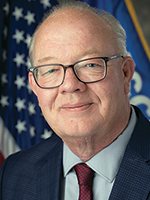
Rep. Todd Novak
Sponsored bills
Maddy summaryAB 1006 amends Wisconsin law to create a new definition of "veteran" specifically for state veterans benefits eligibility. It defines a veteran as a current or former National Guard member who completed their initial obligated service term and received an honorable or general discharge under honorable conditions. This change directly expands eligibility for state veterans benefits to include qualifying National Guard members who previously might not have met the existing definition. The bill does not alter benefit amounts or other eligibility criteria beyond this definition update.
Maddy summaryAJR 138 designates February 2026 as "Career and Technical Education Month" in Wisconsin to raise awareness about the value of these programs. It does not create new laws or funding but symbolically recognizes how career and technical education prepares students for jobs, citing that 92% of 2024 Wisconsin Technical College graduates were employed within six months and earned median salaries of $55,636 (for certificates) or $60,030 (for associate degrees). The resolution aims to encourage state residents to learn about CTE opportunities and their role in supporting Wisconsin's workforce. This is a ceremonial designation, not a policy change.
Maddy summaryAB 1002 allocates $1 million for economic support specialist positions at resource centers in the 2025-26 fiscal year, as defined under state law. This new funding replaces the previous allocation method for these roles, creating a dedicated budget line item (20.435(7)(f)). The bill directly affects resource centers providing economic support services, such as job training or financial counseling. It specifies no funding for 2026-27 and takes effect immediately upon passage, with the old funding mechanism repealed July 1, 2027.
Maddy summaryAJR 142 is a Wisconsin legislative resolution celebrating Scouting America's 115th anniversary. It expresses the legislature's support for Scouting America's values and community contributions, including its emphasis on character development and volunteerism, but does not create new laws or funding. The resolution encourages Wisconsin citizens and organizations to recognize Scouting America's role in youth development and community service. It is purely symbolic, with no policy changes or direct effects on individuals or programs.
Maddy summaryAB 1081 adjusts payment rates for opioid treatment programs using medication-based care to match Medicare rates for comparable services starting in 2027. It also sets new staffing requirements, including a medical director with addiction medicine experience who must be present 40% of dosing time (reduced to 20% for the first 60 days of operation), and mandates one counselor for every 55 enrolled patients. The bill changes admission rules for minors, requiring documented failed detox attempts and written parental consent, while adding requirements for initial physical exams and Hepatitis/HIV testing with patient consent. These provisions directly affect all Wisconsin opioid treatment programs providing medication-assisted therapy.
Maddy summaryAB 819 allows health care providers to offer discounts of up to 15% for prompt payment of fees by individuals covered under disability insurance policies. It directly affects health care providers serving patients with such coverage and requires providers to: (1) post discount policies online, (2) limit discounts to avoid collection costs, and (3) not shift discount costs to other patients or advertise discounts publicly. The bill does not require providers to offer discounts but prohibits them from reducing coinsurance/deductibles under disability insurance terms, except for these structured prompt payment discounts. It also ensures discounts comply with federal law and do not override existing provider contracts with insurers.
Maddy summaryAB 895 modifies sentencing and parole procedures for individuals under 18 convicted of crimes. It requires courts to consider youth-specific mitigating factors and relevant information when determining eligibility for release to extended supervision or parole. The bill creates new provisions (e.g., § 302.114(5)(cs), § 304.06(1)(bc)) that apply specifically to "youthful offenders" as defined in § 973.014(3)(a). These changes directly affect minors in the state’s criminal justice system by mandating more individualized review of their cases during sentencing and parole decisions.
Maddy summaryAB 887 adds the Platteville Veteran's Memorial in Grant County to official Wisconsin state highway maps. The bill requires the memorial's location to be marked on all future highway maps published after the law takes effect. This is a procedural change that directly affects how the memorial is identified on public transportation maps, with no financial or policy impact beyond map notation.
Maddy summaryAB 840 regulates data centers in the state by requiring specific operational and environmental standards. It mandates that data centers use closed-loop cooling systems (recycling water instead of using fresh water) and report annual water usage to the department. The bill also requires renewable energy facilities serving data centers to be located on-site and prohibits utility customers from paying for data center infrastructure costs. Additionally, operators must provide financial bonds for construction and restore land if projects are abandoned. These provisions directly affect all data center operators and developers in the state.