

Maddy summaryAB 712 clarifies the sales tax exemption for personal farm property or household goods sold at auctions online. It defines an "auction event" for internet sales as the consecutive days winning bids are selected (not just when property is available), while maintaining a limit of five or fewer such auctions per year by the same auctioneer at one location. This primarily affects small-scale auctioneers selling personal items online, ensuring they meet the exemption criteria. The bill updates definitions to explicitly include internet bidding periods without changing the exemption's core eligibility rules.
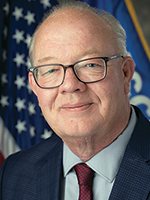
Rep. Todd Novak
Sponsored bills
Maddy summaryAB 702 creates a new income tax credit for individuals incurring unreimbursed medical expenses related to in vitro fertilization (IVF), directly affecting those who pay for IVF consultations, procedures, or prescribed drugs out-of-pocket. The credit allows a maximum $5,000 annual reduction against state income tax for eligible individuals with adjusted gross income under $100,000 (single) or $200,000 (joint filers). It excludes expenses covered by insurance, travel, lodging, or health savings accounts, and prohibits claiming the same expenses under other tax provisions. The credit must be claimed using forms provided by the state tax department when filing annual returns.
Maddy summaryAB 749 requires all public high schools to include instruction about organ and blood donation in at least one grade between 9 and 12. The law mandates that this instruction cover the purpose of donations, the statewide and nationwide need for them, and how students can participate. This applies to all high school curricula starting with the 2026-27 school year. The bill directly affects high school students and school districts by adding this specific health education requirement to their curriculum.
Maddy summaryAB 711 increases funding for the Family Foundations home visitation program by $1.2 million in fiscal year 2026-27. This appropriation directly supports the Department of Children and Families' program under section 48.983, which provides home visits to families with young children. The bill modifies the existing budget allocation without changing program eligibility or requirements. It was introduced in December 2025 with multiple co-authors and is currently under review by the Committee on State Affairs.
Maddy summaryAB 803 would expand state funding for workforce training grants to specifically include programs preparing individuals to become teachers. The bill creates a new grant category (106.27 (1) (b) 1. b.) for programs offering evidence-based training, leadership development, on-site job experience, and support to build teaching skills. This directly affects teacher preparation programs, including those in dual enrollment settings, by adding them to eligible grant recipients. The key change is codifying support for structured career pathways into teaching, moving beyond current grant scope. The bill is currently pending in the Rules committee after passing its primary committee unanimously.
Maddy summaryAB 798 requires the Department of Transportation (DMV) to ask applicants for driver's licenses or ID cards whether they want to provide contact information for up to three primary caregivers during the application process. If provided, the DMV stores this information securely in the applicant's file. Law enforcement agencies can electronically request and access this caregiver information (along with emergency contacts from another law section) during emergencies, but the DMV cannot share it with anyone else. The bill aims to improve emergency contact access while maintaining privacy protections for applicants.
Maddy summaryAB 812 amends a state statute to allow up to 50% of a tax incremental district's area in the Village of Somers to be used for residential development, increasing the previous limit from 35%. This change directly affects developers, planners, and property owners within Somers' designated tax increment districts by expanding permissible residential use. The bill modifies the statutory definition of "mixed-use development" to specify this higher residential percentage only for districts in Somers, while maintaining the 35% limit elsewhere in the state.
Maddy summaryAJR 1 is a constitutional amendment requiring voters to present valid photo identification to cast a ballot in any election. It directly affects all voters in state elections, specifying that acceptable ID must be issued by the state, federal government, a federally recognized tribal entity, or a college/university in the state. The bill mandates the legislature to define acceptable ID types and establish exceptions, while allowing voters without ID on election day to cast a provisional ballot and submit ID later. This proposal, on second consideration after a 2023 rejection, would be submitted to voters in April 2025 if approved.
Maddy summaryAJR 3 is a symbolic resolution that officially recognizes January 2025 as "Human Trafficking Awareness and Prevention Month" in Wisconsin. It does not create new laws or allocate funding but aims to raise public awareness about human trafficking, highlighting its prevalence across all 72 Wisconsin counties and its impact on vulnerable groups like youth and individuals with disabilities. The resolution aligns with broader state and national efforts to combat trafficking through education and community engagement. As a procedural resolution, it focuses solely on designation and awareness, with no direct policy changes or obligations for state agencies.
Maddy summaryAB 91 requires first-class city school districts to maintain at least 25 school resource officers (SROs) during school hours, before/after school, and at events starting January 2024, with mandatory 40-hour training for SROs. It mandates a cost-sharing agreement where school districts cover 75% and cities cover 25% of SRO-related expenses. School districts and cities must formally agree on implementation and provide certifications to avoid state funding withholdings of up to 20% for non-compliance. The bill directly affects first-class cities and their school districts, creating specific administrative and financial obligations tied to SRO staffing.