

Maddy summaryAB 792 modifies how Wisconsin calculates state funding for public school districts by excluding certain costs funded through local voter-approved referenda (like bond elections) from the "shared cost" formula. This directly affects school districts receiving state equalization aid, as it prevents referendum-funded expenses from reducing their state aid eligibility. The bill adds specific rules to exclude referendum-authorized levies and related debt service from the calculation, ensuring districts aren’t penalized for using locally raised funds. These changes aim to align funding formulas with how school districts actually finance projects through voter-approved measures.
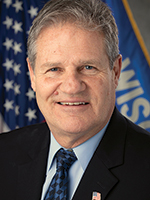
Rep. Paul Melotik
Sponsored bills
Maddy summaryAB 758 modifies Wisconsin tax statutes to remove the requirement for sellers to obtain exemption certificates when selling precious metal bullion that qualifies for existing tax exemptions under specific sections (like 77.54(5)(a)3.). This directly affects businesses selling precious metal bullion (e.g., gold or silver coins/bars) that meet these exemption criteria. The key change simplifies tax administration by eliminating the need for sellers to collect and verify proof of exemption for these transactions. The bill does not alter the tax exemption status itself but streamlines the process for qualifying sales.
Maddy summaryAJR 1 is a constitutional amendment requiring voters to present valid photo identification to cast a ballot in any election. It directly affects all voters in state elections, specifying that acceptable ID must be issued by the state, federal government, a federally recognized tribal entity, or a college/university in the state. The bill mandates the legislature to define acceptable ID types and establish exceptions, while allowing voters without ID on election day to cast a provisional ballot and submit ID later. This proposal, on second consideration after a 2023 rejection, would be submitted to voters in April 2025 if approved.
Maddy summaryAB 3 requires Wisconsin schools to incorporate cursive writing into the state English language arts curriculum standards and mandates that all elementary schools teach cursive writing as a core skill. Specifically, it requires public schools, charter schools, and private schools participating in parental choice programs to ensure students can write legibly in cursive by the end of fifth grade. The law applies to all elementary grades (K-5) and takes effect by July 1, 2026, though it excludes union high school districts. This policy change directly affects elementary school curricula across Wisconsin, requiring a specific skill-based objective in language arts education.
Maddy summaryAB 28 creates a new type of special vehicle registration plate with a black background and white lettering displaying "XWisconsinY" (with up to 7 characters for identifying text). It requires an additional $25 fee for annual plate renewals or $50 (reduced to $25 in the second year) for biennial plates, with excess funds deposited into the transportation fund after covering initial production costs. The bill specifies design requirements for these plates and clarifies they are distinct from existing special group plates. This directly affects residents who choose to purchase these specific license plates.
Maddy summaryAJR 9 is a Wisconsin Assembly Joint Resolution honoring Bob Uecker, the longtime Milwaukee Brewers radio broadcaster and entertainer, for his 69-year career in baseball. The resolution recognizes his contributions as a broadcaster, actor (including "Mr. Belvedere" and "Major League"), philanthropist, and community figure, citing his 54-year tenure with the Brewers and his cultural impact. It does not create new laws or affect any policies - it is a symbolic tribute passed by the Wisconsin Legislature to memorialize his legacy. The resolution extends condolences to his family and acknowledges his widespread influence on baseball fans and Wisconsin.
Maddy summaryAB 170 prohibits the Department of Justice from using legal services from non-governmental employees (such as private lawyers or contractors) for investigating or prosecuting civil or criminal cases. The only exception allows legal interns paid no more than $10,000 annually, even if they are not state or federal employees. This directly affects how the Department of Justice hires legal support for case work. The bill creates a new statute (165.252) to enforce this restriction, with no other exemptions beyond the intern provision. It was introduced in April 2025 and referred to the Judiciary Committee.
Maddy summaryAssembly Joint Resolution 19 honors April 22, 2025, as the 55th anniversary of Earth Day, an event founded by U.S. Senator Gaylord Nelson of Wisconsin. The resolution encourages Wisconsinites to continue actions to preserve the environment.
Maddy summaryAssembly Joint Resolution 23 designates April 2025 and April 2026 as Parkinson's Disease Awareness Months in Wisconsin. This resolution aims to raise public awareness and understanding of Parkinson's disease, a chronic neurological condition.
Maddy summaryAB 247 requires local governments to reduce building permit fees for certain home improvements benefiting disabled veterans. Political subdivisions must lower these fees by 75% or $500, whichever is less. This reduction applies when the permit is for improvements to a disabled veteran's primary residence that are necessary to accommodate their disability. The residence must be owned by the veteran or their caretaker, and local governments may request proof of eligibility.