

Maddy summaryAB 286 redirects $172 million in interest earned from unused coronavirus state and local fiscal recovery funds to the general state fund. It applies to funds held under specific state appropriations (section 20.505(1)(mb)) that were not spent by the deadline. The bill transfers this interest directly to the general fund on its effective date, rather than allowing it to remain in the recovery fund. This is a procedural adjustment to reallocate existing interest earnings, not a new funding program.
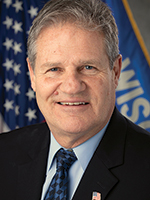
Rep. Paul Melotik
Sponsored bills
Maddy summaryAB 27 expands eligibility for state veterans' benefits to include individuals who served in Laos supporting U.S. forces during the Vietnam War and were naturalized under the federal Hmong Veterans Naturalization Act of 2000. The bill updates state statutes to define these veterans as qualifying for property tax exemptions (under 36.27) and other benefit programs (under 38.24 and 45.01). It specifically adds them to eligibility criteria for benefits previously limited to other veteran categories. This change directly affects Hmong veterans residing in the state who meet the federal naturalization requirements. The bill passed committee unanimously and is now pending in the Rules committee.
Maddy summaryAB 172 creates a new consumer data protection law by defining key terms like "personal data," "biometric data," "sale of personal data," and "consumer" in section 100.80 of the statutes. This bill directly affects businesses that collect or process personal data of state residents, requiring them to follow standardized handling practices for such data. The law includes penalty provisions for violations, though specific penalty amounts and enforcement details are not provided in the available bill text.
Maddy summaryAB 303 creates a new state grant program to fund crisis intervention services for people contacting the national 988 Suicide and Crisis Lifeline from within the state. The bill requires the state department to award grants to organizations providing crisis care coordination to individuals who call or text 988. This directly affects crisis service providers that serve callers within the state's geographic boundaries. The key mechanism is a state-funded grant program administered by the department to support these organizations, ensuring consistent access to crisis care for 988 users. The bill does not change the 988 hotline's operation but provides state funding to support local crisis response services.
Maddy summaryAB 299 requires the University of Wisconsin (UW) System Board to contract with a mental health service provider for virtual counseling and support for students at UW institutions with 30,000 or fewer full-time undergraduate students (as counted April 1 annually). The services must work alongside existing campus mental health programs, operate beyond standard business hours, and include proven clinical support and licensed professionals experienced with college students. Vendors must have at least five years of higher education mental health experience and provide software enabling collaboration with campus staff. The board must annually report student usage statistics system-wide and by institution to the legislature.
Maddy summaryAB 176 repeals the financial eligibility requirement (section 46.87(5m)) for Wisconsin's Alzheimer's family and caregiver support program. It updates two sections of the law to remove references to this repealed requirement, clarifying that eligibility now depends on meeting the financial criteria previously defined under the repealed section. The bill directly affects Alzheimer's patients and their caregivers in residential facilities who previously needed to satisfy these financial standards to receive program services. The key change is eliminating the specific financial threshold that determined program access, streamlining eligibility without creating new benefits or funding. This is a technical adjustment to existing statutes, not a substantive policy change.
Maddy summaryAJR 6 is a symbolic resolution passed by the Wisconsin State Legislature declaring support for nuclear and fusion energy as critical clean energy sources. It states the legislature's commitment to advancing nuclear power, fusion technology, and related innovations to meet energy demands, reduce carbon emissions, and create high-paying jobs - citing current nuclear plants powering 1.2 million homes and avoiding 6.4 million tons of carbon emissions annually. The resolution does not create new laws or allocate funding but formally endorses expanding nuclear energy development. The bill was introduced in February 2025, referred to committees, and ultimately laid on the table in June 2025 without further action.
Maddy summaryAB 233 amends Wisconsin law to expand funding for child advocacy centers by adding two new recipients: the Lakeshore Regional Child Advocacy Center in Sheboygan County and a statewide "Child Advocacy Centers of Wisconsin" entity. It authorizes $17,000 annually per center for education, training, and quality assurance activities related to child maltreatment response. The bill directly affects existing centers (like those in Milwaukee, Kenosha, and Racine Counties) and the newly added entities by securing their grant funding from the Department of Justice’s existing appropriation. The policy change specifies concrete funding recipients and mechanisms without altering eligibility criteria for current centers.
Maddy summaryAB 259 creates a new misdemeanor offense for entering or remaining on a campground without permission from the operator. It directly affects visitors who enter or stay on licensed campground property without consent. The law allows campground operators to issue written requests for individuals to leave, and failing to comply results in fines up to $100 or up to 30 days in jail. This bill specifically applies to campgrounds and camping resorts licensed under state law, clarifying that standard trespass laws do not cover campground occupants or guests.
Maddy summaryAB 83 prohibits state and local governments from restricting the sale or use of motor vehicles based on their energy source (e.g., gasoline, electric, or hydrogen). It also extends this rule to other energy-powered devices, such as power tools or generators, if their significant functions rely on that energy source. The law explicitly allows government agencies to prioritize electric vehicles for their own fleets when purchasing. This ensures public policies do not discriminate against specific vehicle or device types based on energy use.