

Maddy summaryAB 325 modifies Wisconsin's firearm transfer rules to require most sales or transfers to go through a licensed firearms dealer, with exceptions for direct family gifts, bequests, or inheritances (if the recipient is at least 18 and not prohibited from owning firearms). It adds a $10 fee for background checks conducted by dealers and mandates new forms requiring transferees to confirm they aren’t transferring to prohibited individuals. Violating these rules carries a misdemeanor penalty of fines ($500-$10,000) or up to 9 months in jail, plus a 2-year firearm possession ban. The bill directly affects gun sellers, buyers, and family members transferring firearms without a dealer.
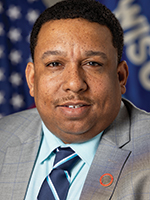
Rep. Russell Goodwin
Sponsored bills
Maddy summaryAB 569 regulates the sale and resale of event tickets by requiring sellers and resellers to clearly disclose all costs (including fees and taxes) upfront. It bans resellers from selling "speculative" tickets (not in their possession) and restricts presales through fan clubs or early access programs. The bill also mandates refunds within 10 days for canceled events, counterfeit tickets, or tickets that don't match descriptions, and prohibits deceptive marketing using artists' or venues' names without permission. These rules apply directly to ticket sellers, secondary marketplaces, and resellers, aiming to increase transparency and prevent deceptive practices.
Maddy summaryAJR 106 is a non-binding resolution honoring the 200th anniversary of Norwegian immigration to the United States, specifically commemorating the 1825 voyage of the sloop *Restauration* from Norway to New York. It formally recognizes the arrival of the first organized group of Norwegian immigrants and their descendants, particularly highlighting Wisconsin's historical connection as home to approximately 25% of Norwegian Americans by 1900. The resolution does not create new laws or affect any individuals or groups; it is purely commemorative, aligning with the 2025 bicentennial of the *Restauration*'s journey.
Maddy summaryAB 423 establishes an annual sales tax holiday for qualifying back-to-school items, exempting them from state sales tax during a designated period. The bill defines "eligible property" to include clothing (excluding certain accessories), school supplies (like notebooks and pencils), art supplies, school computer supplies, and instructional materials (such as textbooks), but excludes items like protective gear or sport equipment. It creates a reimbursement mechanism requiring the state to fund counties and municipalities for lost sales tax revenue during the holiday. The policy directly affects consumers purchasing these items and retailers selling them during the tax-free period.
Maddy summaryAB 529 requires school boards to provide eligible high school students with voter registration forms, eligibility information, and nonpartisan materials explaining voting importance and civic roles. It directly affects high school students who become eligible to register to vote (typically 16-18 year olds in most states). The bill mandates schools to distribute these resources as part of student enrollment or transition processes, ensuring access to nonpartisan voting information. It creates a new statute (6.31) specifying these requirements without altering voting eligibility rules. The measure aims to streamline voter registration access for young adults through educational institutions.
Maddy summaryAB 536 requires election officials to complete one-hour accessibility training sessions focused on meeting voter accessibility requirements under sections 5.25(4) and 6.82. Specifically, chief inspectors must attend this training under new section 7.31(6), while municipal clerks, inspectors, special deputies, and registration officials must complete it under new section 7.315(5). All training must be provided before the 2027 spring election. The bill directly affects local election staff responsible for polling place operations and voter assistance.
Maddy summaryAB 531 creates a $200,000 annual grant program for counties and law enforcement agencies to establish safe firearm disposal initiatives. Agencies must advertise the program, use law enforcement personnel (with grant funds covering overtime), securely store firearms until destruction, prevent fraud, and have firearms inspected by licensed dealers before payment. Participants receive gift cards (not cash) that cannot be redeemed for guns or ammo, and agencies must report firearm details and program outcomes to the state. The bill also funds staff positions to administer the program and requires annual reports on participation and improvements.
Maddy summaryAJR 98 is a symbolic resolution that would officially proclaim October 2025 as "Filipino American History Month" in Wisconsin. It directly affects Wisconsin residents by encouraging the state to recognize and celebrate Filipino American heritage, contributions, and history. The resolution cites historical milestones, including the first Filipino settlement in the U.S. and Wisconsin's Filipino population of over 22,000 people. It does not create new laws or policies, but rather serves as a ceremonial recognition of Filipino American contributions to Wisconsin and the U.S. The resolution was introduced by multiple legislators and refers to the established national observance of Filipino American History Month.
Maddy summaryAB 329 clarifies and updates regulations for all-terrain vehicles (ATVs), utility terrain vehicles (UTVs), off-highway motorcycles, and snowmobiles. It creates new definitions for terms like "bridge," "culvert," "dune buggy," and "navigable waterway" to standardize language in traffic laws. Key provisions require ATVs to have one headlamp/tail lamp and UTVs to have two of each, prohibit operation without functioning lights, and specify rules for crossing bridges/culverts (e.g., 1,000 feet or less, with local ordinances). The bill also adds exceptions for emergency use and defines patrol vehicles used by law enforcement. This directly affects ATV/UTV operators, emergency responders, and local governments managing roadway access.
Maddy summaryAB 434 creates a new $60 million annual state grant program to fund local traffic calming projects. It directly affects counties, cities, villages, towns, and federally recognized tribes by providing funding for infrastructure projects designed to reduce vehicle speeds. The program, administered by the Department of Transportation, will award grants for projects eligible under federal transportation alternatives programs. Grants require applications with specified details, and the department will set evaluation criteria for funding decisions. This is a concrete policy change establishing ongoing state funding for community safety improvements.