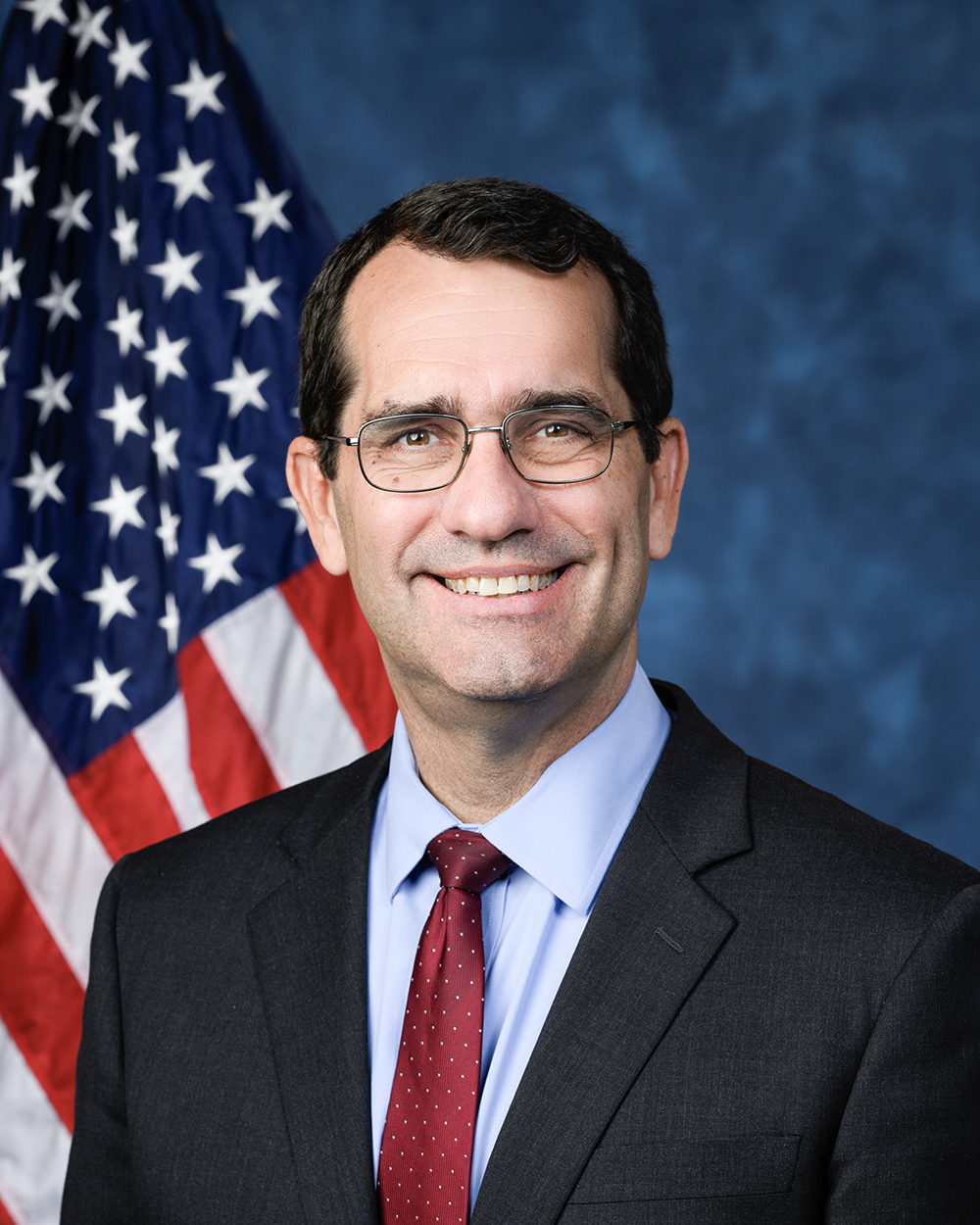
Photo of Derek Schmidt
R United States House · District 2 · Kansas On the 2026 ballot

Rep. Derek Schmidt

Compare
Total votes
650
all sessions
Attendance
99%
5 missed
Higher than 80% of chamber peers
With party
95%
of cast votes
Near the chamber average
Bipartisan score
2%
crosses aisle rarely
Near the chamber average
Sponsored
350
bills & resolutions
Near the chamber average
Committees
11
assignments
350 bills and resolutions

Sponsored bills

Total
350
Primary
17
Co-sponsor
333
This page
350
matching current filters
Co-sponsor HR 7548
In committee · Wisconsin House · Co-sponsor
SCAM Act

Maddy summaryThe SCAM Act requires online platforms that display paid advertisements (like social media sites) to verify advertiser identities, implement scam detection systems, and remove fraudulent ads within 24 hours of confirmation. It directly affects platforms that accept payment for ads, targeting scams such as fake giveaways, romance scams, and AI impersonations that cost consumers $195 billion in 2024 (per FTC data). Key mechanisms include mandatory identity checks for advertisers, active monitoring systems, and a 72-hour investigation window for reported scams. The law aims to reduce fraud by shifting responsibility to platforms, with enforcement by the FTC and state attorneys general.

In committee Feb 12, 2026 1 co-sponsor
Co-sponsor HR 7484
In committee · Wisconsin House · Co-sponsor
Community Bank Relief Act

Maddy summaryHR 7484, the Community Bank Relief Act, adjusts fees for payment card transactions to help community banks. It requires the Federal Reserve to annually increase these fees starting in 2026 based on the October Consumer Price Index (CPI) inflation rate, with a special one-time adjustment using CPI data from October 2009 to October 2025. This change directly affects community banks by linking their transaction fee limits to inflation, aiming to offset rising costs. The bill modifies existing law under the Electronic Fund Transfer Act to implement these specific fee adjustment mechanisms.

In committee Feb 11, 2026 1 co-sponsor
Co-sponsor HR 7494
In committee · Wisconsin House · Co-sponsor
Preventing Domestic Violence Homicides Through Lethality Assessment Training and Technical Assistance Act

Maddy summaryThis bill establishes a national resource center to help states, local governments, and tribes adopt programs designed to prevent domestic violence homicides. It authorizes the Attorney General to award grants to nonprofit or tribal organizations that have proven experience in creating and evaluating these safety initiatives. The funded programs would train first responders to better identify high-risk situations and connect victims quickly with community support services using evidence-based tools. A total of $5,000,000 is authorized annually starting in fiscal year 2026 to support these efforts.

In committee Feb 11, 2026 1 co-sponsor
Co-sponsor HR 7391
In committee · Wisconsin House · Co-sponsor
Community Health Center Drug Pricing Protection Act

Maddy summaryHR 7391, the Community Health Center Drug Pricing Protection Act, requires that Federally Qualified Health Centers (FQHCs) pay the discounted 340B ceiling price for covered drugs **at the time of purchase**, not later through rebates or adjustments. This directly affects FQHCs, which rely on 340B discounts to provide affordable care to low-income patients. The bill amends the Public Health Service Act to prohibit manufacturers from entering agreements where FQHCs initially pay more than the ceiling price, with later reimbursement. It takes effect immediately upon enactment for all new drug purchases and applies to existing agreements starting then.

In committee Feb 5, 2026 1 co-sponsor
Co-sponsor HR 3699
In committee · Wisconsin House · Co-sponsor
Energy Choice Act

Maddy summaryThis bill prevents state or local governments from banning or restricting energy connections (like installation, modification, or access) based on the type or source of energy, such as electricity, natural gas, or renewable fuels. It directly affects consumers choosing energy providers and energy companies seeking to offer services. The key provision prohibits local laws, regulations, or policies that limit energy services sold in interstate commerce, covering all energy types listed in the bill’s definitions. It does not create new programs but limits regulatory authority at the state or local level. The law aims to ensure open access to diverse energy sources without source-based restrictions.

In committee Feb 4, 2026 1 co-sponsor
Co-sponsor HRES 1034
In committee · Wisconsin House · Co-sponsor
Relating to questions of privilege in the House of Representatives during the One Hundred Nineteenth Congress.

Maddy summaryHRES 1034 modifies House rules for "questions of privilege" resolutions during the 119th Congress. It requires that any privilege resolution offered by the Majority Leader or Minority Leader must have at least one-fifth of all House members as cosponsors when introduced. Additionally, Members must maintain this one-fifth cosponsorship threshold for at least one legislative day after a resolution's introduction before making an oral announcement about it. This procedural change affects how Members can formally raise conduct issues involving other Members, Delegates, or Resident Commissioners.

In committee Feb 3, 2026 1 co-sponsor
Co-sponsor HR 7296
In committee · Wisconsin House · Co-sponsor
SAVE America Act

Safeguard American Voter Eligibility Act or the SAVE America Act This bill requires individuals to provide documentary proof of U.S. citizenship when registering to vote, and requires photo identification to vote, in federal elections. Specifically, the bill prohibits states from accepting and processing an application to register to vote in a federal election unless the applicant presents documentary proof of U.S. citizenship. The bill specifies what documents are considered acceptable proof of U.S. citizenship, such as identification that complies with the REAL ID Act of 2005 that indicates U.S. citizenship. Further, the bill (1) prohibits states from registering an individual to vote in a federal election unless, at the time the individual applies to register to vote, the individual provides documentary proof of U.S. citizenship; and (2) requires states to establish an alternative process to demonstrate U.S. citizenship. Each state must take affirmative steps on an ongoing basis to ensure that only U.S. citizens are registered to vote, which shall include establishing a program to identify individuals who are not U.S. citizens using information supplied by certain sources. Additionally, states must remove noncitizens from their official lists of eligible voters. The bill (1) provides for a private right of action for certain violations, and (2) establishes criminal penalties for certain offenses. Individuals voting in federal elections must present an eligible photo identification document. An individual who votes by absentee ballot must submit a copy of their identification document with both the request for, and the submission of, the absentee ballot.


In committee Jan 30, 2026 1 co-sponsor
Co-sponsor HR 7261
In committee · Wisconsin House · Co-sponsor
Motor Carrier Safety Screening Modernization Act

Maddy summaryThis bill modernizes how motor carriers (like trucking companies) screen driver safety records. It makes safety history checks voluntary for employers, prohibiting them from using such data to deny jobs without first giving applicants notice and a chance to appeal (per Section 31150(c)(3)). It also requires labeling safety violations under review in databases and creates a formal appeals process for disputed data (Sections 31150(d)-(e)). The law directly affects motor carrier employers and job applicants in the commercial driving industry by changing how safety data is used in hiring decisions.

In committee Jan 28, 2026 1 co-sponsor
Co-sponsor HR 7235
In committee · Wisconsin House · Co-sponsor
Protecting Motherhood Act

Maddy summaryHR 7235, the "Protecting Motherhood Act," requires all federal agencies to stop using the term "birthing person" in official documents and instead use specific terms like "female," "mother," "pregnant woman," or "woman." It directly affects federal agencies that produce regulations, forms, or communications, mandating the use of these defined terms when referring to individuals based on biological sex. The bill provides detailed definitions for terms like "female" (based on biological sex at conception) and "pregnant woman" (an adult human female carrying a child). The law takes effect 30 days after enactment. This is a procedural change focused solely on terminology in government documents, with no direct impact on healthcare access or services.

In committee Jan 23, 2026 1 co-sponsor
Co-sponsor HR 4323
Signed into law · Wisconsin House · Co-sponsor
Trafficking Survivors Relief Act

Maddy summaryThe Trafficking Survivors Relief Act (HR 4323) allows victims of human trafficking to petition courts to vacate convictions for non-violent federal crimes (level A offenses) or expunge arrest records if those offenses were directly related to their trafficking victimization. The bill establishes clear procedures for filing these motions, requires courts to consider testimony from anti-trafficking service providers, and ensures confidentiality for petitioners. It also adds a new "human trafficking defense" that permits defendants to claim duress due to trafficking victimization in criminal cases. The law mandates reports to Congress on implementation, including the number of petitions filed and outcomes, to assess its impact on trafficking survivors.

Signed into law Jan 23, 2026 1 co-sponsor
Showing 81 to 90 of 350 bills
Previous 1 8 9 10 35 Next