

Maddy summaryThis bill, known as the Kelsey Smith Act, would require telecommunications service providers to share location data with law enforcement or public safety answering points during emergency situations. It directly affects phone and internet service providers, law enforcement officers, and individuals whose location information might be disclosed. The key provision allows officers to request location data without delay if the device was used to contact emergency services in the past 48 hours or if there is reasonable suspicion of an emergency involving risk of death or serious physical harm. The bill also establishes requirements for obtaining consent from subscribers or their next of kin, with a defined priority order for determining next of kin when consent is needed. Additionally, law enforcement agencies must maintain records of these requests, and the bill does not exempt providers from complying with applicable state laws regarding location information disclosure.
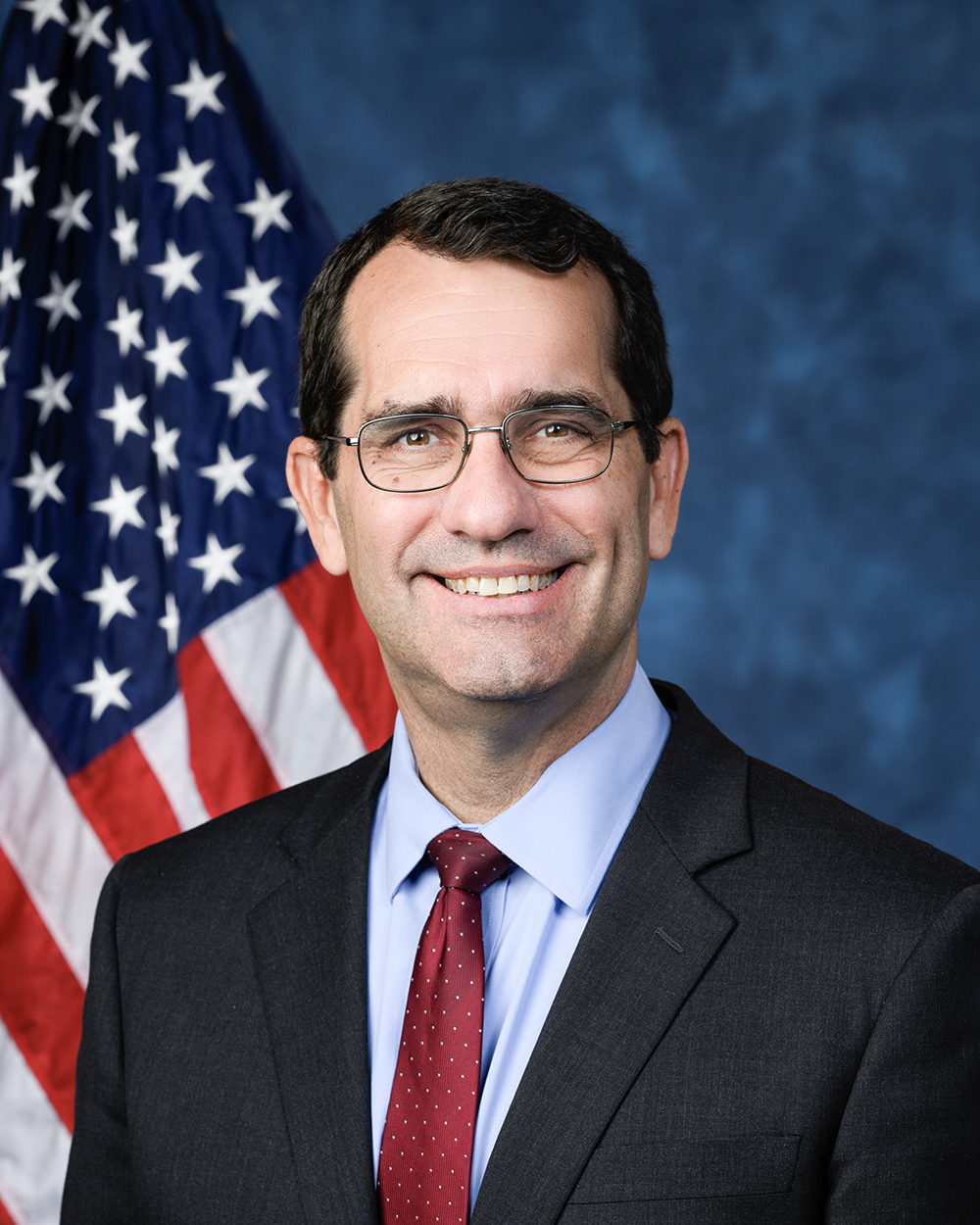
Rep. Derek Schmidt
Sponsored bills
James T. Woods Act This bill expands the federal framework for combating the online exploitation of children. Among its provisions, the bill establishes new criminal offenses, expands reporting requirements, and facilitates the prosecution and sentencing of offenders. TITLE I—SAFE ACT Sentencing Accountability For Exploitation Act or the SAFE Act This title directs the U.S. Sentencing Commission to review and amend its guidelines and policy statements applicable to federal criminal offenses involving the production, receipt, transport, shipment, or distribution of child sexual abuse material to (1) account for the actual and potential harm from the offense and changes since the last amendments with respect to the typical offense behavior and modern technologies, and (2) better reflect the spectrum of offender culpability. TITLE II—ENDING COERCION OF CHILDREN AND HARM ONLINE Ending Coercion of Children and Harm Online Act or the ECCHO Act This title establishes a federal framework to combat the online coercion of minors to commit harm. The title creates new criminal offenses, expands reporting of instances involving the online coercion of minors, facilitates the prosecution of offenders, and expands protections for minors who testify in court. TITLE III—STOP SEXTORTION Stop Sextortion Act This title criminalizes threats to distribute child sexual abuse material to intimidate, coerce, extort, or cause substantial emotional distress. This practice is commonly referred to as sextortion . The title also increases criminal penalties for related offenses that involve the use of child sexual abuse material to intimidate, coerce, extort, or cause substantial emotional distress.
Maddy summaryThis bill requires Veterans Affairs call centers to use multi-factor authentication to verify the identity of callers before taking high-impact actions. It directly affects veterans and beneficiaries who interact with VA services, ensuring their identities are confirmed more securely. The law defines high-impact actions as those where fraud could cause lasting harm, such as diverting funds or accessing sensitive accounts. By adding this requirement to federal code, the bill strengthens existing security controls for vulnerable service members.
Maddy summaryHR 7678, the Gun Owner Registration Information Protection Act, prohibits federal funding for state or local databases that track lawfully owned firearms or their owners. The bill allows federal funding for databases recording lost or stolen firearms but bans it for databases listing legal gun ownership. This means states cannot use federal money to create or maintain systems that compile information about legally owned guns. The bill directly affects state and local governments that rely on federal funds for firearm ownership databases.
Maddy summaryThis bill allows state attorneys (who are licensed and trained) to represent U.S. Immigration and Customs Enforcement (ICE) in removal proceedings for certain criminal aliens, under federal supervision. It requires states to ensure these attorneys follow federal law, provide proper training, and not displace federal employees. The bill also expands the definition of "aggravated felony" to include more state-level crimes (like certain drug offenses or thefts punishable by over one year in prison), making those offenses trigger mandatory immigration removal. This directly affects state attorneys participating in federal immigration enforcement and immigrants convicted of qualifying state crimes.
Maddy summaryThe RESCUE Act of 2025 amends federal permitting rules to streamline approvals for projects extracting minerals or carbon from specific waste sources. It directly affects companies and projects working with acid mine drainage, coal waste, mine tailings, or coal byproducts to recover rare earth elements, minerals under the 1872 Mining Law, or microfine carbon. The key provision adds these activities to the existing FAST Act permit process, removing barriers for processing materials from mining waste streams. This change aims to expedite development of domestic rare earth and carbon resources without altering environmental standards. The bill focuses on clarifying permit eligibility rather than creating new regulations.
Law-Enforcement Innovate to De-Escalate Act This bill removes less-than-lethal projectile devices (e.g., certain TASERs) from regulation under the Gun Control Act. The term less-than-lethal projectile device means a device that (1) is not designed or intended to expel (and may not be readily converted to discharge) commonly used ammunition or projectiles exceeding a velocity of 500 feet per second; (2) is designed and intended to be used in a manner not likely to cause death or serious bodily injury; and (3) does not accept (and cannot be readily modified to accept) an ammunition feeding device. The bill also requires the Bureau of Alcohol, Tobacco, Firearms and Explosives to determine whether a device satisfies the definition of a less-than-lethal projectile device within 90 days of a request.
Maddy summaryThis bill directs U.S. agencies to support Iranian people's access to uncensored information and hold Iranian officials accountable for human rights abuses. It requires the State Department and FCC to report on technologies (like satellite networks and mesh systems) that could bypass internet restrictions in Iran, and authorizes $2 million annually to develop such tools. The bill also establishes a new "Iran Kleptocracy Initiative" at FinCEN to track corruption, freeze assets of Iranian regime officials and state-owned businesses, and coordinate with international partners. These measures apply to U.S. policy toward Iran but do not alter Iran's domestic laws; they focus on U.S. sanctions, technology development, and anti-corruption efforts targeting the Iranian regime.
Maddy summaryThis bill delays a Medicare payment adjustment for physicians' services until 2030. It prevents the implementation of a 2025 rule that would have adjusted Medicare payment rates based on efficiency metrics for doctors' work. The delay requires the Secretary to submit a report to Congress by 2027 assessing whether a future one-time adjustment to these payment rates is necessary, with specific conditions for any future implementation. The bill does not cancel the adjustment but postpones it, while maintaining existing payment update percentages for Medicare physician services. It directly affects physicians and Medicare providers who rely on these payment structures.
Maddy summaryThis bill establishes the United States-Israel Defense Technology Cooperation Initiative to accelerate joint development and integration of defense technologies between the two countries. It directs the U.S. Secretary of Defense, with Israel’s agreement, to identify Israeli-origin technologies for rapid adoption into U.S. military systems, focusing on areas like counter-drone systems, missile defense (including "Golden Dome for America"), AI, cyber defense, and directed energy. The initiative requires annual congressional reporting on progress, partnerships with industry, and technology transitions, while authorizing $150 million annually for fiscal years 2027-2029. It aims to strengthen bilateral defense innovation and streamline the use of Israeli technologies within U.S. military programs.